
 Available
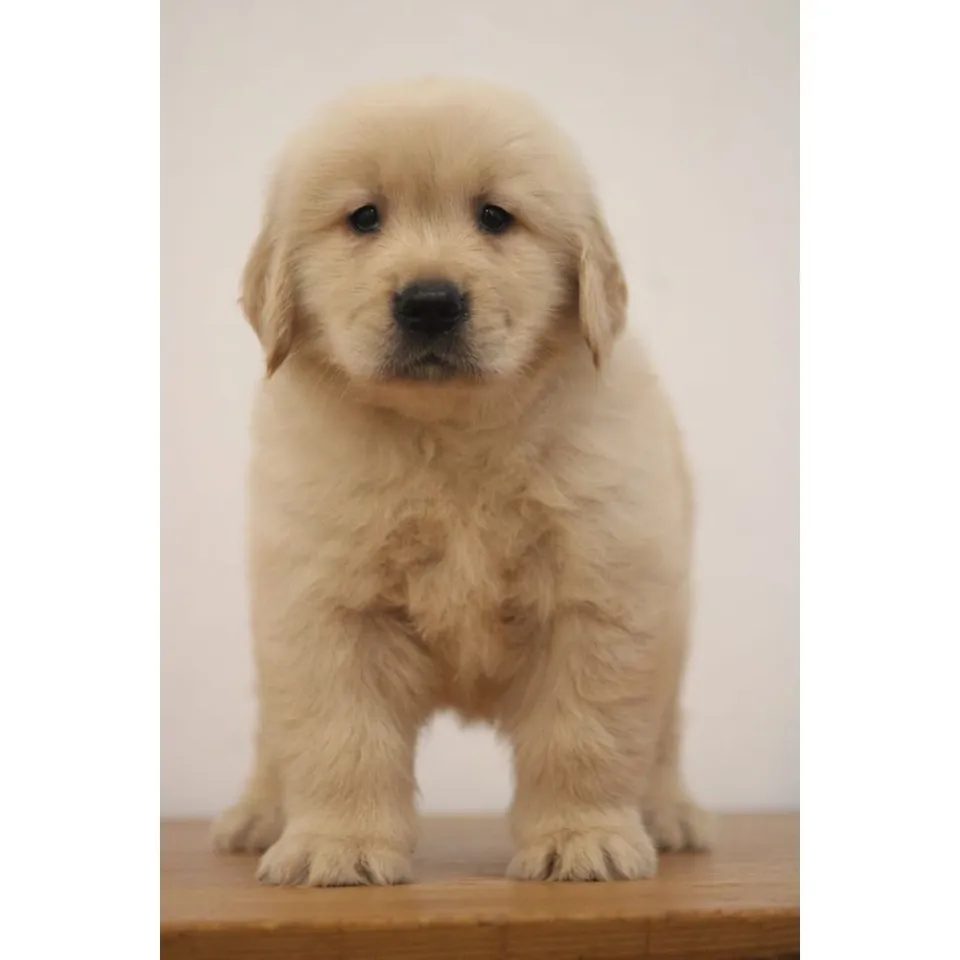
Golden Retriever puppy
Male3 monthsNot HDB
$7,500
Ask about Golden Retriever puppySee Golden Retriever puppy's listingGolden Retriever puppy for sale Singapore, the short answer: $4,588–$5,500 from an AVS-licensed seller, vet-checked, vaccinated and microchipped, under licence BR25052. The breed is not HDB-approved, so it needs a condo or a landed home, and its double coat needs a plan in a city that sits near 31C.
The rest of this page is the long answer: the price, the housing rule, the heat, and the two-minute check that tells you whether any seller is licensed.

Every Golden Retriever puppy for sale Singapore buyers see on this page is at the farm today, with its own photo, age and price. Litters of this breed are small and placements happen weekly, so the list changes often, and the Golden Retriever puppies with us this week sits on one page.
Available Available
 Available
 Available
 Available
 Available
 Available
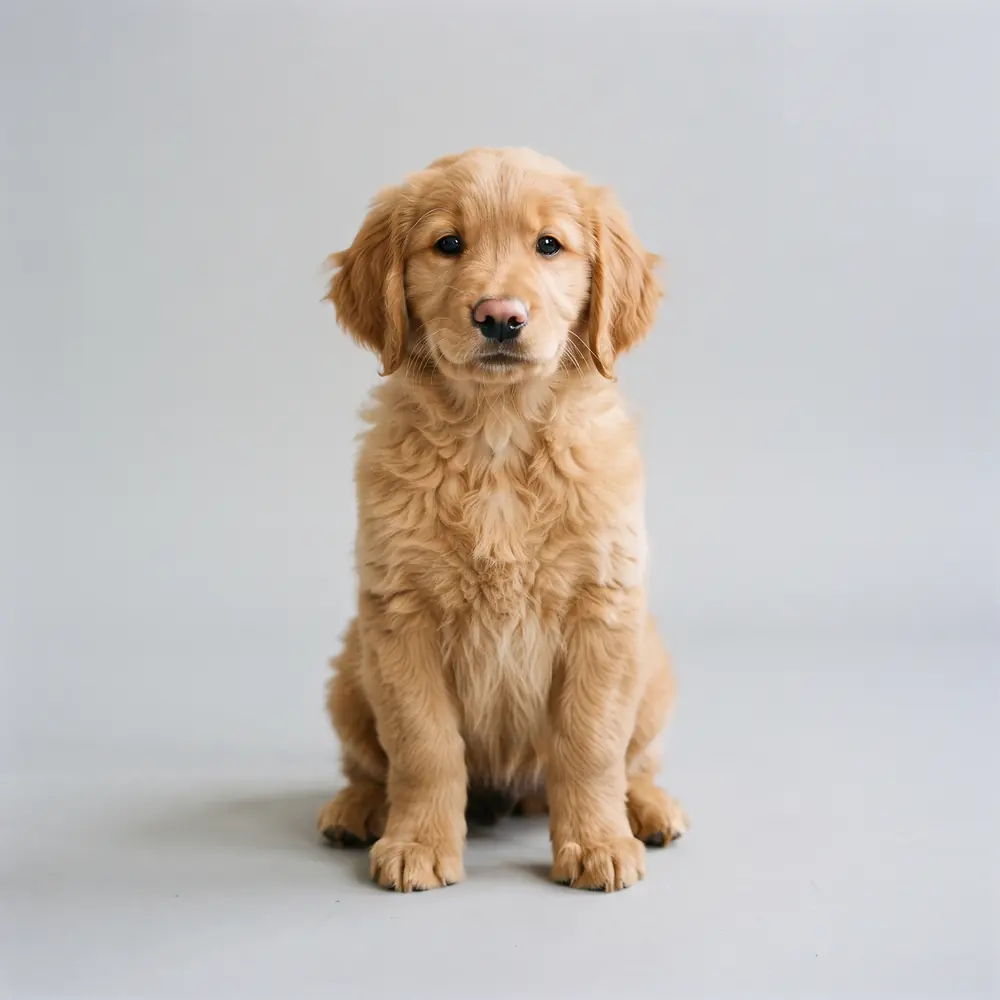
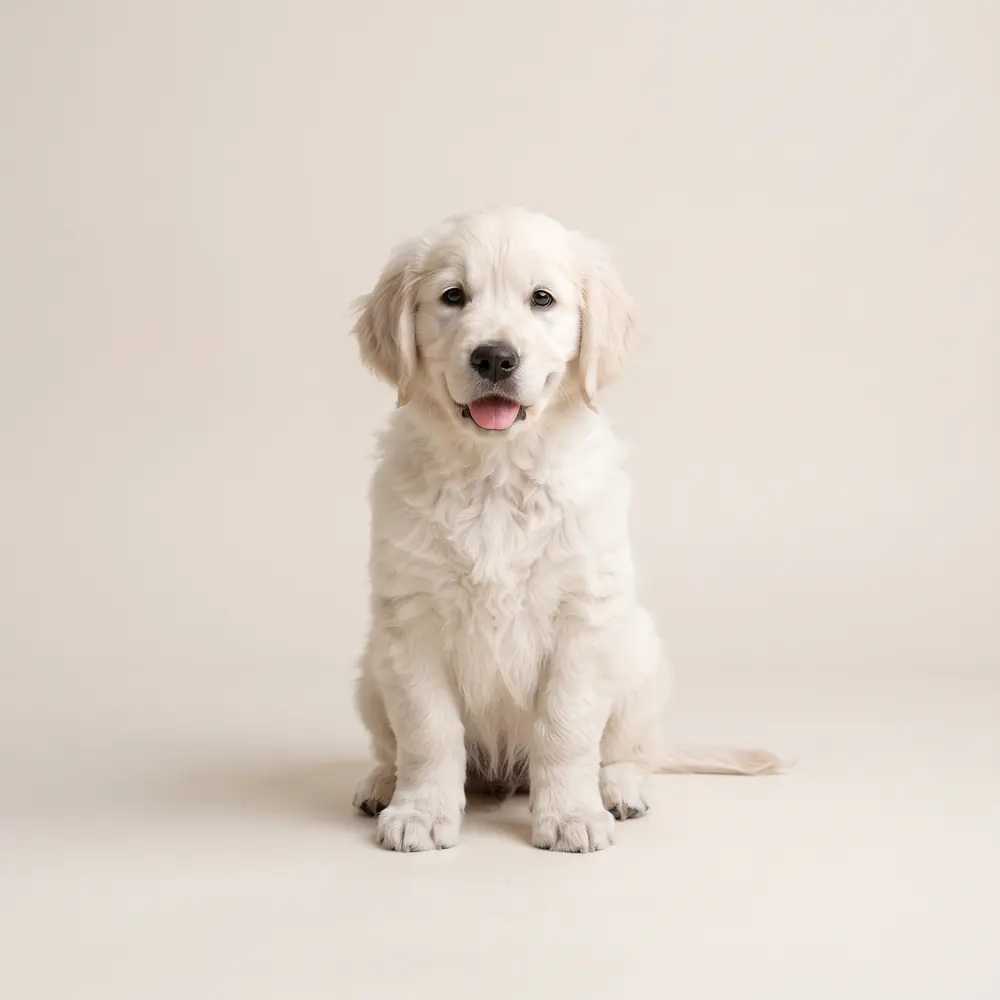
These Goldens have already gone home. They are here so you can see the coats and the condition our litters actually arrive in, not as available stock.

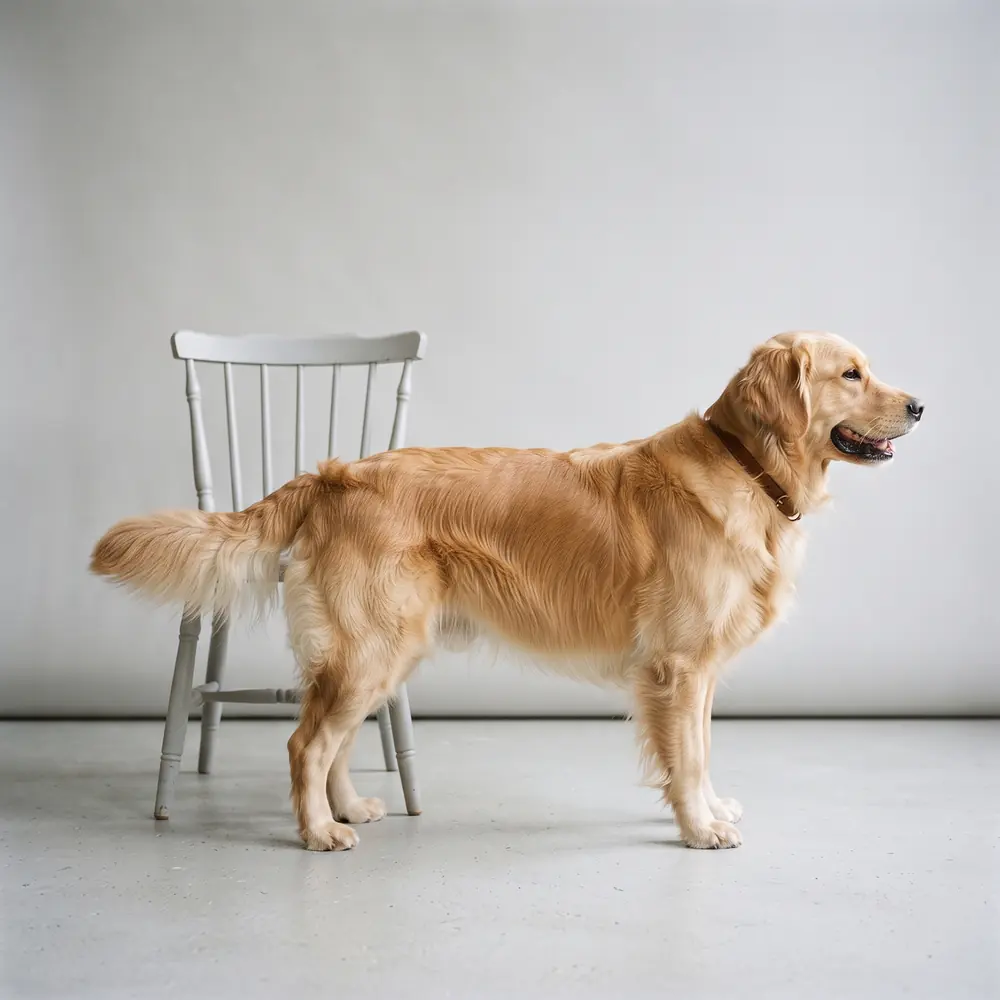
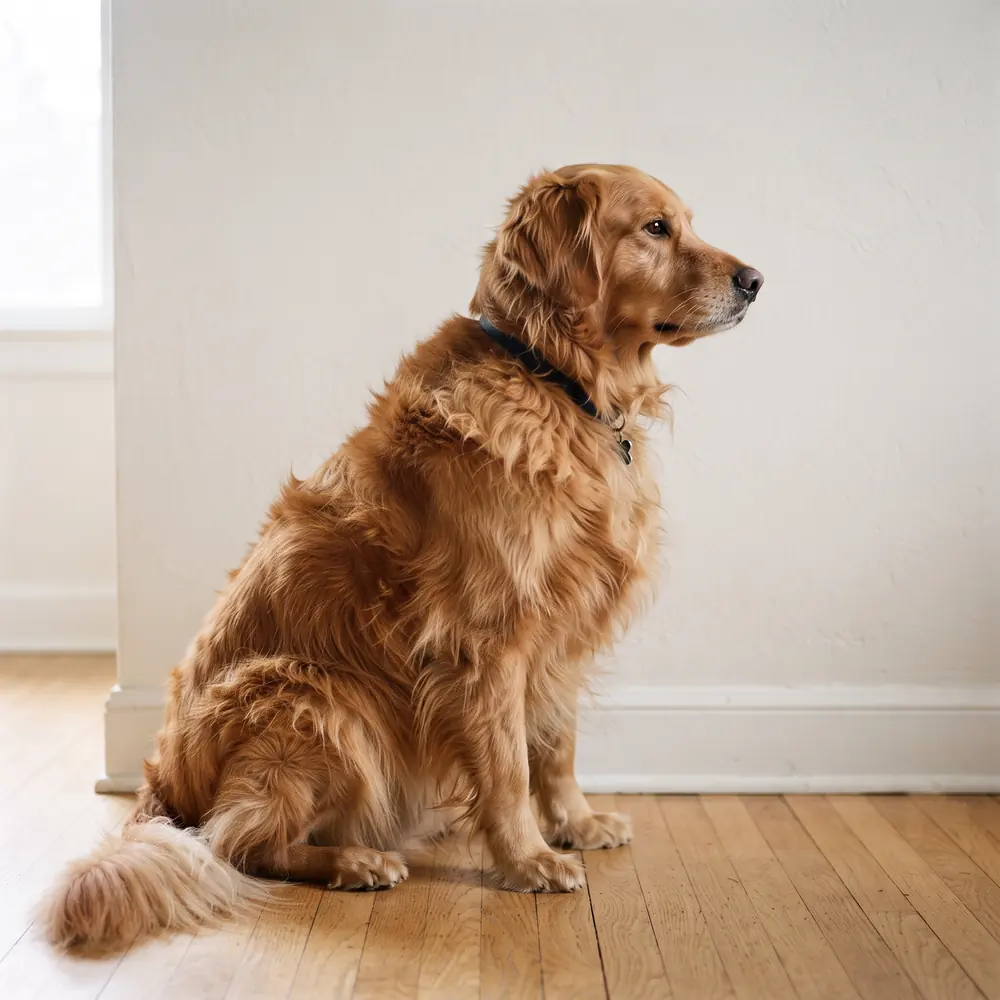
Nine illustrations of the breed: the coat colours a Golden Retriever comes in, the size it grows to, and the coat between grooming appointments. These are drawings of the breed, not photographs of puppies for sale. The 7 puppies we actually have are further up this page, each with its own photograph.





A Golden Retriever puppy costs $4,588–$5,500 from an AVS-licensed seller in Singapore. The price includes vaccinations to date, deworming, a vet health check, a microchip, health certification and ancestry records. Age, sex and litter move a puppy within that band, and coat colour does not.
Six things travel with every Golden Retriever puppy, and each one is a document or a procedure you can check rather than a promise. There is no separate paperwork fee and no vaccination surcharge on top of the price you see.
A Golden Retriever litter is bigger, eats more and stays at the farm through the same vaccination schedule as a two-kilogram puppy that costs a third as much to feed. The mother needs more care through whelping and nursing, and the puppies need more space while they grow. That is the whole of the difference.
Coat colour does not move our price. Age, sex and litter do.
What does not move our price: coat colour. Cream Goldens are marketed at a premium in some markets, and the searches around this one show buyers expect to pay it.
We price on age, sex and litter, which you can see in the cards above, where the range runs across colours. Our price hub publishes what a Golden Retriever costs here to buy and to keep, breed by breed.
In Singapore, $3,000 is below the licensed-market floor for this breed, not above it. Our Goldens start at $4,588, and the licensed sellers we see on the same search results sit in the same territory. The question buyers are really asking is what a cheaper listing means.
None of those is a bargain, and the last two only surface after you have paid.
Adoption is the honest exception. A shelter or breed-rescue fee under $3,000 is normal, the dog is usually adult and sterilised, and if you are flexible on age and history it is the better path. We would rather point you there than sell you a puppy that does not fit your household.
No. The Golden Retriever is not on the HDB-approved breed list, the 62 breeds HDB permits in a flat, so it can only be kept in a private condominium or a landed home. HDB allows one dog per flat from its approved list, and this breed is not on it at any weight.
There is not. The approved list is a list of breeds, not a size threshold you can argue against, so a small or a mixed-looking Golden does not qualify.
Project ADORE, the scheme people usually have in mind when they ask, covers local mixed-breed rescue dogs under set conditions, not pedigree Goldens.
A dog kept in a flat against the rules is a complaint away from an enforcement letter, and the outcome falls on the dog.
If you live in a flat, the answer is a different breed, and we would rather redirect you now than take the sale. Read HDB's own pet rules and our list of the flat-legal breeds beside the Golden Retriever before you choose.
Condos are not automatically simpler. Many MCSTs set their own rules on size, on lift use and on the number of dogs per unit, and those rules are enforced by the management, not by HDB. Check your by-laws before you reserve a puppy, not after.
Buyers who want the Golden's temperament in a flat usually end up on one of four breeds. All are approved, all are on this site with their own published range, and all are small enough that the heat is a smaller problem than it is for a double-coated gundog.
The Cavapoo, the Bichon Frise, the Shih Tzu and the Maltipoo are the four that come up most often. All are on the approved list, all are small enough that the heat is a smaller problem, and all publish their own range on this site.
The purchase price is the smaller half of year one for a large breed. A Golden eats at the top of the food range, needs a groom every six to eight weeks once the adult coat comes in, and carries the same licence and vaccination costs as any other dog in Singapore.
| Line | Typical cost | What moves it |
|---|---|---|
| The puppy | $4,588–$5,500 | Age, sex and litter, not coat colour |
| Food | $80 to $120 a month | Adult weight of 25 to 34 kg, and this breed reaches it fast |
| Grooming | $50 to $120 a session, every 6 to 8 weeks | Coat condition and whether you brush between visits |
| AVS dog licence | $15 a year sterilised, $90 non-sterilised | Duration and sterilisation status; your first licence is at the unsterilised rate |
| Routine vet and annual booster | Budget yearly from year one | Ear checks matter more for this breed than most |
| Pet insurance (optional) | From about $30 a month | Age, breed and coverage level |
Figures for food, grooming and insurance are the bands this site publishes across every breed; the licence fee is the AVS schedule. Sources are listed at the foot of this page.
The Golden Retriever was bred in nineteenth-century Scotland to retrieve waterfowl from cold water, and the double coat is the tool for that job. Singapore's daily high sits near 31C all year with humidity to match, so the coat that made the breed useful in a Scottish loch is the thing you manage every day here.
It is manageable, and thousands of Goldens live well in this city. It just means the day is planned around two cool windows rather than whenever suits you.
The instinct in a hot country is to cut the coat off. It backfires.
The undercoat traps a layer of air that insulates against heat as much as cold, and the guard hairs are the dog's only sun protection. Shave it and you get sunburn risk, worse cooling and a coat that grows back patchy.
A Golden's ear folds over the canal, and in this climate that fold holds moisture after every swim, bath and rainy walk. Warm and damp is exactly what yeast and bacteria want, so ear infections are the most common vet visit this breed makes in Singapore.
The prevention is unglamorous and it works: dry inside the ear flap with a soft cloth after any water, look inside once a week, and go to the vet at the first sour smell or head shake rather than the fourth. An early ear infection is a week of drops. A late one is months.
Golden Retrievers run from pale cream through to a deep red gold, and all of it is one breed standard. Colour is the first thing buyers ask about and the least important thing about the dog in front of you.
Colour changes neither temperament nor health. There is no calmer cream line and no healthier dark line, and a seller who prices on colour is pricing on fashion. What actually varies between puppies is what you can watch in the pen: how a puppy handles noise, how quickly it settles, how it approaches a stranger.
Puppy fur tells you less than buyers think. Puppy fur is lighter and softer, the feathering on the legs and tail arrives later, and a pale puppy often deepens by a shade or two through its first year. Choose the puppy, not the shade.
This breed sheds all year and heavily twice a year, and it needs real exercise every day of its life. Neither fact is negotiable, and both are the reason Goldens end up rehomed by households that budgeted only for the purchase price.
Brushing is the load-bearing habit. Ten minutes with an undercoat rake, two or three times a week, removes the dead hair that would otherwise sit against the skin and trap heat.
Skip it for a month and the coat mats behind the ears and under the legs, which is a groomer's problem and a painful one for the dog.
A healthy adult Golden wants an hour a day split across the two cool windows, plus something for the head: a training session, a food puzzle, a retrieve. A bored Golden in a condo is loud, destructive and unhappy, in that order.
Goldens are a robust family dog with two well-documented weaknesses and one hard truth. The weaknesses are joints and ears. The hard truth is that this breed carries a higher lifetime cancer risk than most, and no seller can screen that away.
Every question below has a right answer and a telling silence. Ask them of us, and ask them of anyone else you are considering.
The same six things travel with every puppy we place, and you get them in your hand on homecoming day rather than by email later.
The timeline is set by the vaccination schedule, not by us. Core vaccinations run at weeks 6, 8 and 12, with an optional dose at week 16, and deworming happens at every visit.
Your puppy comes home about a week after its second vaccination, at around week 9. The week-12 dose happens with you and your own vet, and the booster is annual from year one.
Our guide to the weeks a Golden Retriever puppy is vaccinated walks the whole first year.
Both exist in this market, and you will see imported Goldens advertised alongside local litters. An imported puppy is flown in, usually older than a locally whelped one by the time it reaches you, and it arrives with the paperwork of its country of origin plus the import permits.
The trade-off is meeting time. A locally whelped puppy can be visited while it is still with its litter, so you see the conditions it was raised in before you commit.
With an import, the first time you meet the dog is usually after the money has moved. It has just spent a day in transit and needs a week to acclimatise to heat it never knew.
Neither is wrong. Ask which one you are being offered, ask for the paperwork either way, and price the difference honestly rather than treating import as a quality grade.
Four steps, in order, and none of them takes more than an evening. They apply to us as much as to anyone else selling this breed.
Check the licence. Search the AVS public registry for the seller's number. Ours is BR25052, and a seller who will not give you a number has given you your answer.
See the puppy in person. Viewing is by appointment. Watch how the puppy moves, how it recovers from a noise, and how the place smells, then ask where the litter is kept.
Read the paperwork before you pay. Vaccination booklet, health certification, ancestry records. Dates should line up with the puppy in front of you.
Reserve after meeting, not before. A deposit that has to be paid before you can see anything is a deposit on a photograph.
These are the four breeds that come up in the same conversation, with the two attributes that decide it in Singapore: whether you can keep it in a flat, and how much coat you are signing up for.
| Breed | HDB flat | Shedding | Energy | Typical range |
|---|---|---|---|---|
| Golden Retriever | No, condo or landed | High, all year | High | $4,588–$5,500 |
| Labrador | No, condo or landed | High, all year | High | $4,588–$5,500 |
| Labradoodle | No, condo or landed | Low to medium | High | $3,488–$4,800 |
| Cavapoo | Yes, approved | Low | Medium | $3,288–$5,988 |
If the flat is the constraint, the Cavapoo is the answer on this table. If the coat is the constraint, it is the Labradoodle.
If neither is, the choice between a Golden and a Labrador comes down to grooming: same temperament, less coat. A Golden Retriever puppy for sale Singapore families can live with needs the space and the grooming time to be there first.
Every number attached to a listing on this page traces to one of the sources below.
Figures last checked 25 August 2026.