
Dog Licence Singapore: What It Costs and How to Get One"hl">Singapore?
The dog licence costs $15 a year for a sterilised dog and $90 for an unsterilised one, before a 10% online-payment rebate. Every dog in Singapore must have one. Here is the full official fee table, the exact application steps, and the timeline that actually applies to a new puppy owner.
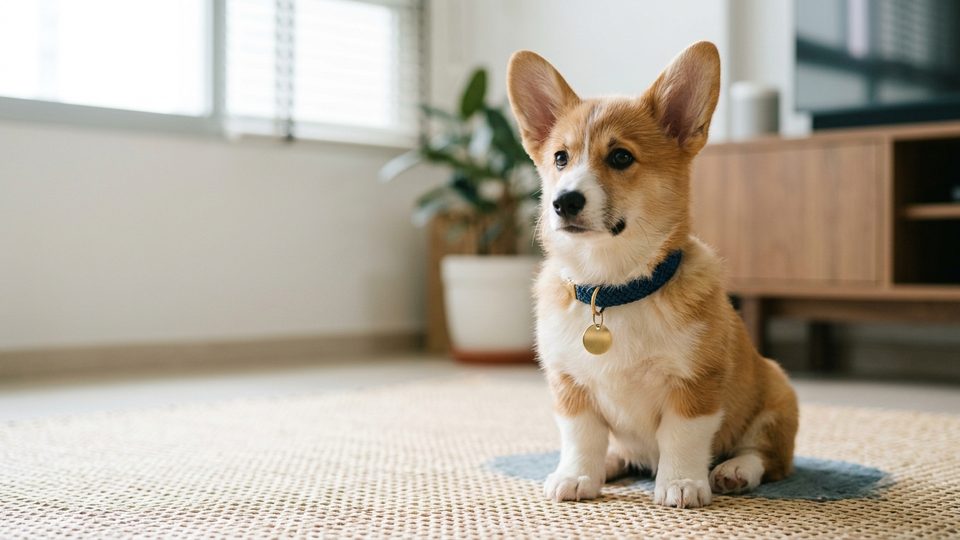
Dog licence Singapore, the short answer: a one-year licence costs S$15 for a sterilised dog and S$90for a non-sterilised one, less a 10% rebate if you pay online. A sterilised dog can take a one-time licence for S$35 instead, valid for life. Fees read 2026-08-26.
How much is a dog license in Singapore?
A dog licence in Singapore costs $15 a year for a sterilised dog and$90 a year unsterilised (first three dogs), less 10% when paid online. A puppy under five months is $15 for the year, and a sterilised dog can take a $35 one-time licence valid for life. Licensing is mandatory for every pet dog.
The full AVS fee table
Figures below are AVS's published fees for dogs not kept on a farm, read from the official fee page on 2026-08-26 and rendered from site data rather than typed here. Paying via GIRO, online or AXS earns a 10% rebate on these amounts.
The published table these figures come from was headed "before 1 September 2026" and that date has now passed. AVS has scheduled a new fee table from 1 September 2026. Re-checked on the AVS fee page on 26 August 2026: the replacement had still not been published, and the live page still showed only the "before 1 September 2026" table, last updated 31 October 2025. Treat the figures as the last published schedule and check the AVS page before relying on them.
| Situation | 1-year | 2-year | 3-year | One-time (lifetime) |
|---|---|---|---|---|
| Puppy below 5 months | $15 | N.A. | N.A. | N.A. |
| Sterilised dog | $15 | $25 | N.A. | $35 |
| Unsterilised dog | $90 | $165 | $230 | N.A. |
Source: the AVS licence fees page. A revised structure takes effect from 1 September 2026; check that page if you are reading this after that date. The fourth and subsequent dogs cost more, with one exception: a reduced rate for sterilised, obedience-trained local mixed-breeds adopted from an AVS rehoming partner.
What will the licence cost over your dog's whole life?
The tier you land in is a decision, not a fate, and the difference compounds. Take a puppy licensed at week 9 and follow three paths across a typical 12-year lifespan.
| Path | Year 1 | Years 2–12 | Lifetime total |
|---|---|---|---|
| Sterilise ~7 months, take the one-time licence | $15 (below-5-months tier) | $35 once, then nothing | about $50 |
| Sterilise ~7 months, renew yearly | $15 | $15 × 11 = $165 | about $180 |
| Never sterilise | $15 | $90 × 11 = $990 | about $1,005 |
The maths explains itself: AVS prices the licence to reward sterilisation, because sterilised dogs mean fewer strays and fewer accidental litters.
Vets typically recommend sterilising from about 7 months, your puppy goes home unsterilised at week 9, and the moment you update the status in PALS the $90 tier becomes a $15 tier, or a $35 one-time licence you never think about again. Every figure above drops a further 10% if you pay via GIRO, online or AXS.
- Under five months: S$15, whatever the sterilisation status.
- After sterilisation: the one-time licence at S$35, for life.
One niche tier worth knowing: the fourth and subsequent dog in a household normally costs $180 a year, but a sterilised, obedience-trained local mixed-breed adopted from an AVS rehoming partner qualifies for the reduced $15 rate. That is the licensing system quietly subsidising Project ADORE adoptions.
What changes on 1 September 2026
Every dog licence Singapore fee on this page comes from one table, the one AVS publishes today, and AVS heads it "Dog licence fees (before 1 September 2026)". It was last updated on 31 October 2025. That wording is a scheduled expiry, not a typo.
As of 2026-08-26, when these figures were read from the source, AVS had not published the schedule that replaces it. So if you are reading this on or after 1 September 2026, treat every figure on this page as historical and open the AVS licence fee page before you pay anything.
- Before 1 September 2026: the table on this page applies.
- On or after: check the AVS page, because the schedule changes.
We will update this page when the new table appears. Every competing guide on this search result states its numbers without a date, which is how a fee page quietly goes wrong.
What is one-time license for dogs?
A one-time licence covers a sterilised dog for the rest of its life for S$35, before the rebate. It is the cheapest route by a wide margin and it is easy to miss, because on the AVS page it sits in a footnote rather than in the table body.
There is a second detail worth knowing: a three-year licence bought for a non-sterilised dog converts to a one-time licence automatically once you update the sterilisation status in PALS. You do not reapply and you do not pay again.
Annual renewals against a one-time licence
Licensing a puppy: the case we see most
The dog licence Singapore rules treat puppies differently, and it is worth knowing before you pay. A puppy below five months old licenses at S$15 for one year whatever its sterilisation status. That matters, because puppies go home around week 9 and vets advise sterilising from about 7 months, so a first licence would otherwise fall at the non-sterilised rate.
The sequence that costs least is simple. License the puppy under five months at the low rate, sterilise when your vet advises, update the status in PALS, and move onto the one-time licence from there.
- The microchip comes first. The licence is tied to the chip number, and every puppy from a licensed seller is chipped before homecoming.
- The breeder's licence is not yours. Ours is BR25052, which covers the farm. Your dog still needs its own.
- First-time owners do the course. It is short, free and online, and the licence will not issue without it.
The order a new owner does this in
How do I pay for my dog license?
- 1
Complete the Pet Ownership Course (first-timers). Free and online. First-time owners must finish the AVS Pet Ownership Course before a licence can be issued.
- 2
Log in to PALS with SingPass. PALS (pals.avs.gov.sg) is the Pet Animal Licensing System; every licence transaction happens there.
- 3
Apply with your puppy’s microchip number. Your puppy comes home already microchipped; the chip number identifies the dog on the licence.
- 4
Pay online for the 10% rebate. GIRO, online payment or AXS all qualify for the rebate on the published fee.
- 5
Renew, or update status when circumstances change. Update PALS the same week sterilisation is done and your tier drops, and use the same screen when you move or rehome, because the licence transfers rather than restarts.
The new-owner timeline
- Week 9: puppy comes home, already microchipped, about a week after its second vaccination.
- First licence: the below-5-months tier ($15) covers the first year; puppies go home not yet sterilised.
- ~7 months: vets typically recommend sterilisation from this age; update PALS after and your renewal drops to the sterilised tier, or take the $35 lifetime licence.
- Every year after: renewal (or nothing, if you took the one-time licence), alongside the annual vaccination booster.
The licence and the vaccination schedule run on the same first-year calendar, and both costs sit on top of the purchase price; our published puppy price guide lays out the whole picture. HDB households: the licence does not override the approved-breed rules, it sits alongside them.
Do dogs need a license in Singapore?
The licence is a traceability system before it is a revenue line.
Under the Animals and Birds (Dog Licensing and Control) Rules, every pet dog must be licensed so that in a disease outbreak, rabies being the scenario the rules were built for, authorities can trace every dog to an owner and an address. Singapore has stayed rabies-free for decades, and the licence register is part of how.
- Every licensed dog is traceable to an owner and an address.
- That register is what makes a disease response possible at all.
That context matters when the non-sterilised fee stings. The system is not priced to punish you, it is priced to know where every dog is.
A licensed, microchipped, vaccinated dog is inside that safety net. An unlicensed one is invisible to it.
What happens if you skip the licence?
Licensing is mandatory, and an unlicensed dog exposes you to enforcement action under the Rules.
- Legal: licensing is mandatory under the Rules.
- Practical: the licence number gets asked for constantly.
The practical friction arrives sooner than the legal kind. Boarding kennels, groomers, vets, insurers and rehoming processes all ask for the licence number eventually.
HDB compounds it, because keeping a dog in a flat already requires the breed to be approved and the dog licensed. An unlicensed dog in an unapproved situation stacks two problems.
- Boarding, grooming and insurance all ask for the number.
- HDB adds its own approved-breed rule on top of the licence.
The honest cost-benefit: a sterilised dog's licence is $15 a year, or $35 once, forever, minus 10% paid online. There is no scenario where skipping it is worth what it risks. If the fee tier is the objection, sterilisation timing, not non-compliance, is the lever.
What you need before you apply, and what PALS handles after
Everything above happens at pals.avs.gov.sg with a SingPass login; there is no paper process to queue for.
How many dogs you may keep
The licence and the housing rule are two separate things, and satisfying one does not satisfy the other. HDB allows one dog per flat, from its approved-breed list. Private property allows up to three.
A licence will not make a non-approved breed legal in a flat, and an approved breed still needs its licence. If you are still choosing, every puppy available this week shows its breed and its HDB verdict on the card. Check the 62 breeds HDB allows before you choose a dog, not after.
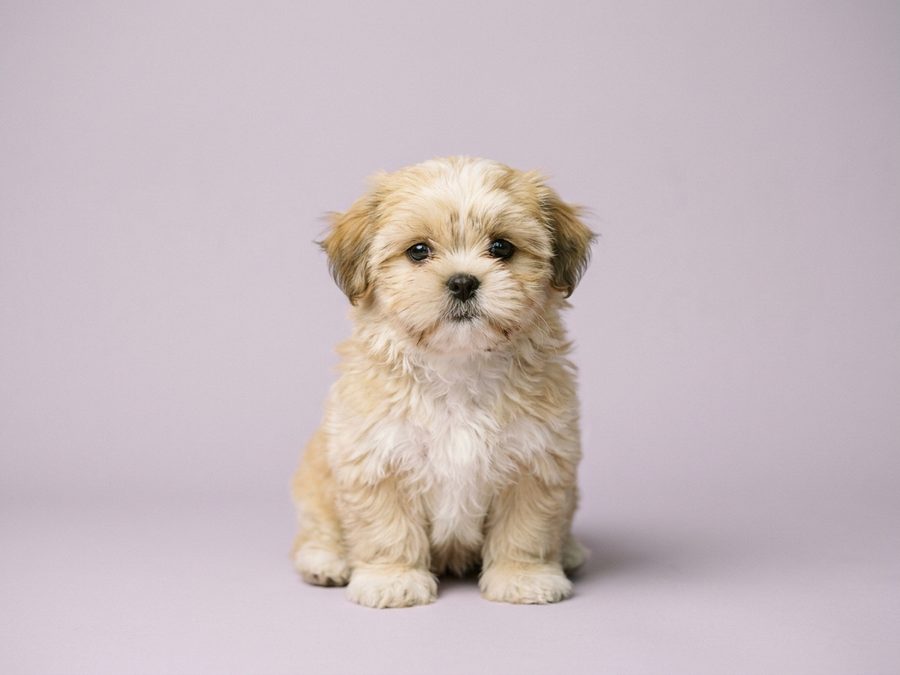
Licence versus breeder licence
Two different licences get confused constantly. A breeder or pet shop holds a business licence from AVS, the Animal and Veterinary Service of NParks, which covers the premises and the animals in its care. The dog licence is yours, and it follows the dog.
A licence held by an owner here is not the same document as a seller's business licence. Puppy Singapore sells under AVS licence BR25052, held by William Goh Pet Farm LLP. That number covers our farm and tells you nothing about whether your own dog is licensed, which is a separate obligation under the Animals and Birds Act.
- The seller holds: a business licence for the premises.
- You hold: the dog licence, tied to your dog's microchip.
Both are checkable. A seller's licence number can be searched in the public registry, and you should do that before buying; what a puppy costs in Singapore covers the rest of the paperwork that should come with one.
Requirements, paying online, and the free-licence question
Three things people search for that the sections above answer only in passing.
Is there a free dog licence?
No. There is no free dog licence, and anything advertised as one is not the licence. What exists is a cheaper rate rather than a waived one.
- A puppy under five months is licensed at the lowest rate on the table.
- A sterilised dog costs a fraction of an unsterilised one, which is the biggest single lever on the price.
- Paying online, by GIRO or at AXS earns a 10% rebate on the amount.
Applying and renewing online
Through the AVS Pet Animal Licensing System rather than at a counter. The whole thing is done online, renewals included, and the rebate above is the reason to do it that way.
Dog and cat licences run through the same system, so a household with both is dealing with one account rather than two separate processes.
Dog licence Singapore requirements, in short
- The dog is microchipped, and you have the number to hand.
- You know whether it is sterilised, because that decides the fee.
- You are within the limit for your housing type, which for a flat is one dog.
- For a flat, the breed is on the approved list, which the licence does not settle.
That last one catches people out. A licence is not permission to keep any dog in a flat. The approved breed list, linked further up this page, is where that question is settled.
Where the figures on this page come from
- Every licence fee: the AVS licence fee page, read 2026-08-26. The table is headed "Dog licence fees (before 1 September 2026)" and was last updated 31 October 2025.
- The 10% rebate: the same page. Quoted prices exclude it; it applies to GIRO, online and AXS payments.
- The Pet Ownership Course requirement: the AVS Pet Ownership Course, checked 25 August 2026.
- Where the application happens: PALS, the AVS licensing system at pals.avs.gov.sg, which is the top result on this search.
- Homecoming at about week 9 and sterilisation from about 7 months: this site's own canonical puppy facts, unchanged since 2026-07-09.
- Buyer-side checks on a seller: The Poodle Mom, quoted above with a link to the source video. US context; Singapore adds the registry check that video does not mention.
Figures read 2026-08-26. AVS has scheduled a new fee table from 1 September 2026. Re-checked on the AVS fee page on 26 August 2026: the replacement had still not been published, and the live page still showed only the "before 1 September 2026" table, last updated 31 October 2025.
Licensing comes after the purchase. If you are still choosing, our puppies for sale Singapore page lists every breed with its price published and our AVS licence number shown.