
Puppy Price Singapore: What a Puppy Actually Costs
Puppy price Singapore, the short answer: a pedigree puppy from an AVS-licensed seller costs $3,288–$12,888, depending on breed. Every breed we carry is priced in the table below, and the price includes vaccinations to date, deworming, a vet check, a microchip, health certification and ancestry records.
The rest of this page is the part most price pages leave out: what the first year costs, what the next fifteen cost, what adoption costs instead, and what a price below the market floor usually means.
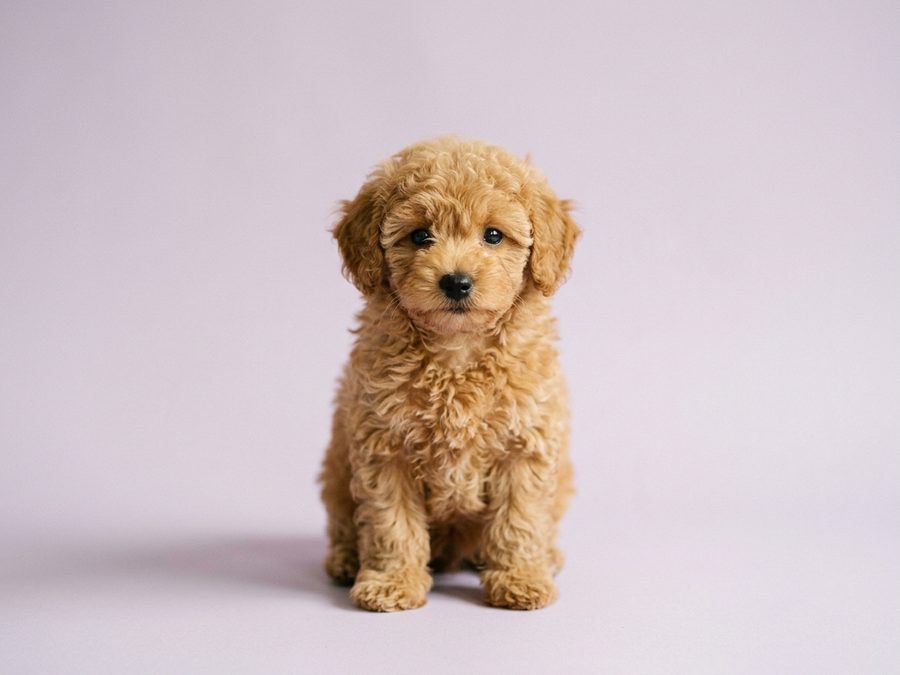
Every breed we carry, and what it costs
Sorted by starting price, lowest first. Each row links to that breed's page, where the current availability and the care detail sit.
No other page on this search result publishes its prices at all, which is the main reason this table exists. Puppy Singapore publishes every band before you enquire, so a puppy price Singapore buyers can compare is available without sending a message first.
| Breed | Price range | HDB flat | Size |
|---|---|---|---|
| Maltipoo | $3,288–$5,988 | Yes, approved | Toy |
| Cavapoo | $3,288–$5,988 | Yes, approved | Small |
| Morkie | $3,288–$5,388 | Yes, approved | Toy |
| Toy Poodle | $3,488–$5,988 | Yes, approved | Toy |
| Labradoodle | $3,488–$4,800 | No, condo or landed | Medium |
| Standard Poodle | $3,488–$5,988 | No, condo or landed | Large |
| Beagle | $3,588–$4,500 | No, condo or landed | Small |
| Corgi | $3,688–$5,500 | No, condo or landed | Medium |
| Cavachon | $3,688–$5,988 | Yes, approved | Small |
| Goldendoodle | $3,800–$5,988 | No, condo or landed | Medium |
| Jack Russell Terrier | $3,888–$5,988 | Yes, approved | Small |
| Bichon Frise | $3,888–$5,988 | Yes, approved | Small |
| Biewer Terrier | $3,888–$5,388 | Case by case | Toy |
| Cockapoo | $3,988–$4,500 | No, condo or landed | Small |
| Shih Tzu | $3,988–$5,288 | Yes, approved | Small |
| Papillon | $4,088–$6,088 | Yes, approved | Toy |
| Dachshund | $4,288–$6,088 | Yes, approved | Small |
| Maltese | $4,288–$5,988 | Yes, approved | Toy |
| Chihuahua | $4,288–$4,888 | Yes, approved | Toy |
| Golden Retriever | $4,588–$5,500 | No, condo or landed | Large |
| Pug | $4,588–$5,288 | Yes, approved | Small |
| Labrador Retriever | $4,588–$5,500 | No, condo or landed | Large |
| American Cocker Spaniel | $4,588–$5,988 | No, condo or landed | Small |
| West Highland Terrier | $4,688–$5,988 | Yes, approved | Small |
| Yorkshire Terrier | $4,688–$5,388 | Yes, approved | Toy |
| Shiba Inu | $4,788–$6,500 | No, condo or landed | Small |
| Japanese Spitz | $4,888–$5,088 | Yes, approved | Small |
| Pomeranian | $4,888–$5,388 | Yes, approved | Toy |
| Miniature Schnauzer | $4,888–$5,388 | Yes, approved | Small |
| Shetland Sheepdog | $4,988–$6,500 | Yes, approved | Small |
| Pomsky | $5,000–$6,000 | No, condo or landed | Small |
| Siberian Husky | $5,088–$6,088 | No, condo or landed | Large |
| Poochon | $5,388–$5,988 | Yes, approved | Small |
| Cavalier King Charles Spaniel | $5,588–$6,588 | Yes, approved | Small |
| Border Collie | $5,880–$6,988 | No, condo or landed | Medium |
| Sheepadoodle | $6,500–$6,800 | No, condo or landed | Large |
| French Bulldog | $6,800–$8,800 | No, condo or landed | Small |
| Chow Chow | $6,888–$10,888 | No, condo or landed | Medium |
| Alaskan Malamute | $6,988–$7,500 | No, condo or landed | Large |
| British Bulldog | $6,988–$9,988 | No, condo or landed | Medium |
| Coton de Tulear | $9,888–$12,888 | Yes, approved | Small |
These are the bands. An individual puppy occasionally lists below its breed's low, and when it does, the price on the card is the price, and the structured data follows the card. the current litter list carries its own figure.
How much does a puppy cost in Singapore?
A pedigree puppy from an AVS-licensed seller in Singapore costs $3,288–$12,888. Breed is the largest factor: a common small breed sits near the floor and a large or rare one near the ceiling. Age, sex and litter move a puppy inside its band, and coat colour does not.
What is the price of a normal puppy?
For a common small breed from a licensed seller here, the answer is the lower half of that band. The breeds at the bottom of our table are Maltipoo, Cavapoo, Morkie, and they start at $3,288.
Large breeds cost more for reasons that are mostly arithmetic. A bigger litter eats more, stays at the farm through the same vaccination schedule, and needs more space and more vet time before it is cleared to go home.
The four things that move a price between sellers
- Licensing. An AVS-licensed seller carries inspection and record-keeping costs that an unlicensed one does not.
- Vaccination stage at handover. A puppy released before its second dose costs the seller less and costs you a vet visit and a risk.
- Import or locally whelped. An imported puppy carries freight, permits and quarantine time.
- Paperwork. Health certification and ancestry records cost money to produce, which is why the cheapest listings do not have them.
Is $2000 expensive for a dog?
For a pedigree puppy from a licensed seller in Singapore, $2,000 is below the market floor of $3,288. For an adoption fee it is normal, and often more than a shelter asks. The same figure means two different things depending on the transaction.
That is the honest answer to a question the search results treat as one thing. A buyer comparing $2,000 against our table is comparing a purchase to a purchase, and there it is a warning rather than a bargain.
- Against a licensed purchase: below the floor, so check the licence first.
- Against an adoption fee: above the usual band, so ask what it covers.
A buyer comparing $2,000 against an adoption fee is looking at a different transaction entirely, and there the figure is simply high.
| Transaction | Typical figure | What $2,000 signals |
|---|---|---|
| Licensed puppy purchase | $3,288–$12,888 | Below the floor: check the licence before anything else |
| Shelter or rescue adoption | About $200 to $500 | Above the usual fee, so ask what it covers |
| Unlicensed private listing | Well below the licensed floor | No licence, no records, no recourse |
How much does it cost to adopt a dog in SG?
Adoption fees at Singapore shelters and rescues typically run from about $200 to $500, and some rescues ask only for a donation. That fee is cost recovery rather than a sale price, and it usually covers sterilisation, vaccination and microchipping already done.
We sell puppies, and we will still say this plainly: if you are flexible on breed, age and history, adoption is the better answer and the cheaper one. What you give up is breed certainty, a known early history, and the puppy stage itself.
- Usually included: sterilisation, vaccination and a microchip already done.
- Usually not: a known early history, or a puppy.
What you get is an adult dog whose size, coat and temperament are already visible, which for a first-time owner is worth more than most people expect. Our guide to adopting rather than buying covers the process, the fees and Project ADORE for HDB households.
What is the cheapest pet in Singapore?
Not a dog, and it is worth saying so on a page that sells them. Fish, small rodents and rabbits all cost less to buy and far less to keep. A dog sits at the expensive end of the pet spectrum in this country before you have bought a single bag of food.
- Fish: the cheapest to acquire and to run, with equipment as the main cost.
- Small rodents and rabbits: low purchase price, modest ongoing cost, no licence.
- Cats: no licence required in HDB flats since 2024's framework change, and lower grooming and food costs than most dogs.
- Dogs: a purchase price, a mandatory licence, and the highest recurring cost of the four.
If cost is the deciding factor, that ordering matters more than any discount on a puppy. The right reason to buy a dog is that you want the fifteen years, not that you found a cheap one.
The first year, line by line
The purchase price is the first of three numbers. Setup costs land in the first fortnight, and the recurring cost starts the day the puppy comes home.
What the first year actually costs
Budgeting before the puppy comes home
The setup list is short and most of it is one-time. Buy the crate, the bedding, food and water bowls, a collar and lead, a carrier for the trip home, and whatever grooming tool the coat needs. Everything else can wait until you know the dog.
The one thing not to defer is the vet. Book a check within the first week, both because it is good practice and because it is when anything undisclosed would surface, while the seller relationship is still fresh.
What it costs to keep a dog every month
Between $40 and $250 a month once the puppy is home, and the spread is mostly coat and size. Grooming is the biggest swing: a smooth-coated small dog needs almost none, and a curly or long coat needs a session every 4 to 8 weeks for life.
| Line | Typical cost | What moves it |
|---|---|---|
| Food | $30 to $120 a month | Adult size: a large breed eats several times what a toy breed does |
| Grooming | $50 to $120 a session, every 4 to 8 weeks | Coat type; smooth coats need almost nothing |
| Routine vet and the annual booster | Budget yearly from year one | Breed-specific risks, and age |
| Pet insurance (optional) | From about $30 a month | Age, breed and coverage level |
| AVS dog licence | $15 a year sterilised, $90 non-sterilised | Duration and sterilisation status |
Grooming costs by coat type
This is where two owners of similarly priced puppies end up with very different bills. A curly single coat has to be cut, a long coat has to be brushed and cut, a double coat has to be brushed and never cut, and a smooth coat needs a bath.
- Curly (Poodle, Maltipoo, Bichon): a full groom every 4 to 8 weeks, plus brushing between visits. The most expensive coat to run.
- Long (Shih Tzu, Yorkshire Terrier, longhaired Dachshund): similar cost, with matting the risk if the brushing lapses.
- Double (Corgi, Golden Retriever, Husky): cheap at the groomer, constant at home, and never to be shaved.
- Smooth (smooth Dachshund, Beagle, Pug): a bath and a wipe. The cheapest coat in this climate.
Pet insurance: worth it or not
Premiums start around $30 a month and rise with age and breed. The honest case for it is that one orthopaedic surgery costs more than several years of premiums, and the honest case against is that most dogs never need one.
Owners of long-backed and large breeds take it most often, for the reason above. If you buy a breed with a known structural risk, price the insurance into your monthly figure rather than treating it as optional.
The AVS dog licence, and the fee
Every dog in Singapore must hold an AVS dog licence, and it is the owner's, separate from the breeder's licence on this page. The fee runs $15 a year sterilised, $90 non-sterilised depending on duration and sterilisation status.
Puppies go home not yet sterilised, since vets recommend sterilising from about 7 months, so a first licence is issued at the unsterilised rate. First-time owners also complete the AVS Pet Ownership Course before licensing, which is short, online and genuinely useful.
What HDB approval has to do with price
Nothing directly. The HDB-approved breed list is a housing rule, not a pricing one, and 22 of the breeds in the table above sit on it at a range of prices. What is true is that the small breeds that fit a flat tend to sit lower in the band than the large ones that do not.
Check the housing question before the price question. Our list of every breed HDB allows in a flat is the faster filter, and every breed we carry carries its verdict on its own page.
The fifteen-year number
Most breeds on this page live 12 to 18 years. At the published recurring bands, the cost of keeping the dog passes the cost of buying it somewhere in the second or third year, and keeps going.
Purchase price against lifetime cost
That is not an argument against buying a dog. It is an argument for choosing the breed on fit rather than on the difference between two purchase prices, because that difference is the smallest number in the decision.
It is also why the puppy price Singapore buyers fixate on is the wrong place to economise. A breed whose coat suits your patience and whose size suits your home will cost less to live with than a cheaper puppy that suits neither, every year, for its whole life.
Why the same breed costs different prices
Search any breed on this page and you will find a range of asking prices across sellers. Four things explain almost all of it, and none of them is negotiating skill.
- 1
Licensed or not. A licensed seller carries inspection, record-keeping and premises costs. Ours is AVS licence BR25052, held by William Goh Pet Farm LLP, whelping at the Sungei Tengah farm cluster.
- 2
Vaccination stage at handover. A puppy released before its second dose is cheaper to produce and riskier to buy. Ours go home about a week after the second dose, at around week 9.
- 3
Import or locally whelped. Freight, permits and acclimatisation time all sit in an imported puppy price, and you usually meet the dog after paying rather than before.
- 4
Paperwork. Health certification, ancestry records and kennel club registration cost money to produce. A listing without them is cheaper for exactly that reason.
What a price below the floor usually means
A pedigree puppy advertised well under $3,288 in Singapore is usually one of three things, and the difference matters more than the discount.
| What you are looking at | What is missing | How to tell |
|---|---|---|
| An unlicensed seller | Licence, inspection, recourse | Ask for the licence number and search the registry |
| A puppy with no records | Vaccination booklet, ancestry, health certification | Ask to see all three before paying |
| An undisclosed health issue | A vet check you can trust | Book your own vet within the first week |
The check takes two minutes: ask for the licence number, then search the AVS public registry of licensed pet breeders for it. Do it for us as readily as for anyone else.
What a good seller answers about price
A seller should be able to tell you what the price includes, what it does not, and why their figure sits where it does. Vagueness on any of the three is the answer.
What the price includes
There is no separate paperwork fee and no vaccination surcharge. For what happens after homecoming, read the vaccination schedule a puppy arrives on.
What actually predicts the price
Whether the puppy was bred here or imported. That is the clearest single predictor on our table, and it matters more than size, which is the thing most buyers assume decides it.
- Size and price used to move together on this table and they no longer do.
- The most expensive breed we list is one of the smallest dogs on it.
- Size still decides the HDB question, which is why the two get asked together, but it has stopped being a reliable guide to the number.
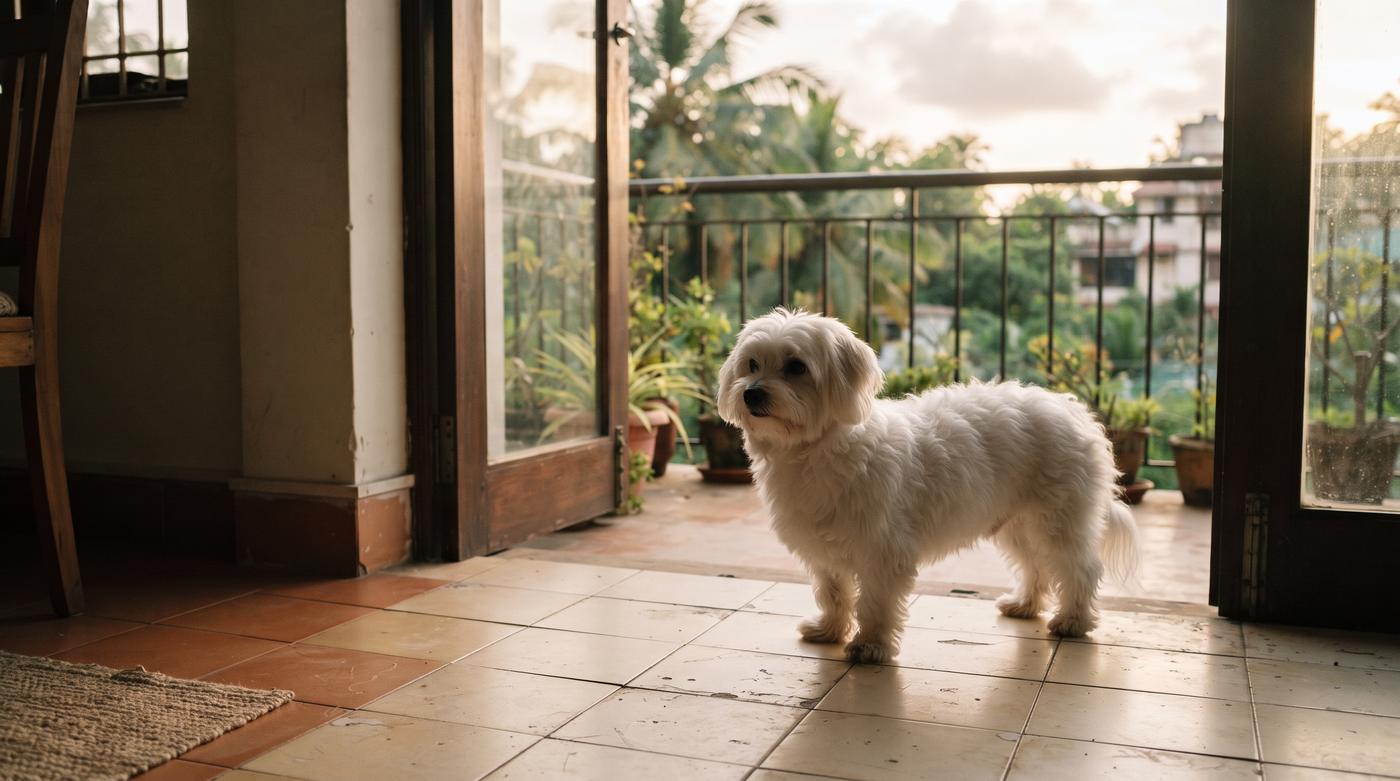
A Coton de Tulear weighs four to six kilograms and sits at the top of our table. A dog five times its weight sits below it. The difference is that almost nobody breeds the Coton here, so the ones we list are imported.
Why an imported puppy costs more
- The overseas breeder sets their own price, often for a show line with pedigree papers.
- Health testing behind that line is done and paid for before the dog is offered.
- The import itself costs money, and so does the paperwork that travels with the dog.
- Scarcity does the rest: a breed almost nobody produces locally has no local price to compete with.
A locally bred puppy carries none of that, which is why the bottom of our table is where the locally bred crosses sit.
The lowest and highest prices we publish
The three cheapest breeds we carry are Maltipoo ($3,288–$5,988), Cavapoo ($3,288–$5,988), Morkie ($3,288–$5,388). The three highest are Coton de Tulear ($9,888–$12,888), British Bulldog ($6,988–$9,988), Alaskan Malamute ($6,988–$7,500).
The gap between those two ends is mostly origin, then breed rarity, then demand. It is not a quality gradient: a puppy at the bottom of our table goes home with exactly the same paperwork and the same vet clearance as one at the top.
If a number on this table looks high for the size of the dog, that is the honest reason, and the breed page for that dog sets out its own version of it in full.
Paying: deposits, reservation and delivery
- 1
Message us. Tell us the breed or send a name from the listing page. We reply with photos, video and the go-home date.
- 2
View by appointment. Meet the puppy at the farm, see the paperwork, ask anything.
- 3
Reserve after meeting. Not before, because anything paid before you can see a puppy is a payment on a photograph. Ask us what a reservation involves and we will tell you plainly.
- 4
Homecoming. About a week after the second vaccination, at around week 9. Door-to-door delivery is available, or collect.
Where the figures on this page come from
- Every per-breed price: this site's own published pricing, which the table, the breed pages and the structured data all read from the same file.
- The AVS dog licence fee of $15 a year sterilised, $90 non-sterilised: the AVS fee schedule, owner-confirmed and last checked 25 August 2026.
- Vaccination schedule and homecoming week: this site's canonical regulatory facts, unchanged since 2026-07-09.
- Monthly cost bands: published on this page and used consistently across every breed page on the site.
- Adoption fee band: the range Singapore shelters and rescues publish for standard adoptions, checked 25 August 2026.
- AVS licence BR25052: the NParks public registry of AVS-licensed pet breeders, checked 25 August 2026.
- The lifetime-cost argument: Southend Dog Training, quoted above with a link to the source video. UK context; the arithmetic is not jurisdiction-specific.
Figures last checked 25 August 2026.
These ranges are live: the puppies they come from are on our dogs for sale Singapore page, each with its own listed price.