
 Available
$6,988–$7,500 · Landed property, NOT HDB · AVS licence BR25052 · updated October 2026
Alaskan Malamute Singapore: an Arctic Dog in the Tropics
Alaskan Malamute Singapore, the short answer: $6,988–$7,500 from an AVS-licensed farm, not on HDB’s list of 62 approved breeds, and 32–43 kg grown. It lives 10–14 years and it is the hardest breed on this site to keep well here.
We sell this dog. We would still rather you read the next three sections before you decide, because most households asking about one should not buy it.
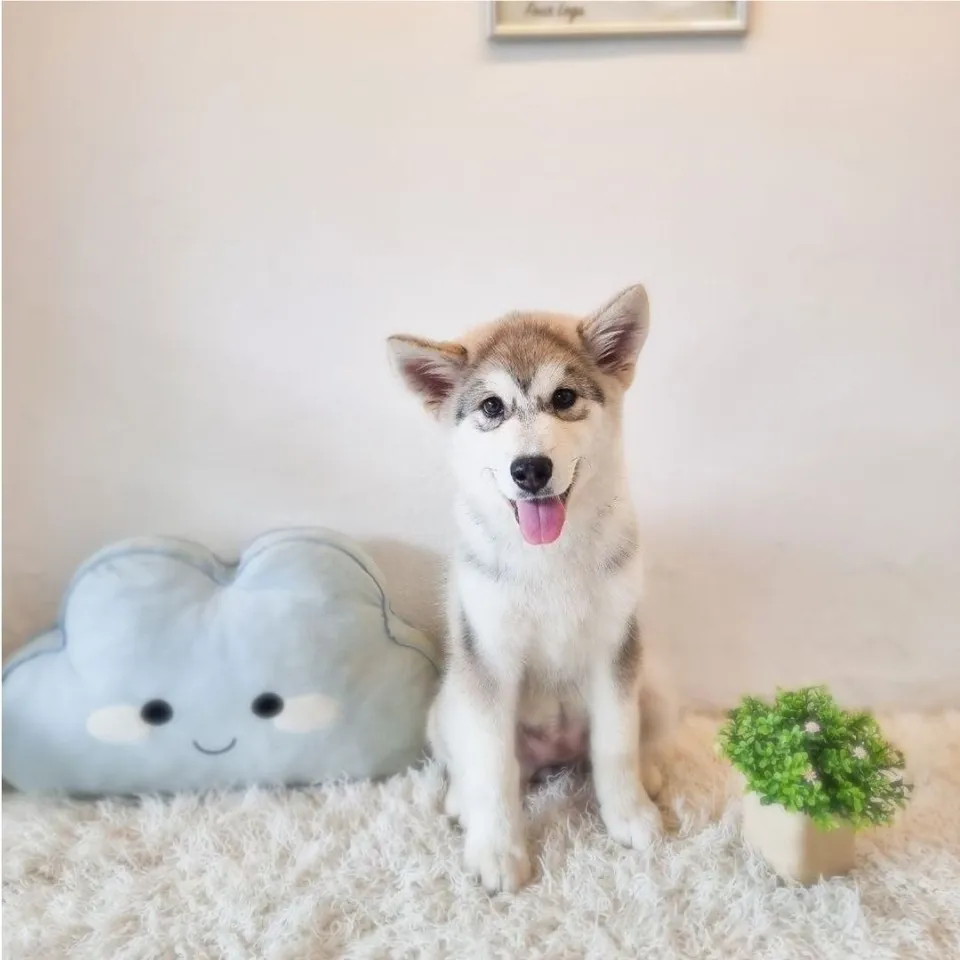
Available now
Alaskan Malamute puppies available now
Price searches for this breed usually end at an enquiry form. Every puppy here carries its price on the card instead. Please read the sections above first, because they matter more than the price does.
The 1 at the farm are listed below, each with its own photo, age, colour and price. The price on the card is the price for that puppy.
AvailableWhere these puppies come from
They are raised at William Goh Pet Farm, the AVS-licensed farm behind this website, licence BR25052. This breed is imported rather than bred here, and the paperwork travels with the dog. Come and meet one by appointment, and ask us the hard questions on this page in person.
The card price is the price
Not a starting point, and not a figure that moves once you are interested. the Alaskan Malamute puppies with us this week sits on one page under the same rule.
What a Alaskan Malamute looks like
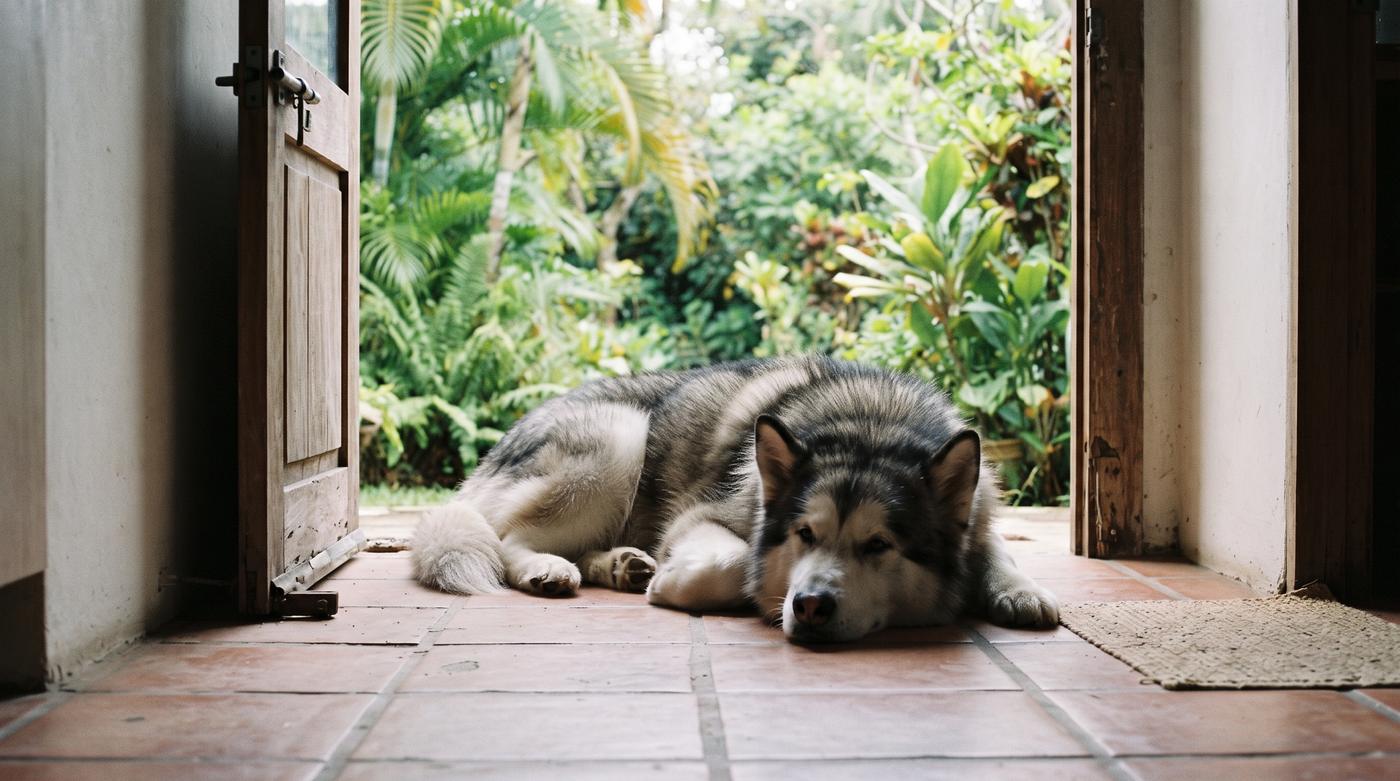
Nine illustrations of the breed: the coat colours a Alaskan Malamute comes in, the size it grows to, and the coat between grooming appointments. These are drawings of the breed, not photographs of puppies for sale. The puppy we actually have is further up this page, each with its own photograph.
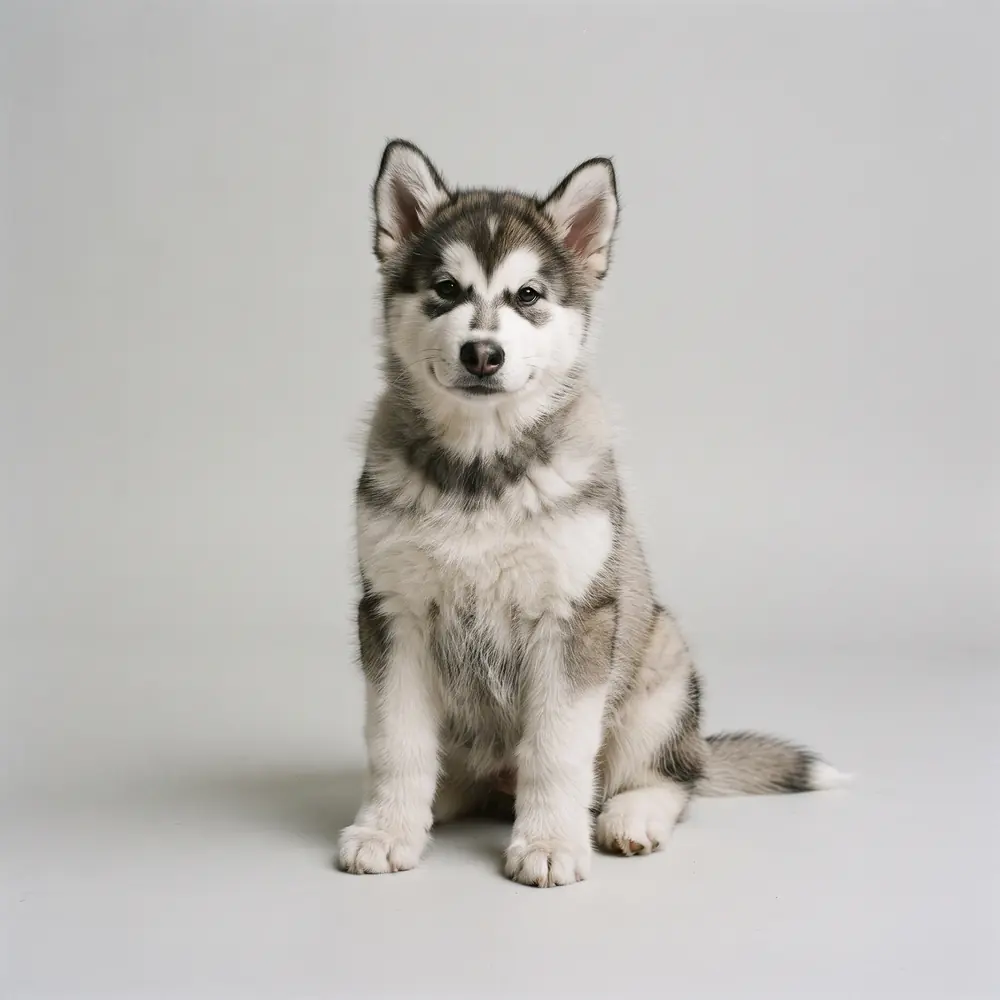
the breed standard colour coat Ask about similar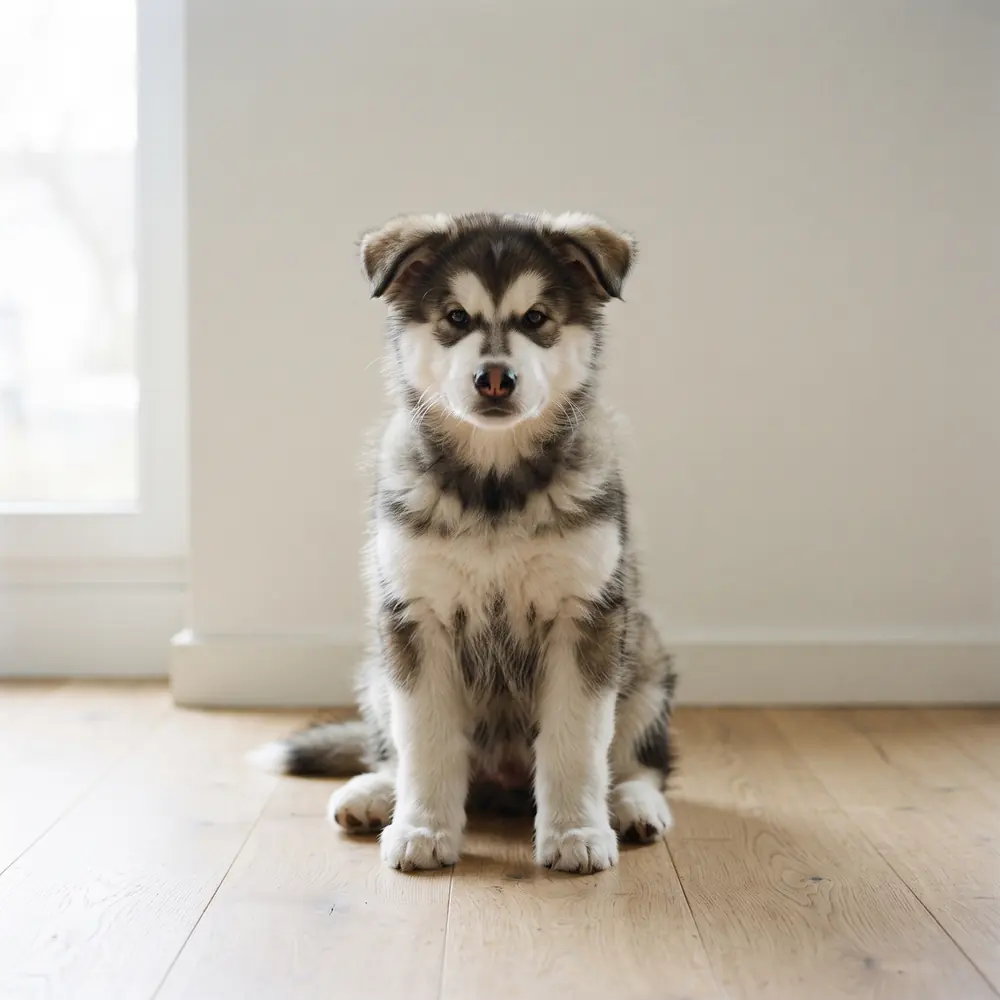
the breed standard colour coat Ask about similar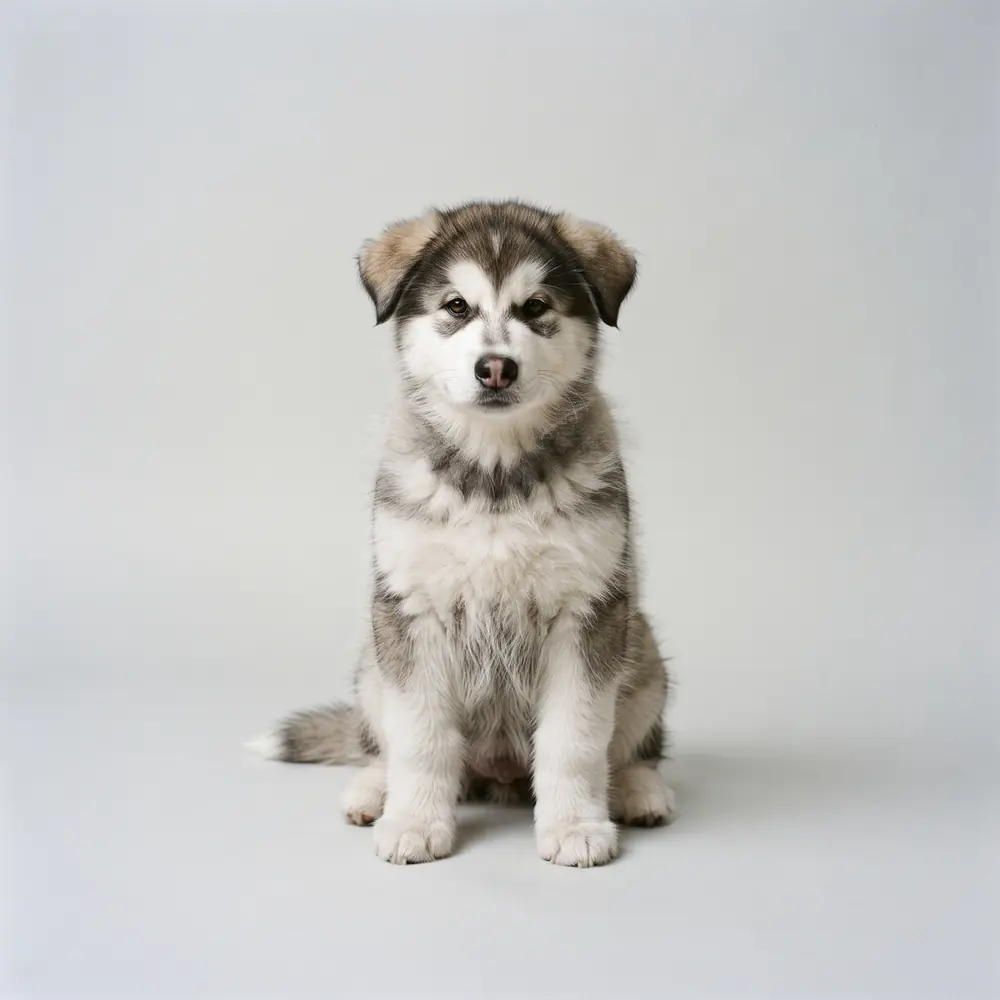
the breed standard colour coat Ask about similar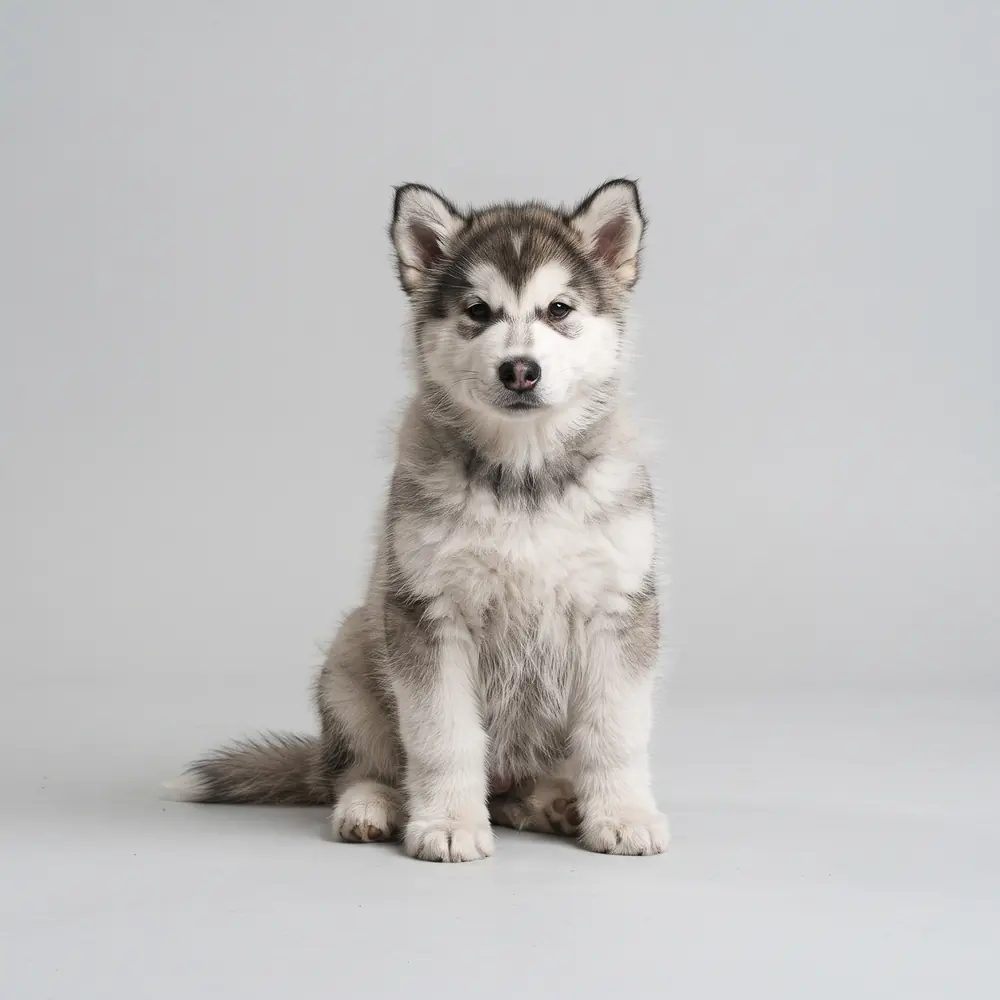
the breed standard colour coat Ask about similar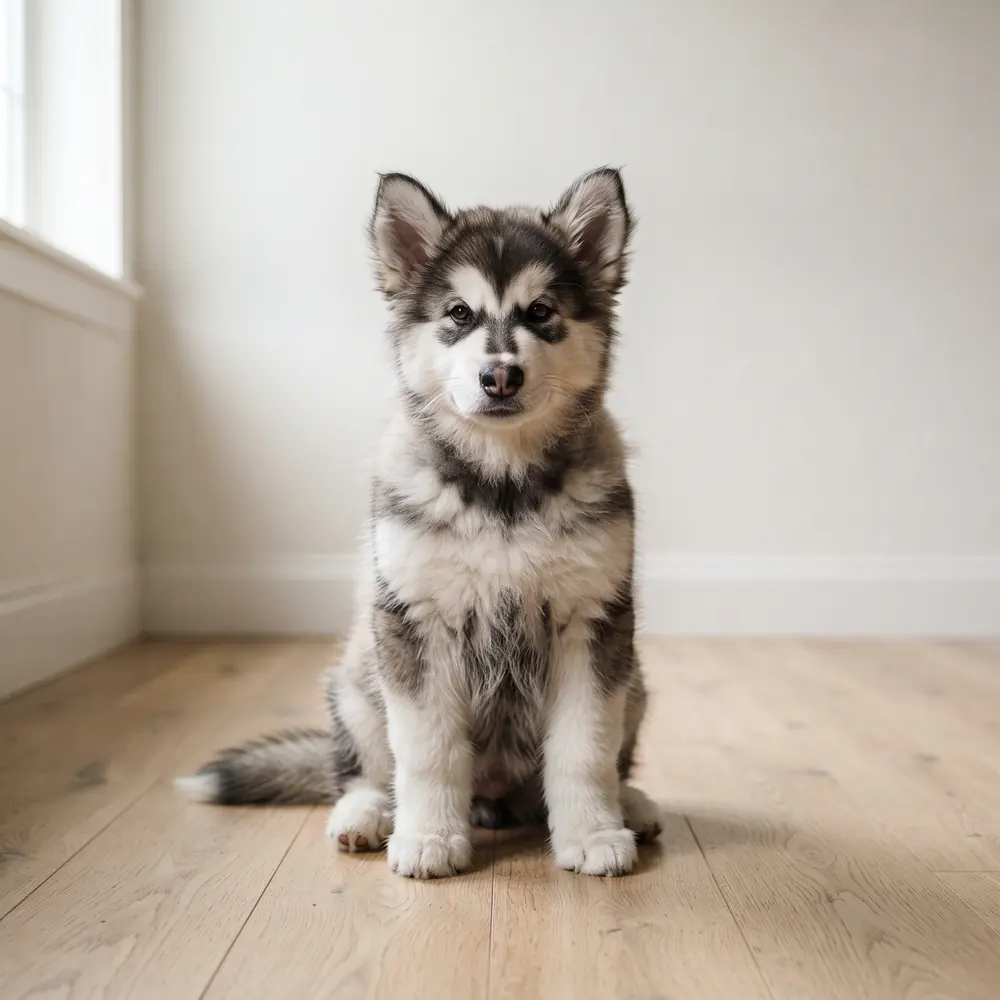
the breed standard colour coat Ask about similar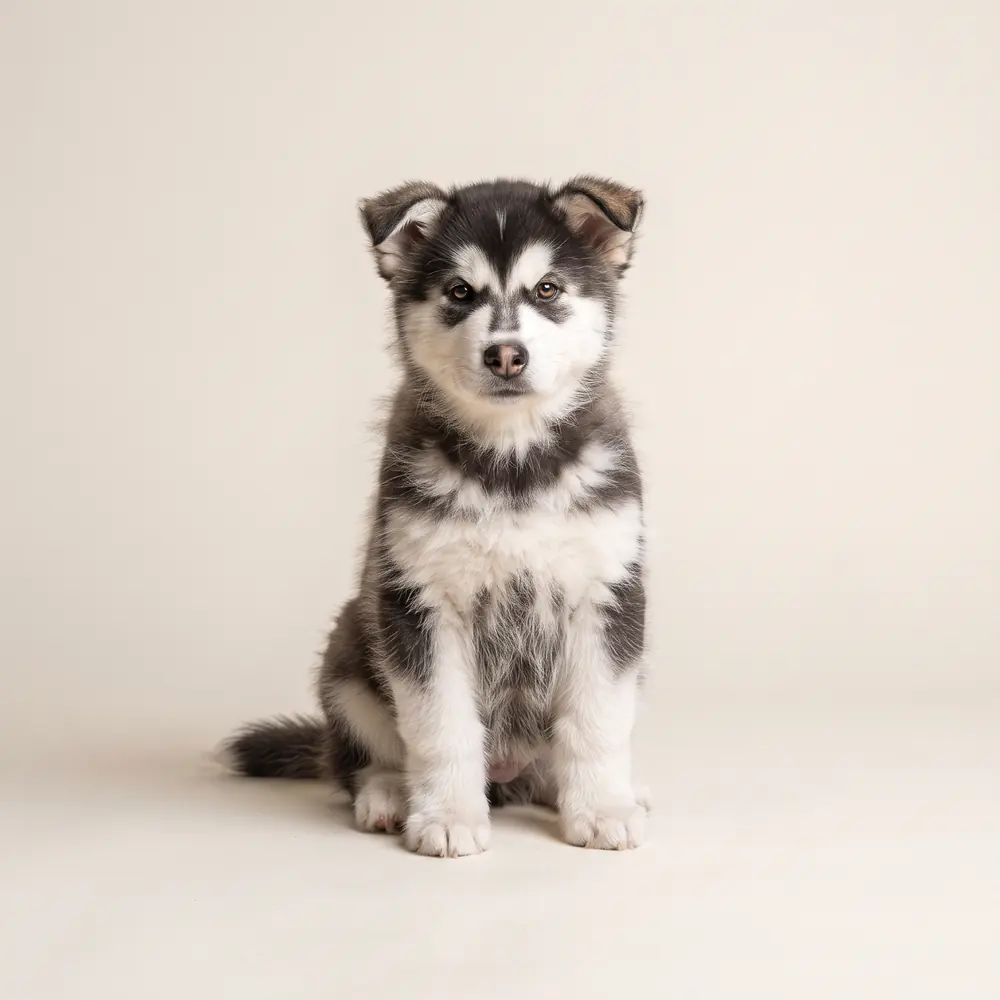
the breed standard colour coat Ask about similar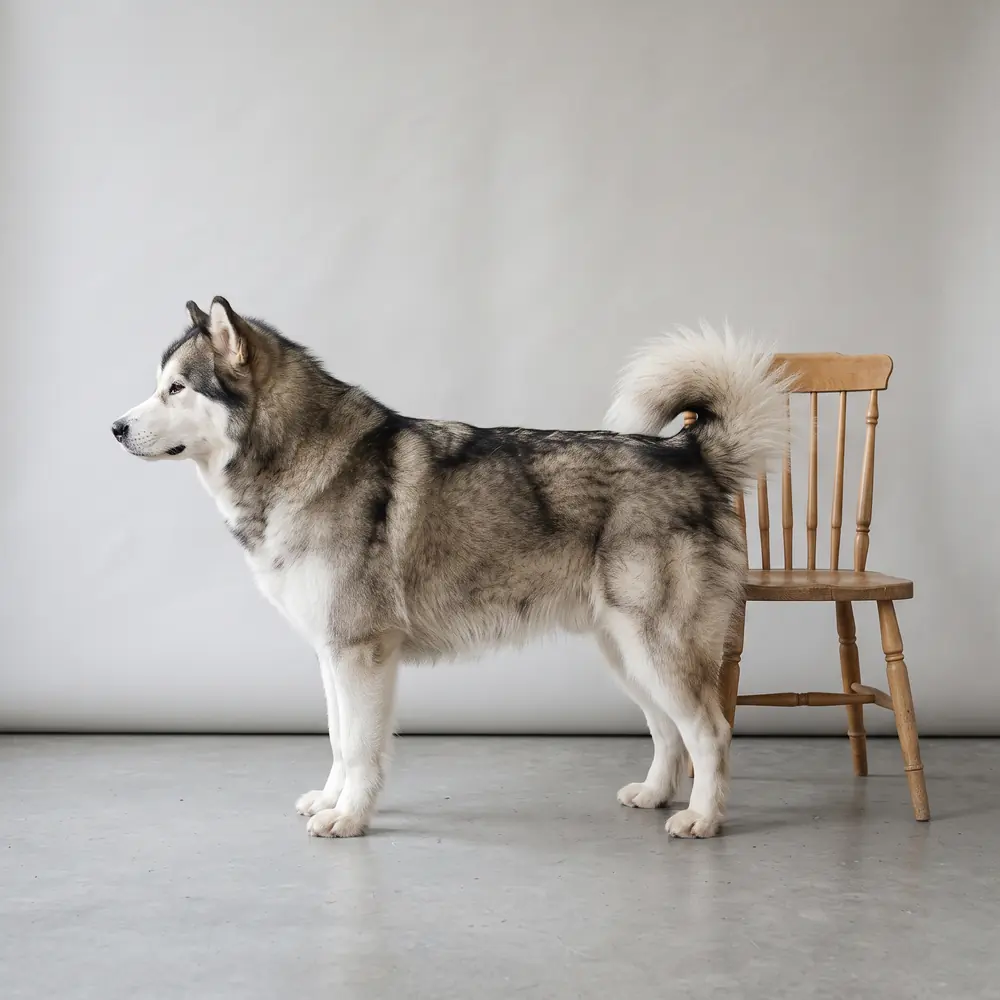
Grown, about 32–43 kg Ask about similar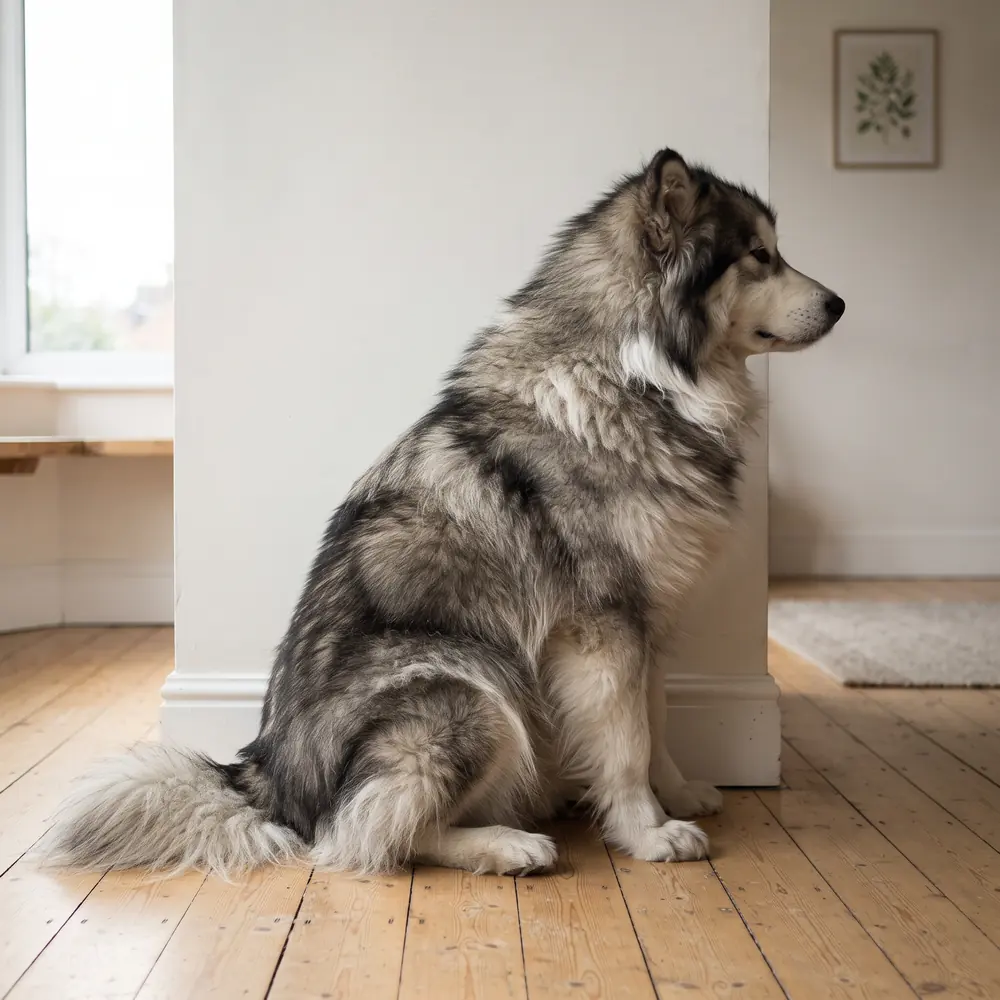
The coat between grooms Ask about similar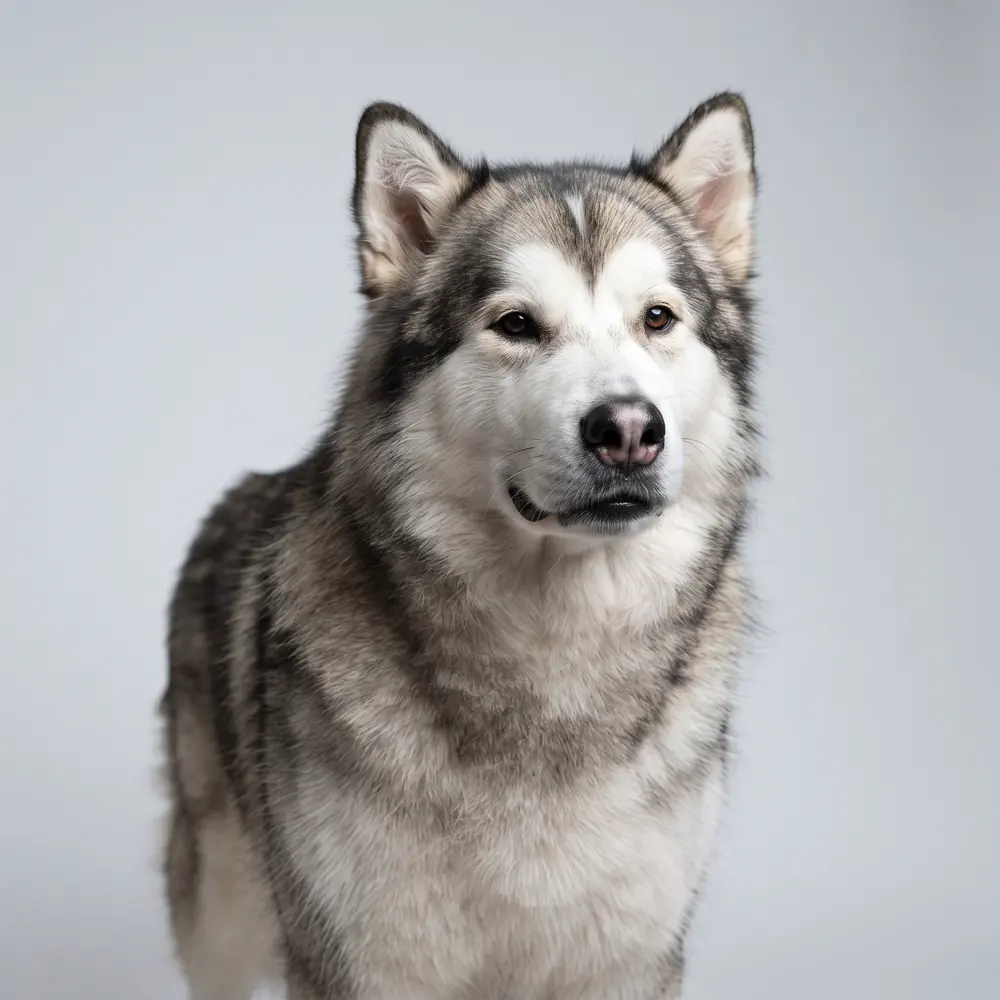
Head, ears and muzzle up close Ask about similar
Is Malamute HDB approved?
No. HDB approves 62 named breeds and the Alaskan Malamute is not among them, so it cannot be kept in a flat. That is the rule, and on this breed the rule is only half the answer.
What the rule does and does not decide
The rule decides where the dog may legally live. It says nothing about whether the dog will be well there, and for an arctic freighting breed in the tropics those are very different questions. where the Alaskan Malamute sits on HDB’s list sets out every name on it, and this one is not there.
Why we say landed rather than condo
Every other breed page on this site says condominium or landed property. On this one we would rather say landed, with real outdoor space, and explain why we are giving a stricter answer than the law requires.
- This is a 32–43 kg dog bred to haul loads over long distances, not a large pet.
- Its exercise is measured in hours a day, and in this climate those hours are restricted to early morning and late evening.
- It needs somewhere genuinely cool to retreat to, which a compact apartment often cannot provide.
A spacious condominium with a committed owner can work. A compact one usually cannot, and we would rather say so on a page where we are trying to sell you the dog.
Confirm your own situation against HDB’s own pet rules rather than resting on any seller’s reading of them, this one included.
What this breed needs in Singapore
This is a sled dog in the strict sense, bred to haul weight across snow rather than to keep anyone company. Everything that makes it remarkable in Alaska makes it demanding here, because it was built to conserve heat and to work all day.
What the household has to provide
The cool space is not optional
A Malamute needs somewhere genuinely cool it can take itself to, and it needs it every day rather than on the hottest ones. Air conditioning, or a properly shaded and ventilated indoor space with cool flooring, is part of the cost of this breed here.
A dog kept outdoors in this climate, or confined to a hot enclosed space, is not being looked after regardless of anyone’s intentions. That is the plainest way we can put it.
Exercise, and when it can happen
Hours a day, and only in the coolest parts of it. Early morning and late evening are the available windows and midday is not a judgement call, it is simply off the table.
The difficulty is that the windows are narrow and the requirement is not. A household that cannot commit to both ends of the day is going to end up with an under-exercised dog of considerable size and strength, and that is where the trouble starts.
Never shave the double coat
This is the mistake kind owners make in this climate, and it is worth being blunt about.
- A double coat insulates against heat as well as cold, so shaving removes the dog’s own protection.
- A shaved double-coated dog is usually hotter afterwards, with skin exposed to sun it never had to handle.
- The coat may regrow patchy or with the wrong texture, and in some dogs that is permanent.
Brushing the dead undercoat out is what actually helps the dog. Speak to a vet or a groomer who knows double coats before anyone reaches for clippers.
What heat stress looks like
Heavy laboured panting that does not settle when the dog stops, thick drooling, and a dog that slows or lies down on cool tile part way through a walk. Those are the early signs and they mean stop, not shorten.
A dog that becomes unsteady, stops responding or collapses needs a vet immediately rather than a rest in the shade.
Is a Malamute different than a Husky?
Yes, and the two are confused constantly. Both are northern sled breeds, and they were bred for different jobs, which is where every difference between them comes from.
A Siberian Husky was bred to pull light loads at speed. A Malamute was bred to haul weight slowly over distance. Racing dog against freighting dog.
| Alaskan Malamute | Siberian Husky | |
|---|---|---|
| Bred for | Hauling weight | Pulling light loads at speed |
| Adult size | 32–43 kg | 16–27 kg |
| On the HDB list | No | No |
| Coat | Heavy double | Double |
| Tail | Plumed, carried over the back | Brush, carried low at rest |
Which is stronger, husky or Malamute?
The Malamute, and not by a small margin. It was bred for hauling power rather than speed, which is exactly why it is the heavier and more solidly built of the two.
- It can pull an adult off their feet without meaning any harm by it.
- Loose-lead walking is a requirement on this breed rather than a refinement.
- It is taught in the first year, or it is a problem for the next ten.
If the husky is what you actually had in mind, our Siberian Husky page sets that breed out in the same detail. It is not on the approved list either.
Will a Malamute protect its owner?
No, and buying one for protection is a mistake worth heading off before money changes hands.
Alaskan Malamute owners will tell you the same thing. An Alaskan Malamute gentle enough to greet every stranger at the gate is not a guard dog. It was developed to work alongside people and to get along with other dogs on a team, which is close to the opposite temperament.
The size invites the assumption. A dog that greets everyone at the door is not a guard dog, and expecting it to become one is a disappointment the animal ends up paying for.
Do Malamutes bark a lot?
Not much barking, and a fair amount of noise. Like other northern breeds they howl, grumble and talk rather than bark, and a bored one is loud in a way that carries.
Can you leave a Malamute alone?
Built up to gradually, like any dog. We are not going to publish a number of hours, because it depends on the individual animal and on what it has been taught.
What is specific to this breed is the scale of the consequence. A bored Malamute is destructive in proportion to its size, and digging and chewing are inherited behaviours rather than misbehaviour to be corrected out.
Are Malamutes high maintenance dogs?
Yes, more than anything else on this site, and the honest answer is worth more here than the one that sells a puppy.
- The coat sheds heavily all year and blows out in bursts twice a year.
- Exercise is measured in hours a day, inside narrow cool-weather windows.
- The climate management is daily and never stops.
- The dog is strong enough that training is a safety matter rather than a convenience.
The independent streak
Malamutes are intelligent and entirely capable of understanding what you want. Whether they do it is a separate question, and that is not stubbornness so much as a breed developed to make its own decisions on a trail.
People who enjoy this breed tend to find that funny. People who wanted an obedient dog find it maddening, and it is worth knowing which of those you are beforehand.
Who should not buy an Alaskan Malamute
This is the longest such list on our site and we mean every line of it.
- Anyone in a flat. It is not permitted and there is no version of this dog that is.
- Anyone in a compact home without a genuinely cool space for the dog.
- First-time owners. This is not the breed to learn on.
- Anyone who cannot exercise a large dog at both ends of every day.
- Anyone who wants a guard dog, or an obedient one.
- Anyone who dislikes dog hair, in quantity, permanently.
If any of those describes you, please buy a different breed. the Alaskan Malamute beside every other breed marks which of ours are HDB-approved, and we would much rather sell you one of those.
Alaskan Malamute Singapore: rescue, rehoming and adoption
People searching Alaskan Malamute Singapore rescue are asking a fair question, and we are the wrong people to ask. We sell puppies and we do not rehome adults.
The same goes for anyone looking at Malamute Singapore for adoption rather than for sale. Adoption is a legitimate route and it is not one we operate.
The Alaskan Malamute dog breed was developed by the Mahlemut people of north-western Alaska to freight loads across snow. Nothing about that job was designed with this island in mind.
What we can tell you honestly is that the Alaskan Malamute is rare in Singapore, and that large northern breeds still come up for rehoming here more often than their numbers would suggest. A dog of this size and drive that turns out to be more than a household expected is difficult to place again.
Where the cost of this breed actually sits
If adopting matters more to you than the breed does, our adoption guide sets out the route here. Saying so costs us a sale, and on this breed in particular we think it is the right thing to put on the page.
Health and lifespan
Hip dysplasia, elbow dysplasia and eye conditions including cataracts are the recognised concerns in the breed, as they are in most large dogs. Bloat is a genuine emergency in a deep-chested dog of this size and is worth reading about before you own one.
Two conditions are more specific and are the ones to ask about by name: inherited polyneuropathy and chondrodysplasia. Responsible breeders test for both.
Naming conditions is not a prediction about your puppy. It is the list to put to a breeder, so that a general assurance that the parents are healthy is not the end of the conversation.
What is the lifespan of a Malamute?
Our own breed record gives 10–14 years, which is normal for a large breed. It is also a long time to sustain the exercise, the grooming and the climate management, and that is the part worth planning around.
What to ask a breeder
- Were the parents tested for polyneuropathy and chondrodysplasia, by name.
- What were the hip and elbow scores.
- Can you see the mother, in the place the litter is kept.
- Is the seller licensed, and what is the licence number.
- For an imported dog, can you see the paperwork that travelled with it.
What an Alaskan Malamute costs here
Ours are $6,988–$7,500, which is the range of the ones listed above rather than a headline figure, and it moves as the roster turns over.
What the price covers
- The vet health check, and vaccinations to date with deworming at each visit.
- Microchipping, health certification and ancestry records.
- The record booklet, with the dates written in it, handed over with the puppy.
What it does not cover is the part that matters more. Grooming a coat this size, feeding a dog this size, and cooling a home for a decade are all larger numbers than the purchase, and anyone buying this breed should have added them up first.
Homecoming at about week 9
Core doses at weeks 6 and 8 on the farm, homecoming about a week after the second, and the third at week 12 with your own vet. An optional fourth at week 16 follows if your vet advises it. the vaccination weeks a Alaskan Malamute puppy follows sets out the whole first year.
Where the information on this page comes from
- The puppies, the photographs and the prices: the live roster sheet, synced October 2026. Every card is a real puppy at the farm and the price on the card is the price. The range on this page is read from the site’s breed data, which is itself set from the listing rather than typed.
- The HDB answer: the 62-breed list published on our own HDB page, checked for this page. The Alaskan Malamute does not appear on it. Confirm your own dog against HDB’s own pet rules, confirmed in a browser on 25 August 2026 since the host blocks automated requests.
- The housing advice, which is stricter than the rule: ours. The law only excludes flats. We say landed property with real outdoor space because a compact home cannot honestly meet what this breed needs here, and we would rather lose the sale than pretend otherwise.
- The climate guidance: first-party, from keeping large double-coated breeds at the farm in this climate. The instruction never to shave the coat is the one we would most like a reader to take away.
- Adult size and lifespan: our own breed record, 32–43 kg and 10–14 years. The Husky comparison is read from our own records for both breeds, which is why it gives figures rather than impressions.
- Who we are: Puppy Singapore is the online marketplace of William Goh Pet Farm, the licensed farm where these puppies are raised. Our breeder licence is BR25052, checkable on the AVS public register rather than something to take our word for.
- Puppy vaccination: the canonical weeks used across this site, core doses at weeks 6 and 8, homecoming at about week 9, the third at week 12 and an optional dose at week 16.
- What we deliberately do not do here: claim this breed suits a first-time owner or a small home; claim it is protective, because it greets strangers; suggest clipping the coat for the heat, which is the opposite of the right advice; publish a number of hours it can be left alone; or name any competing seller, shop, forum or social account. We also do not repeat other people’s difficulties with this breed as a selling device. Those are real households and real animals, and the mechanism above is the part that is actually useful to you.
Roster synced October 2026. Information last checked 26 August 2026.
Alaskan Malamutes in Singapore, answered
Is Malamute HDB approved?
No. HDB approves 62 named breeds and the Alaskan Malamute is not among them, so it cannot be kept in a flat. Confirm your specific dog with HDB rather than relying on any seller, us included. The rule is only half the answer here though, because this breed needs considerably more room and a cooler environment than the rule itself requires anyone to provide.
Can an Alaskan Malamute live in a condominium?
Legally yes, and honestly it depends on the condominium. Our other breed pages say condominium or landed, and for this one we would rather say landed property with real outdoor space. A dog of 32 to 43 kg bred to haul loads all day needs more than a compact apartment can offer, and a cool indoor area it can retreat to is not a comfort here but a requirement.
Is a Malamute different than a Husky?
Yes, though they are constantly confused. A Siberian Husky is the lighter, faster dog, bred to pull light loads at speed. A Malamute is the heavy freighting dog, bred to haul weight slowly over distance, and it is substantially larger with a broader head and a plumed tail carried over the back. The Malamute is also the more independent of the two. Neither appears on HDB’s approved list.
Which is stronger, husky or Malamute?
The Malamute, and not by a small margin. It was bred specifically for hauling power rather than speed, which is why it is heavier and more heavily built. In practical terms that means a dog capable of pulling an adult off their feet, so loose-lead walking is a requirement rather than a refinement.
Will a Malamute protect its owner?
No, and buying one for protection is a mistake. Malamutes are typically friendly with strangers and were never bred to guard anything. Their size invites the assumption, but a dog that greets everyone at the door is not a guard dog, and expecting it to become one leads to disappointment that the animal pays for.
Do Malamutes bark a lot?
Not much barking, quite a lot of noise. Like other northern breeds they howl, grumble and talk rather than bark, and a bored one is loud in a way that carries. In a home with close neighbours that is worth considering before you buy.
Can you leave a Malamute alone?
Built up to gradually, like any dog, and we are not going to publish a number of hours because it depends on the individual animal and on what it has been taught. What is specific to this breed is that a bored Malamute is destructive on a scale that matches its size, and digging and chewing are inherited behaviours rather than misbehaviour.
Are Malamutes high maintenance dogs?
Yes, more than anything else on this site. The coat sheds heavily and blows out in bursts, the exercise requirement is measured in hours rather than in walks, and in this climate every part of that has to be scheduled around the heat. That is the honest answer rather than the one that sells a puppy.
Should I shave my Malamute in this heat?
No. A double coat insulates against heat as well as against cold, so shaving removes the dog’s own protection and usually leaves it hotter rather than cooler, with skin exposed to sun it was never meant to handle. The coat may also regrow patchy or with the wrong texture, permanently in some dogs. Brush the dead undercoat out instead and speak to a vet or a groomer who knows double coats before anyone reaches for clippers.
What is the lifespan of a Malamute?
Our own breed record gives 10–14 years. That is a normal span for a large breed, and it is a long time to sustain the exercise, the grooming and the climate management this dog needs.
How much is an Alaskan Malamute in Singapore?
Ours are $6,988–$7,500, which is the range of the puppies listed on this page rather than a headline figure. That includes the vet health check, vaccinations to date, deworming, microchipping, health certification and ancestry records. The price on each card is the price for that puppy, and the cost of keeping one is considerably higher than the cost of buying one.
When can an Alaskan Malamute puppy come home?
At about week 9. Core vaccinations are given at weeks 6 and 8 at the farm, with deworming at each visit, and homecoming follows about a week after the second dose. The third is due at week 12 with your own vet, and an optional fourth at week 16 if your vet advises it.