
 Available
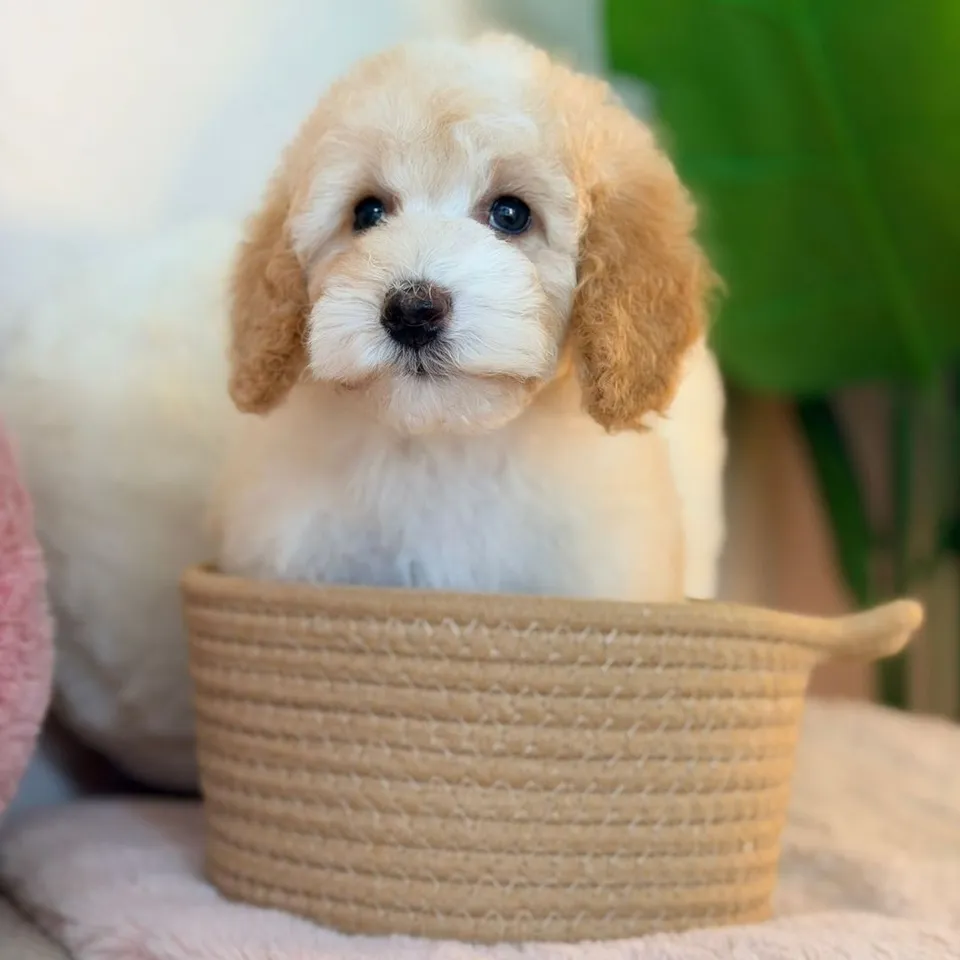
Cream Poochon puppy
Female4 monthsHDB approved
$6,500
Ask about Cream Poochon puppyCream Poochon puppy: photos, price and ageThe Poochon, short answer: $5,388–$5,988 from an AVS-licensed farm, a Bichon Frise crossed with a Poodle, and both of those parent breeds are named on HDB’s list of 62. It weighs 4–8 kg grown and lives 12–15 years.
One caveat decides whether that argument holds for your dog, and it is in the next section rather than buried at the bottom.
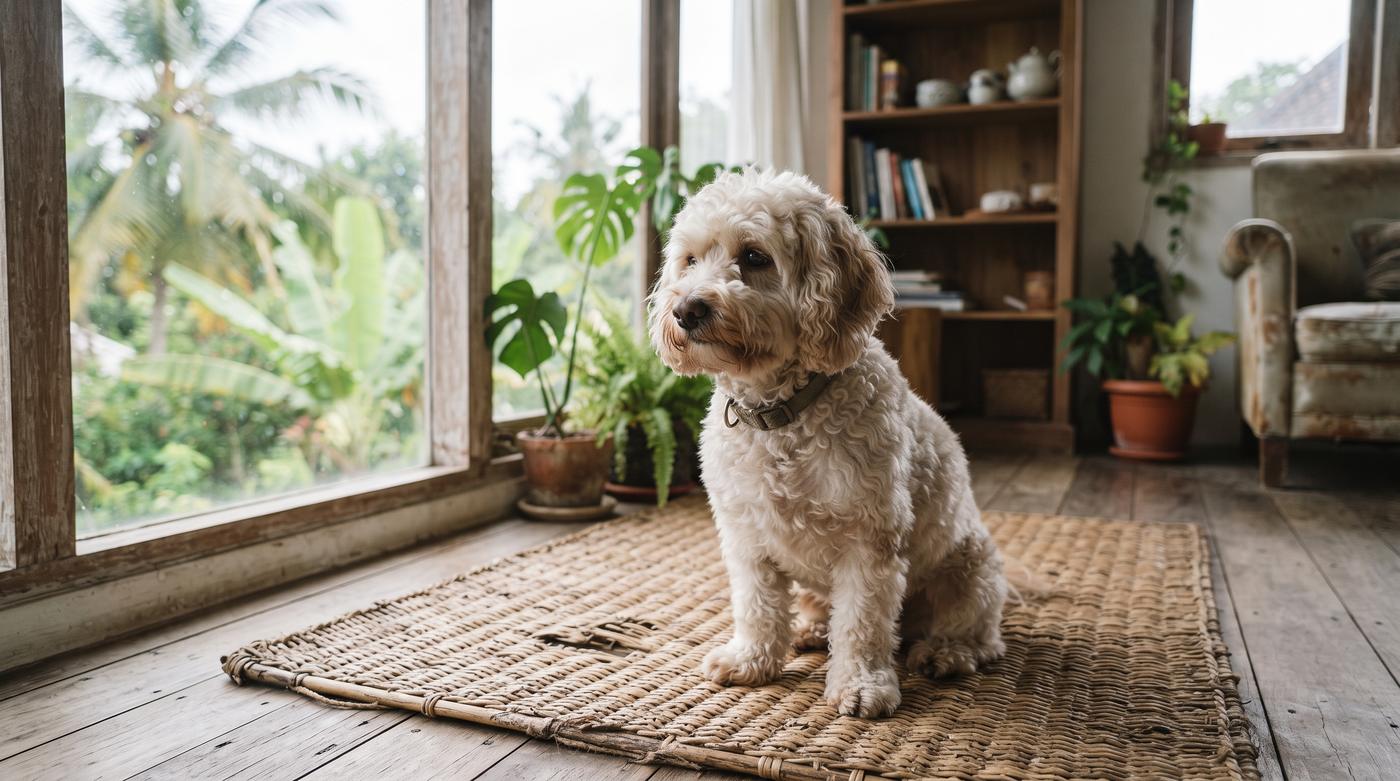
Price searches for this cross usually end at an enquiry form. Every puppy here carries its price on the card instead.
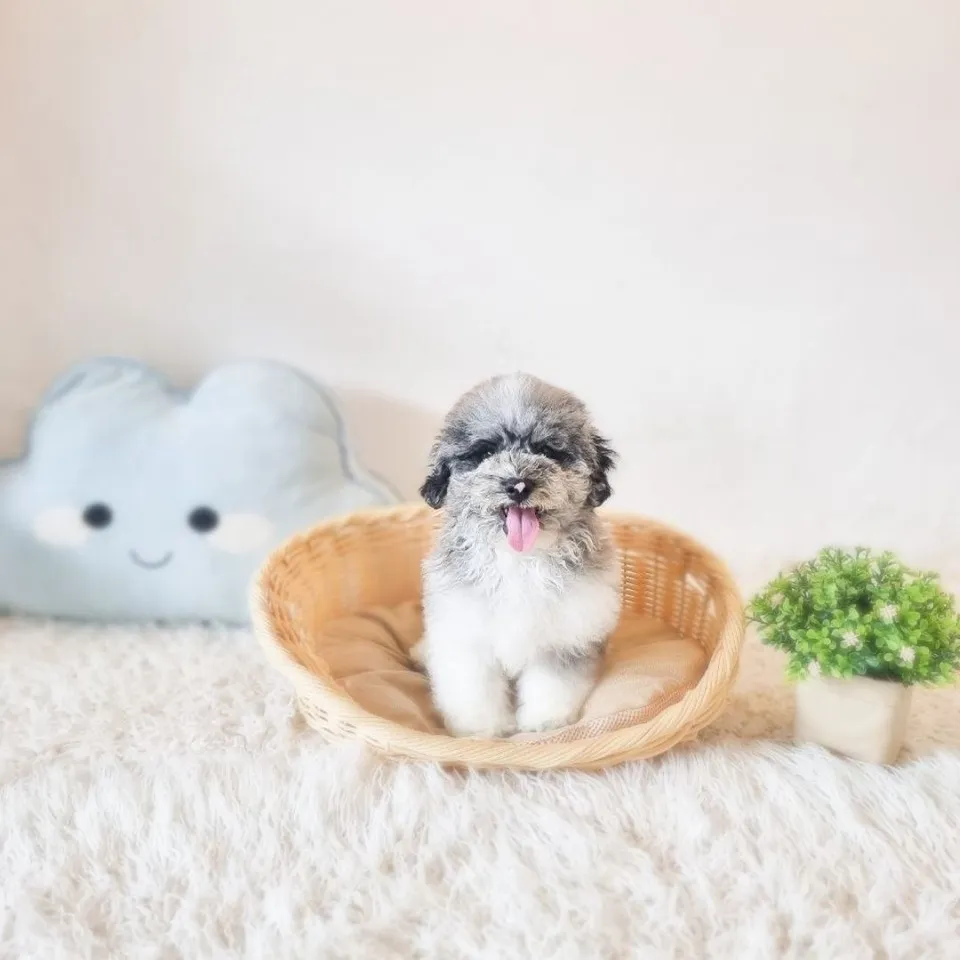
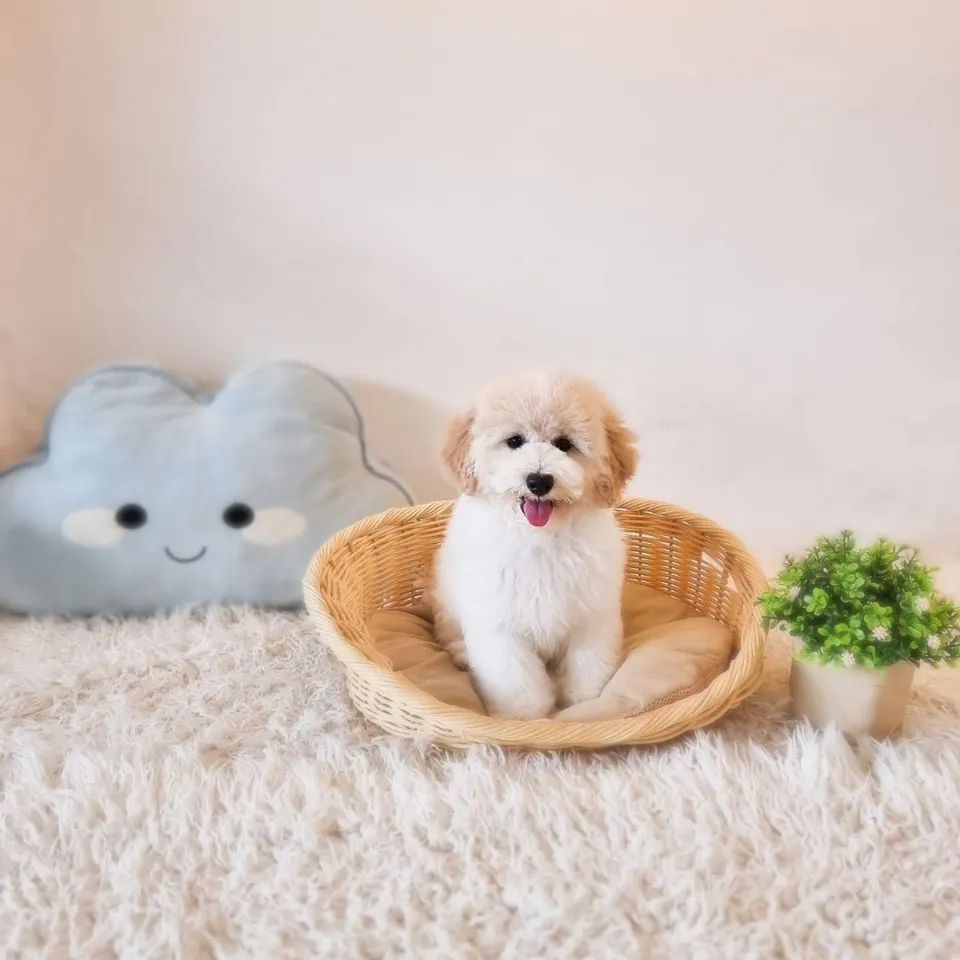
The 7 of them now at the farm are listed below, each with its own photo, age, colour and price. The price on the card is the price for that puppy.
Available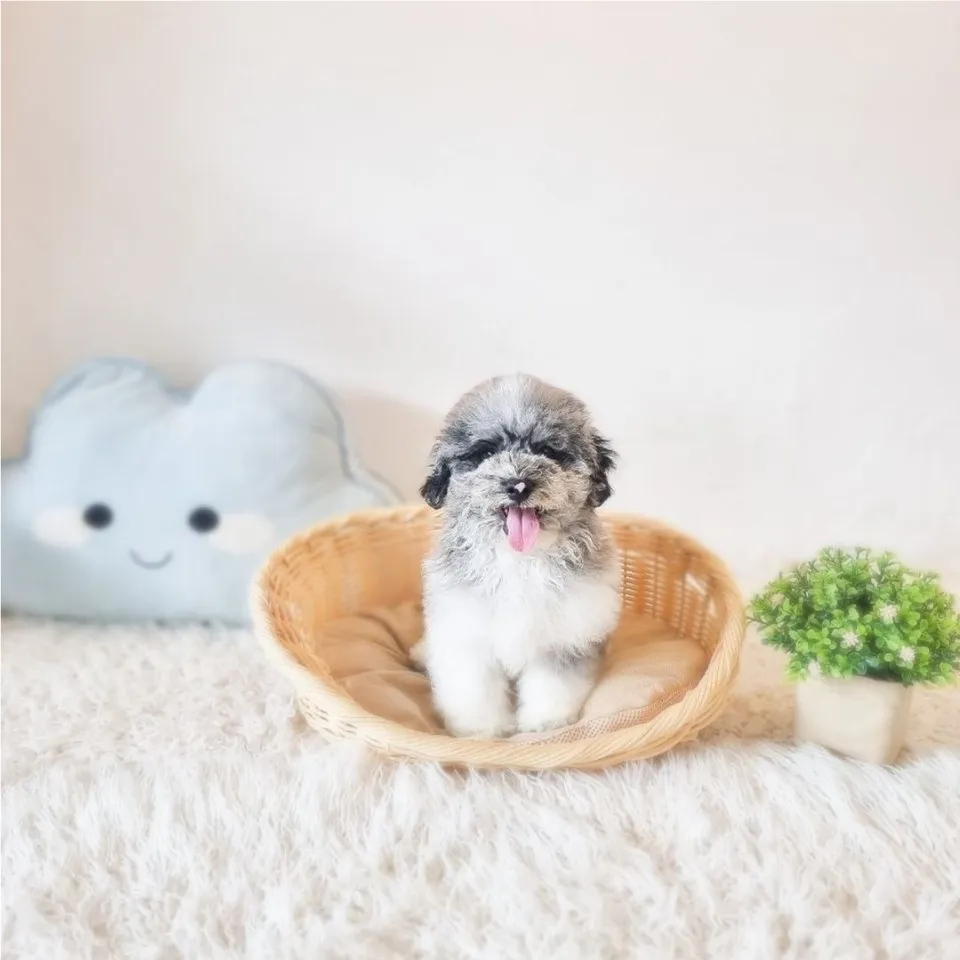 Available
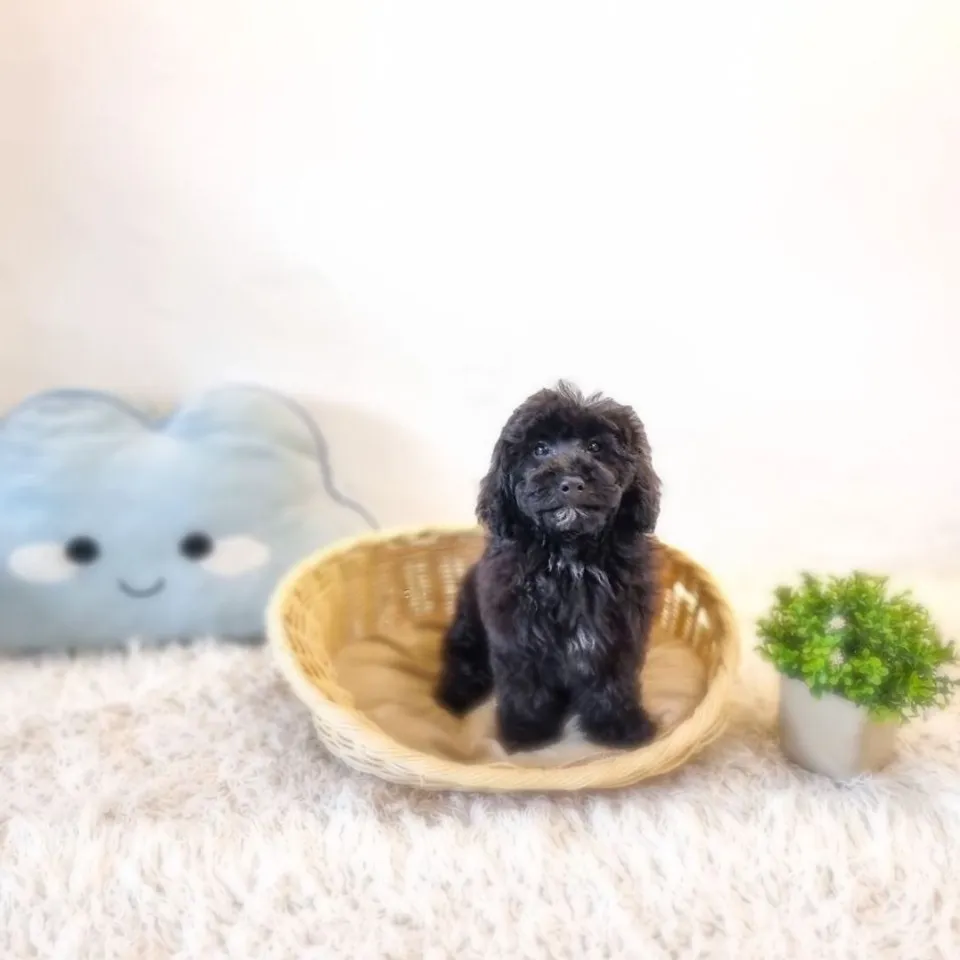 Available
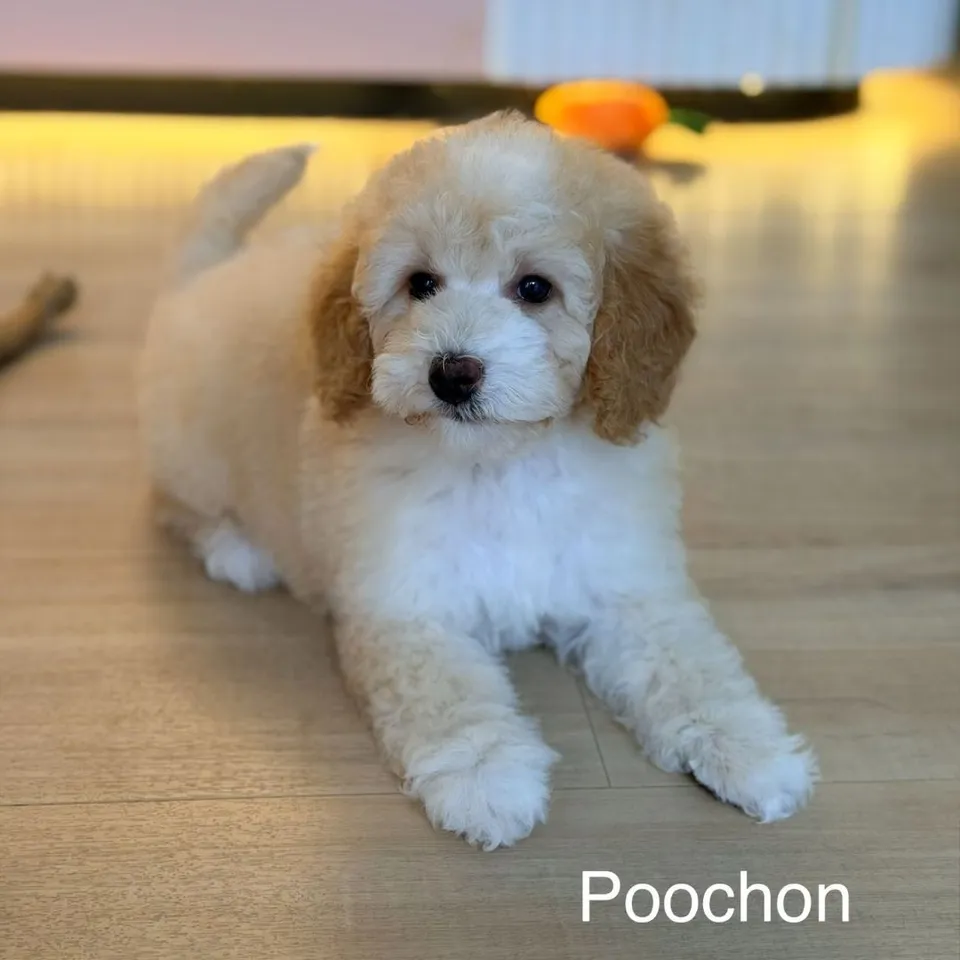 Available
 Available
 Available
 Available
They are held at our AVS-licensed farm, licence BR25052, in the Sungei Tengah cluster, and you can come and meet one by appointment before anything is decided. Several of the current litters came in from abroad rather than being bred here, and we will tell you which is which for the puppy you are looking at.
Not a starting point, and not a figure that moves once you are interested. the Poochon puppies with us this week sits on one page under the same rule.
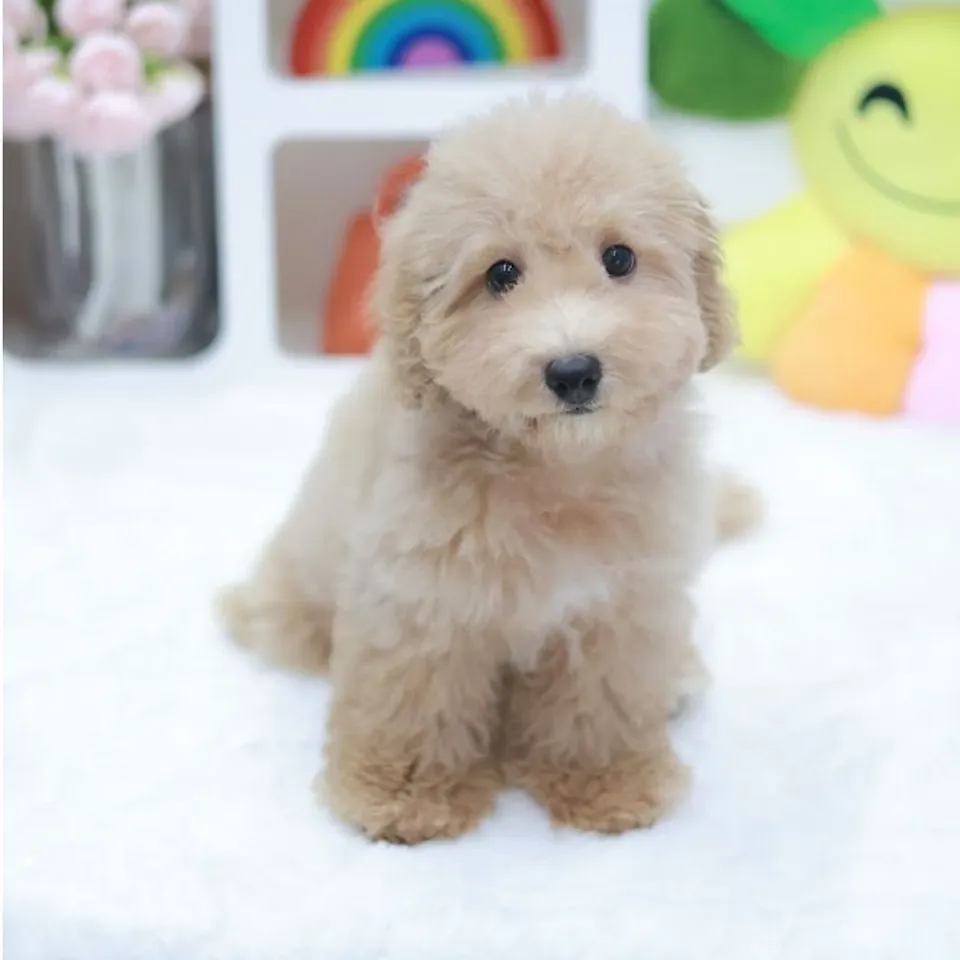
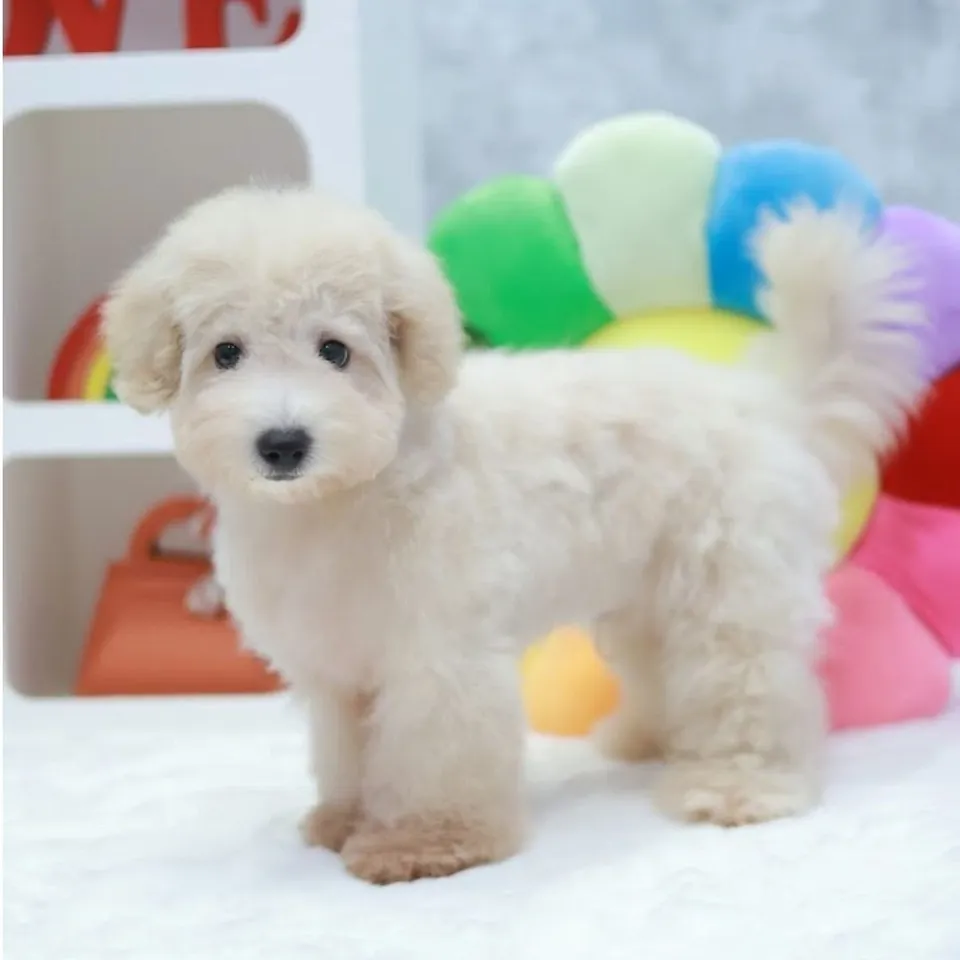
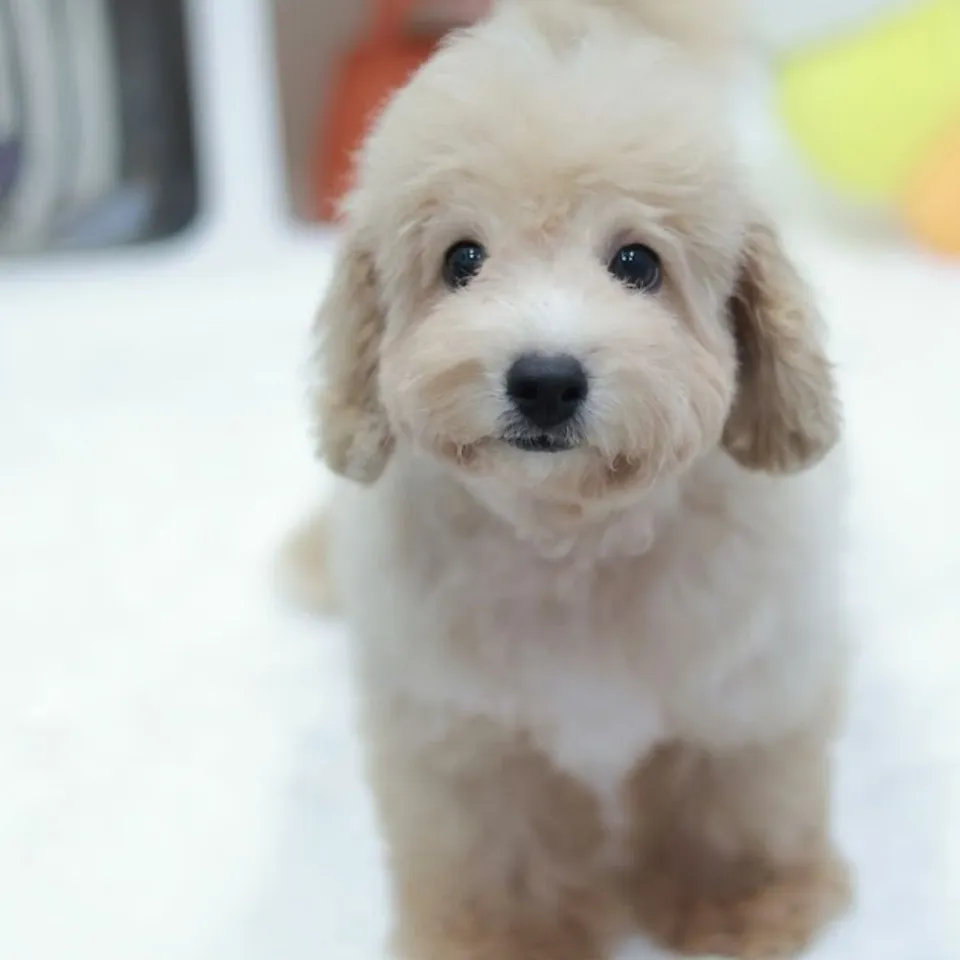
Nine illustrations of the breed: the coat colours a Poochon comes in, the size it grows to, and the coat between grooming appointments. These are drawings of the breed, not photographs of puppies for sale. The 7 puppies we actually have are further up this page, each with its own photograph.
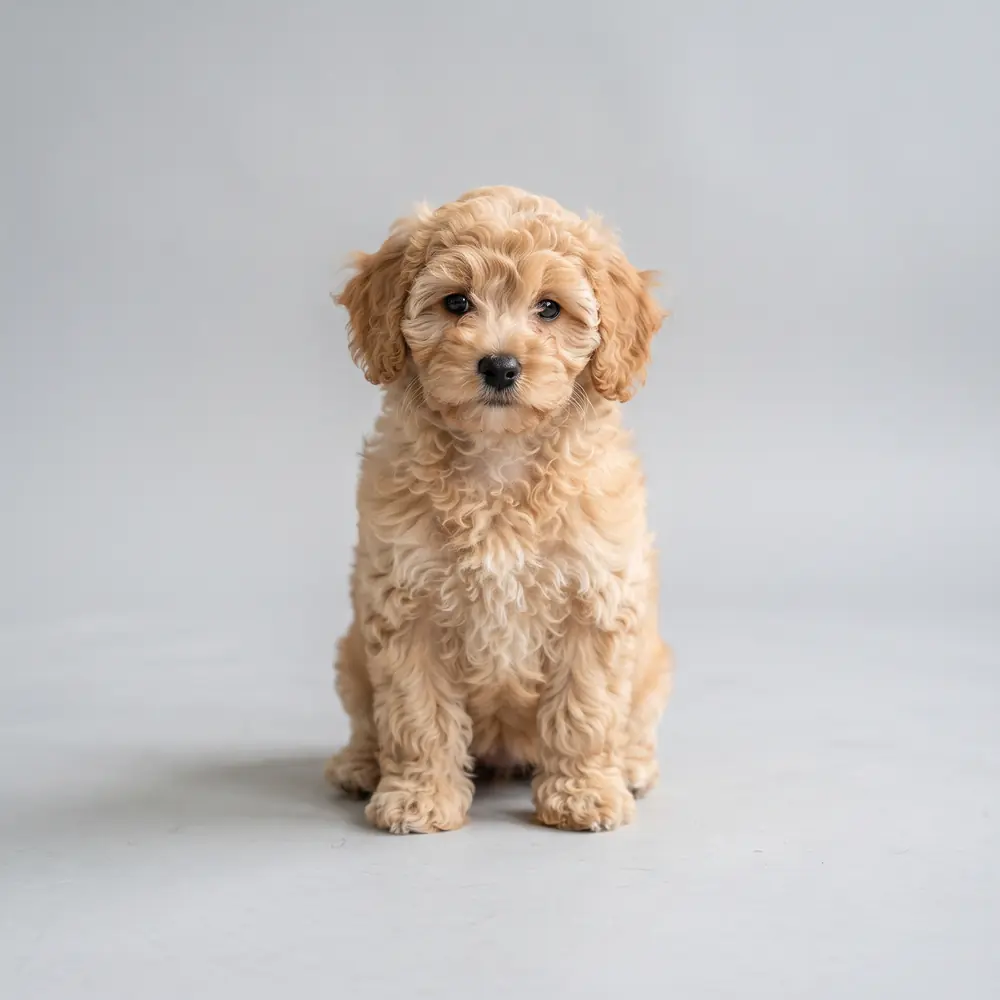
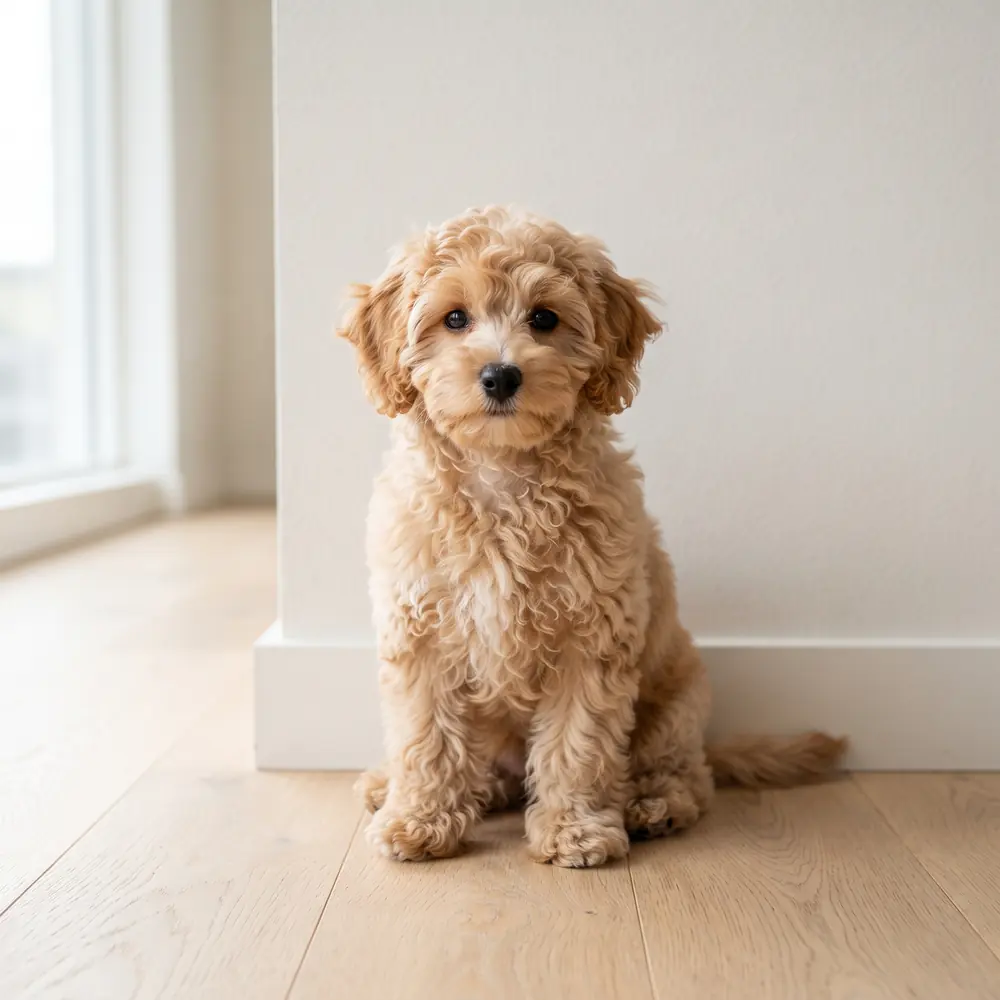
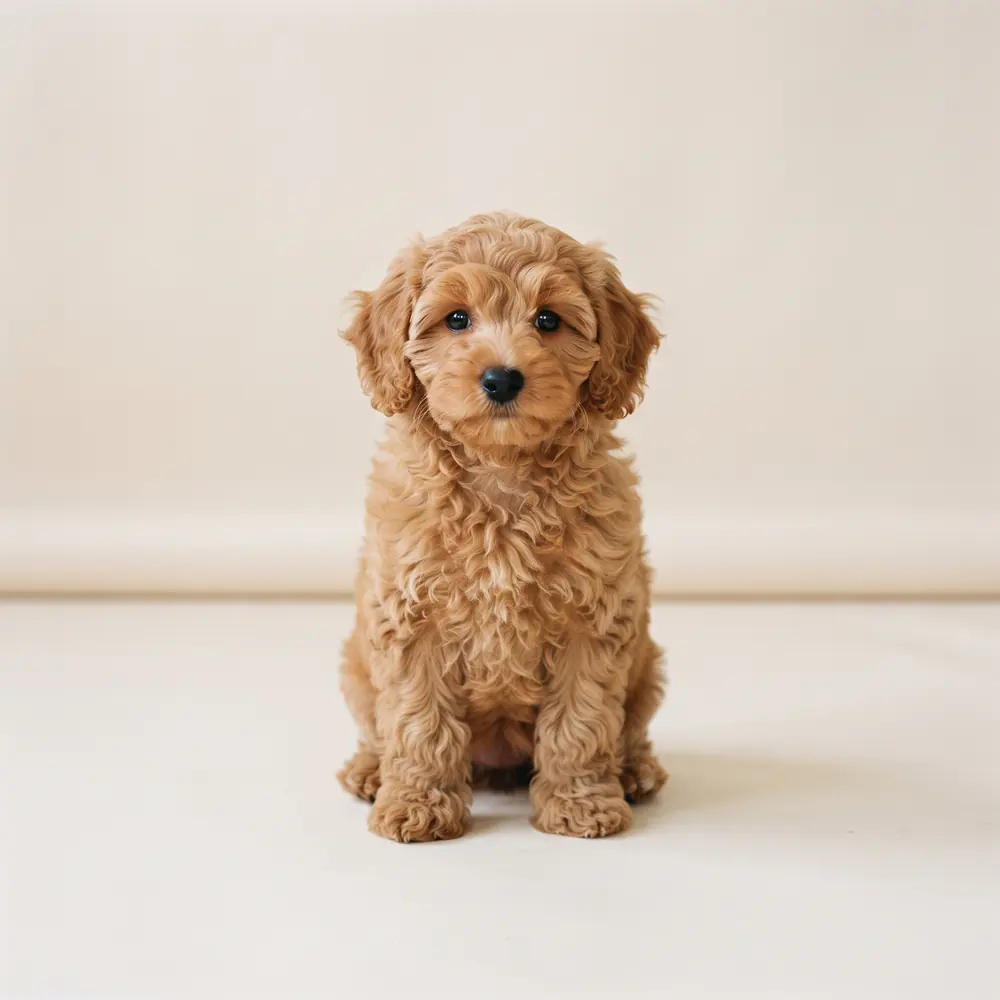
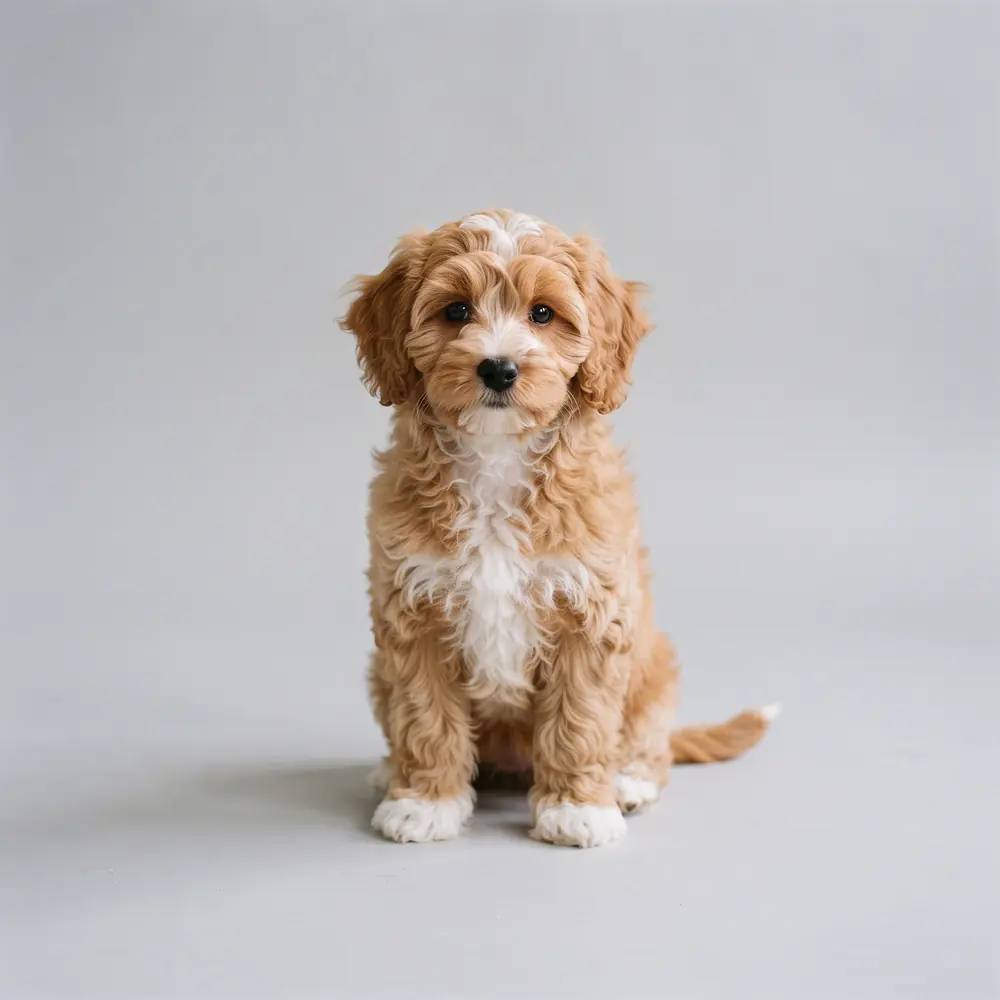
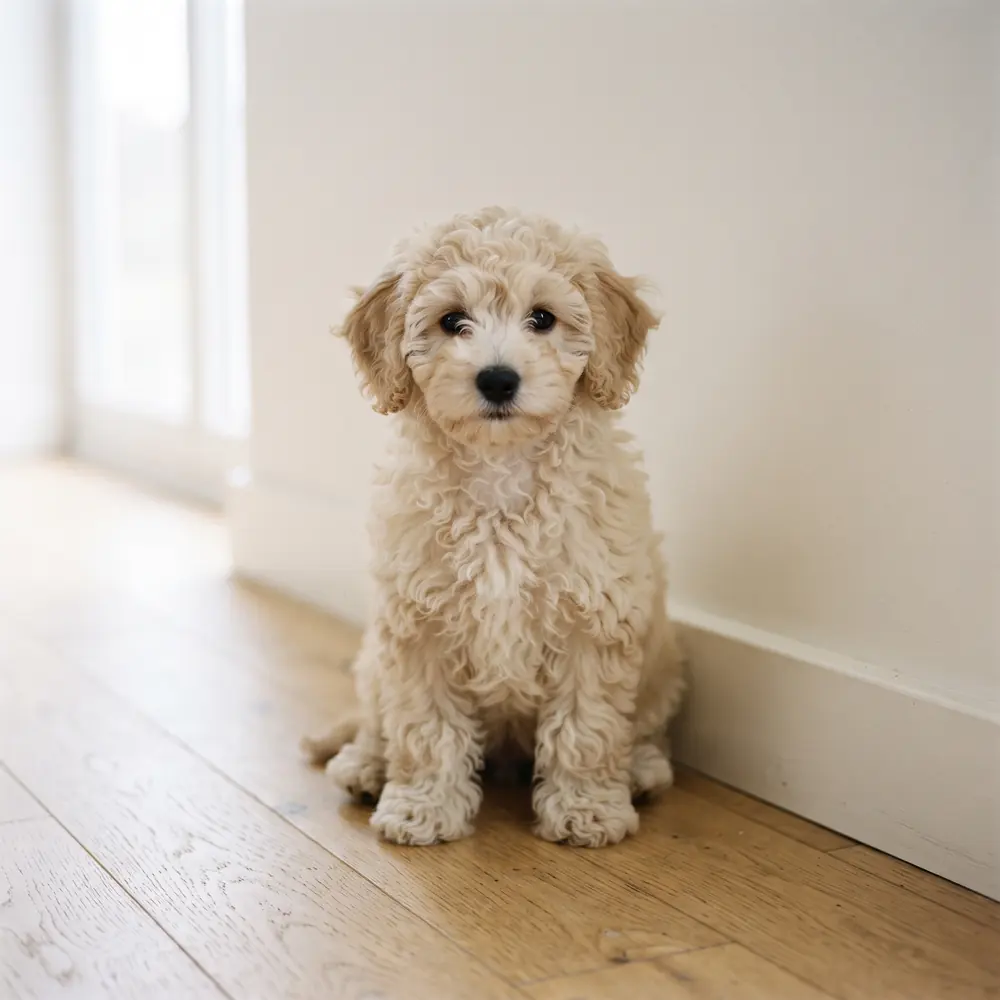
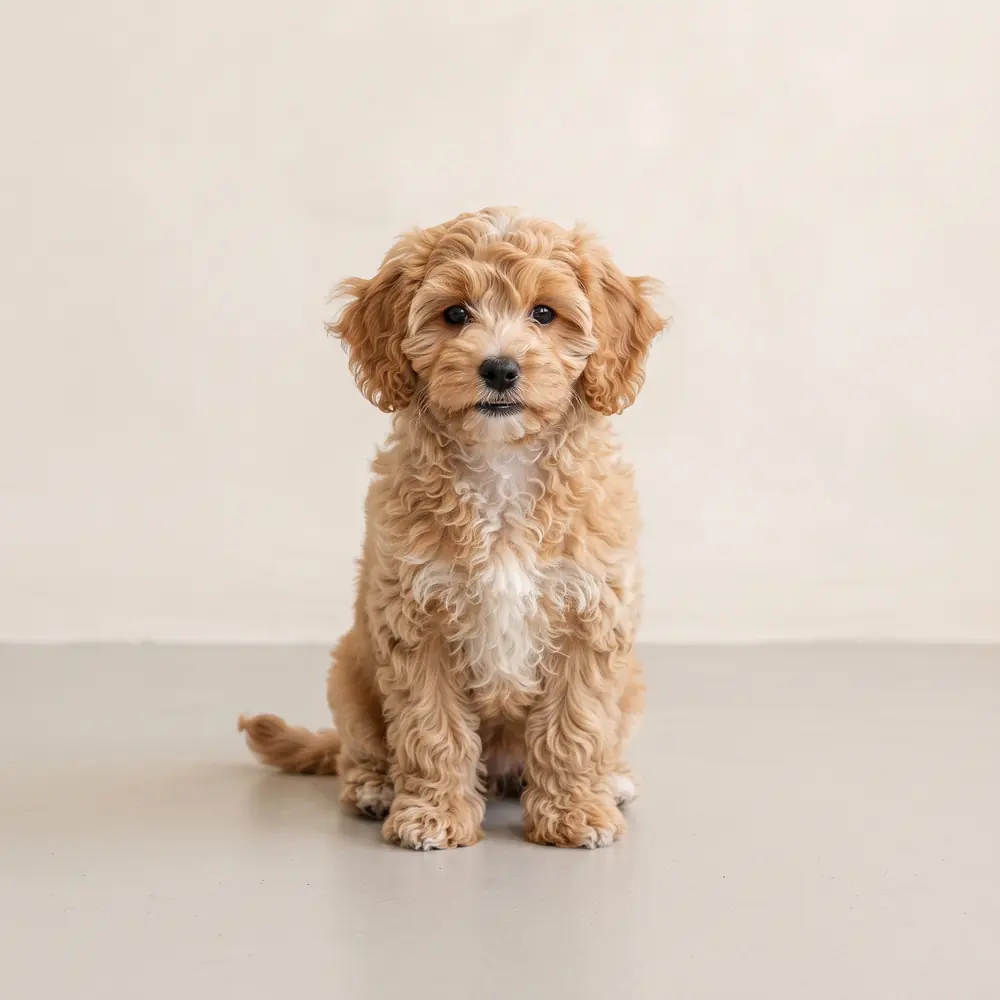
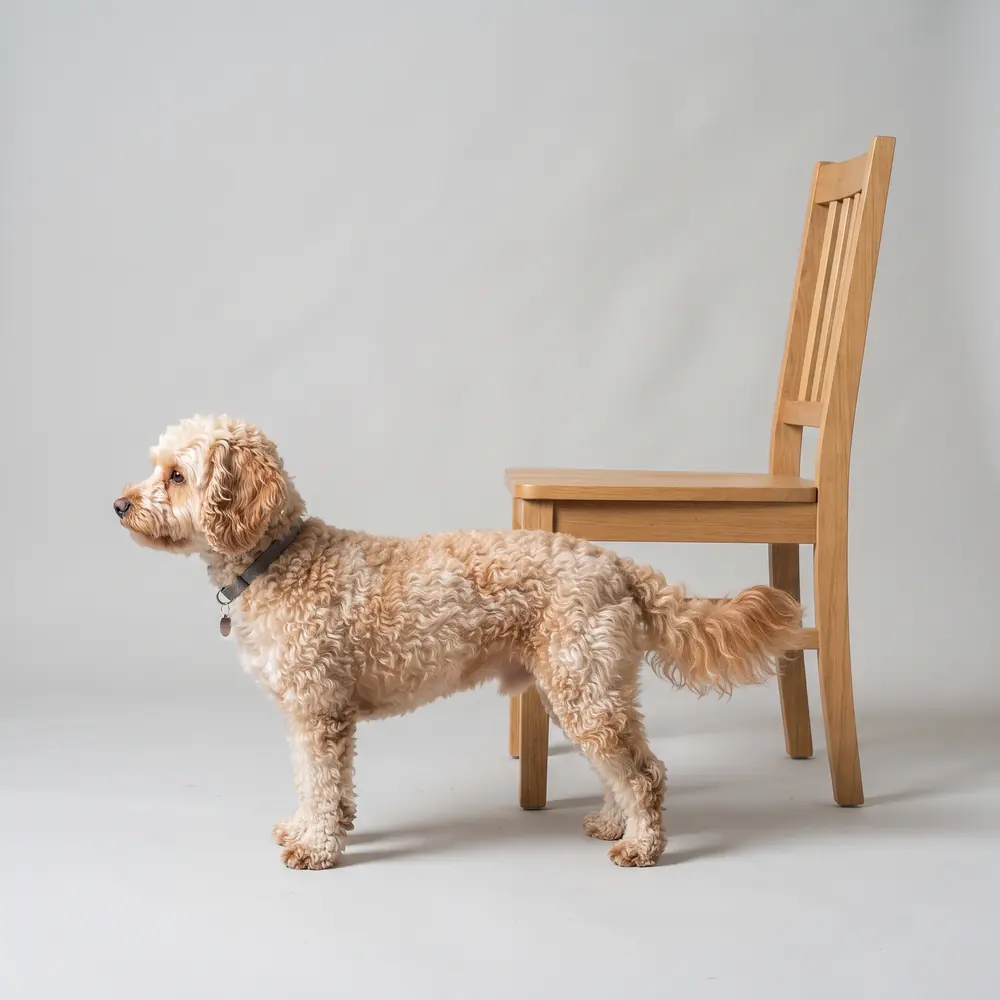
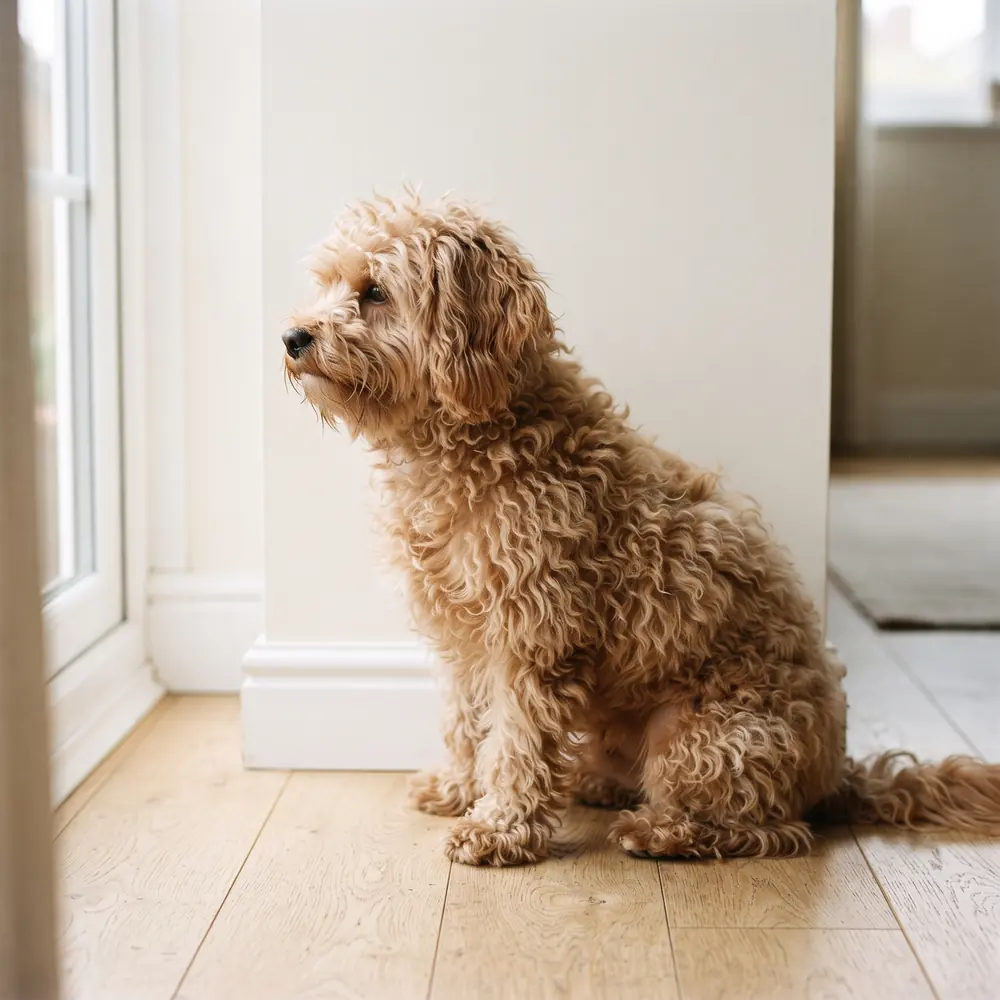
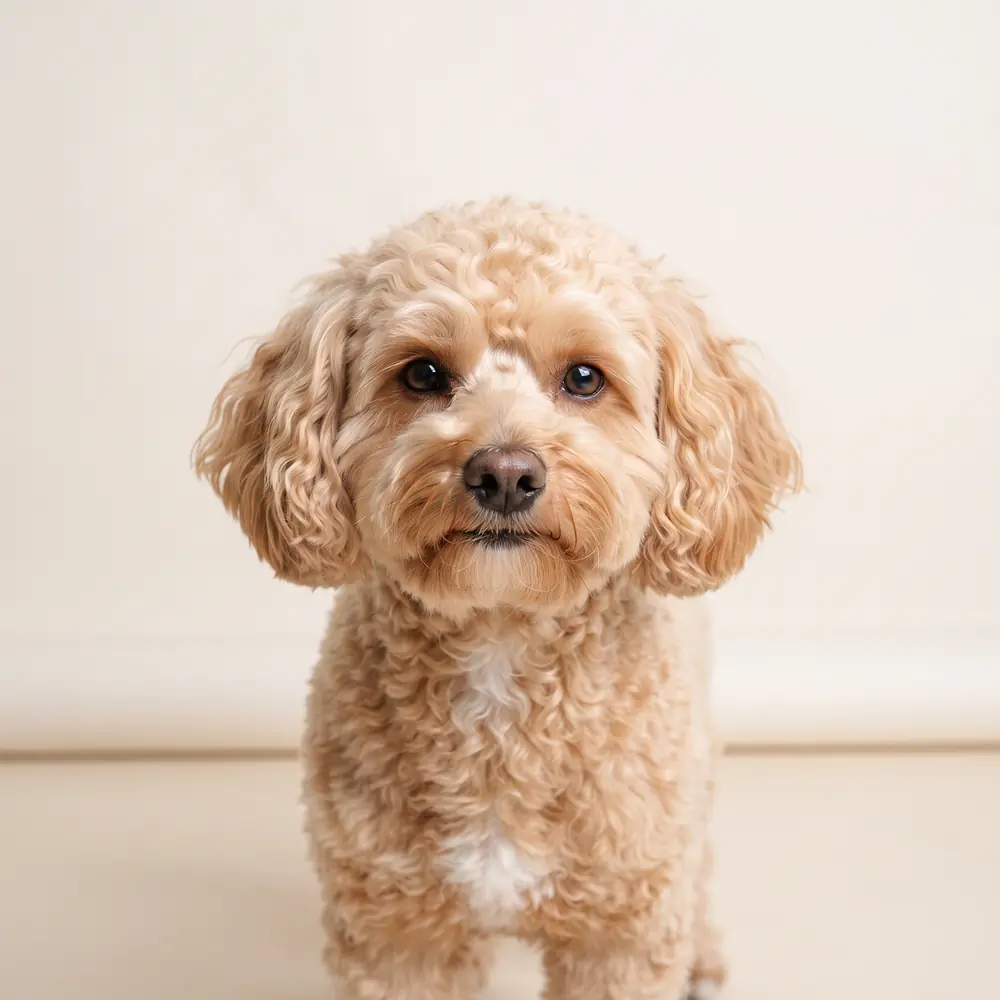
Both parent breeds are named on the list of 62. The Bichon Frise is on it and so is the Poodle, which is the same argument that puts the Cavapoo on this site’s approved side. The list names the Poodle in Toy and Miniature only, so ask which Poodle was used.
HDB approves breeds by name, and a cross has no name on that list. What a buyer can look at instead is whether the two parent breeds are on it, and for this cross they both are. where the Poochon sits on HDB’s list carries the Bichon Frise and the Poodle.
That is a materially better position than most poodle crosses are in. A Goldendoodle has a Golden Retriever behind it and a Cockapoo has a Cocker Spaniel, and neither of those is on the list at all, so neither cross has the argument available in the first place.
A condominium or landed home carries no breed restriction of this kind, so this whole question only decides matters for flat buyers. It just happens that most households here live in flats.
Read the list closely and it does not say Poodle. It says Poodle in its Toy and Miniature sizes, and that is not the same thing.
Nobody selling this cross tends to raise that, and a buyer who does not know the distinction exists will not think to ask. Ours are small-Poodle crosses and you are welcome to ask us the same question you should be asking anyone else.
Confirm your own dog against HDB’s own pet rules rather than resting on any seller’s reading of them, this one included.
A Bichon Frise and a Poodle. Nothing else is in the mix, and a listing describing something more elaborate is describing a different cross.
Bichpoo is the same cross under a different trade name, and neither name is more official than the other because neither is a recognised breed. If you are weighing a Poochon listing against a Bichpoo listing, compare the parents rather than the labels.
The bichon side brings the temperament that sells this cross: cheerful, sociable, and genuinely fond of people rather than merely tolerant of them.
The poodle side brings the coat, the intelligence, and the adult size. That last one is worth holding on to, because it is the parent that decides how big the dog you are buying will actually get.
Small. Our own breed record gives 4–8 kg as an adult, published as a range because a cross inherits a range rather than a size.
A recognised breed has a written standard behind it and varies within narrow limits. A cross has two standards pulling at it and lands somewhere between them, which is why any listing promising an exact adult weight is promising something the biology does not supply.
Neither question is awkward to ask and neither should be awkward to answer. A seller who deflects on the first one is worth walking away from, whoever they are.
The low-shedding coat is what most people are buying, and it is the single biggest ongoing cost of owning this cross. Both of those things are true at once and pages about doodles tend to mention only the first.
Brush in sections, lifting the coat and working from the skin outwards, several times a week. Brushing over the top of a curly coat feels productive and leaves the layer underneath exactly as it was.
Dry the dog properly after a bath or rain, all the way to the skin. In this climate a towel-dried curly coat stays damp for hours, and damp is where matting starts.
The coat is and the dog is not, and that distinction is worth keeping separate. You are taking on a standing grooming appointment for the life of the animal, plus the brushing between them.
What you get for it is a cheerful, biddable, genuinely easy small dog. Whether that is a fair trade is a question about your week rather than about the breed.
Expect some, and expect it to show. Light coats make ordinary tear staining obvious in a way a dark coat hides, and it is cosmetic far more often than it is medical.
Keeping the face clean and dry helps and will not eliminate it. What warrants a vet is a change in the eye itself rather than the colour of the fur beneath it.
The two weeks after a puppy arrives do more to set its adult behaviour than anything else you will do, and most of what goes wrong in them is predictable.
Expect a quiet dog for two or three days and then a much bolder one. The settled, cheerful animal you were shown at the farm reappears once the place stops being unfamiliar, and judging a puppy on its first evening tells you very little.
Keep visitors down in the first week. Everyone wants to meet the new puppy and a small dog meeting fifteen strangers in six days is being asked to cope with a great deal at once.
Start brushing before there is anything to brush out. A puppy coat rarely mats, which is exactly why it is the right time to teach the dog that being brushed is ordinary rather than an event.
The adult coat comes in somewhere between about eight months and a year, and it is denser than what you started with. Households that get caught out are usually the ones who found the puppy coat easy and did not adjust when it changed.
In the right household, genuinely yes. It is cheerful, sociable, quick to learn, and small enough for the housing most people here actually live in.
That is a real answer rather than a polite one, and it comes with an equally real set of conditions attached.
Not typically. It is alert and it will announce a visitor, which is different from a small dog that barks at everything and cannot be talked down from it.
What turns an alert dog into a noisy one is usually boredom or too many hours alone. That is within your control in a way the breeding is not, which is both the good news and the responsibility.
If one of those describes your week, a different breed will serve you better and we would rather say so here than after the fact.
The first year sets most of what the next decade looks like, and with this cross three things matter more than the rest: the coat handling, the time alone, and the routine.
Short sessions, often, and started early. This is a bright dog from two bright breeds, and the usual problem is not that it cannot learn but that it learns the wrong thing quickly when nobody is paying attention.
Housetraining goes the same way as with most small dogs. Pick the spot before the puppy arrives, do not move it, and accept that the first fortnight decides the pattern.
Handle the puppy all over from the week it arrives, feet and ears and muzzle included. A dog that has never been asked to stand still cannot be groomed at three without a fight, and with this coat the grooming is not optional.
How often should I groom my Poochon is the question underneath all of this. Professionally every six to eight weeks is the usual rhythm here, with brushing several times a week in between, and the humidity is what makes the in-between part non-negotiable.
Build up to time alone in small increments from the start rather than discovering the limit the first time you go out for a day. We are not going to publish a number of hours, because it depends on the individual dog and on what it has been taught.
Getting a Poochon into a household that is out from morning to night is the single most common mismatch we see with this cross, and it is one you can predict before you buy. the Poochon beside every other breed marks which of our breeds are HDB-approved and how much company each of them wants.
Two inheritances rather than one breed, which is the honest way to think about any cross. The bichon side is associated with skin sensitivity and allergies, and both sides carry eye conditions and luxating patella.
Naming those is not a prediction about your puppy. It is the list to raise with a breeder by name, rather than accepting a general assurance that the parents are healthy.
We are not going to tell you a cross is healthier than its parent breeds. It is the standard line on pages like this one, and no one can promise it about an individual puppy.
Poochon lifespan is a fair thing to weigh before spending this much, and our own breed record gives 12–15 years.
Plan around the upper end rather than the lower. The households that struggle are usually the ones that budgeted, in time as much as money, for a shorter commitment than they got.
Buying one here costs what the individual puppy costs, and ours are $5,388–$5,988. That is the range of the ones listed above rather than a headline figure, and it moves as the roster turns over.
Core doses at weeks 6 and 8 on the farm, homecoming about a week after the second, and the third at week 12 with your own vet. An optional fourth at week 16 follows if your vet advises it. the vaccination weeks a Poochon puppy follows sets out the whole first year.
These are the two crosses on this site whose parent breeds are both named on the HDB list, so for housing purposes they stand on the same footing. What differs is the spaniel or bichon half and what it brings.
| Poochon | Cavapoo | |
|---|---|---|
| Non-poodle parent | Bichon Frise | Cavalier King Charles Spaniel |
| That parent on the HDB list | Yes | Yes |
| Poodle parent on the list | Toy and Miniature only | Toy and Miniature only |
| Adult size | 4–8 kg | 4–8 kg |
| Coat | Curlier, mats faster | Wavier, varies more |
If the housing question is what brought you here, either works and the Cavapoo page sets out that cross in the same detail. The Toy and Miniature caveat applies to both of them equally.
Roster synced October 2026. Information last checked 26 August 2026.