
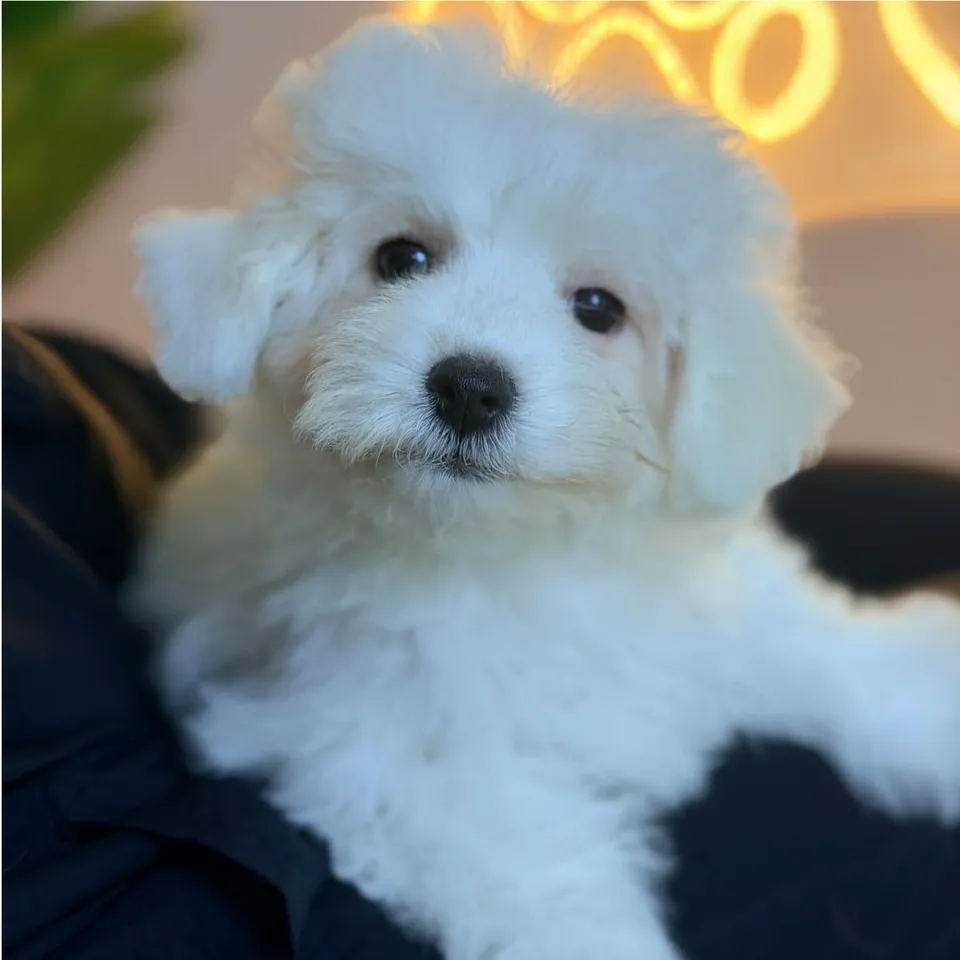
 Available
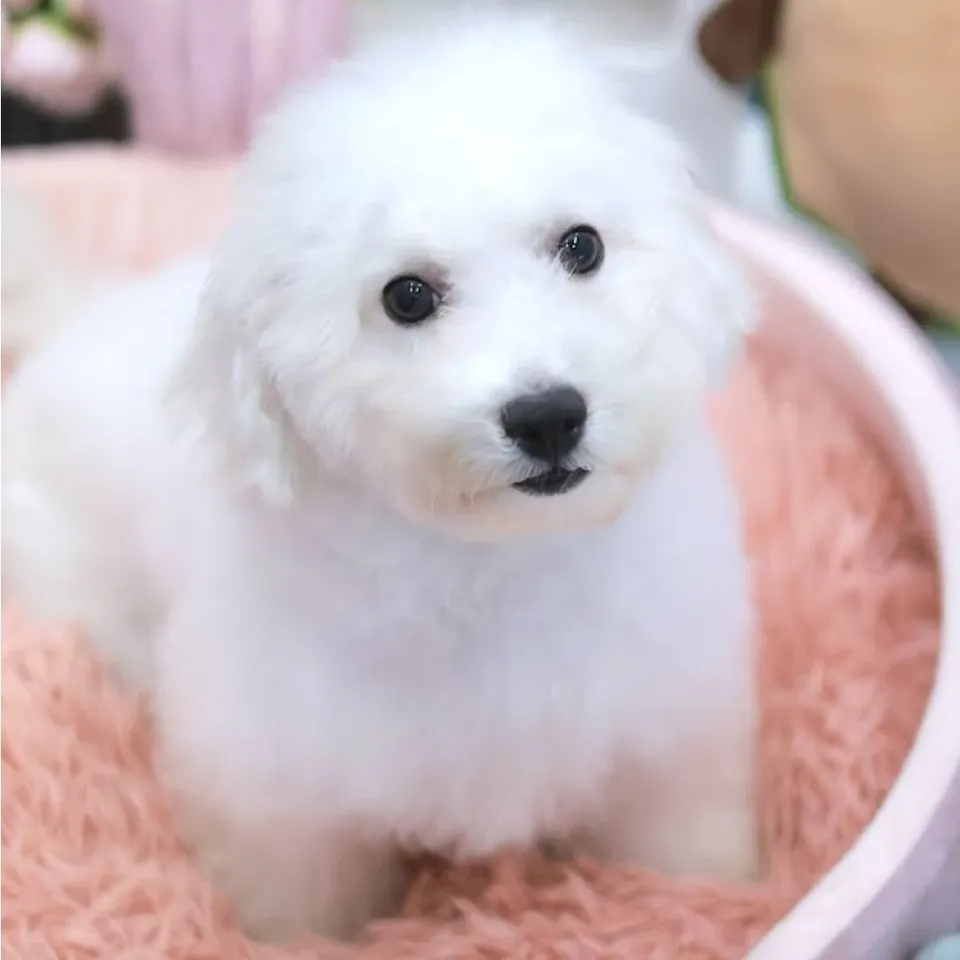
White Bichon Frise puppy
Female3 monthsHDB approved
$5,688
Ask about White Bichon Frise puppyWhite Bichon Frise puppy: photos, price and ageBichon Frise Singapore, the short answer: $3,888–$5,988 from Puppy Singapore, an AVS-licensed seller, vet-checked, vaccinated and microchipped under licence BR25052. The breed is HDB-approved at 5–8 kg, sheds very little, and needs a professional groom every four to six weeks for 14–16 years.
Searches for mini Bichons turn up here too, and there is no such size. The rest answers what buyers actually search: what one costs, why it costs that, how it compares with a Shih Tzu, and the two health facts nobody selling this breed locally mentions.
Every puppy on this page is at the farm today, with its own photo, age, colour and price.
Available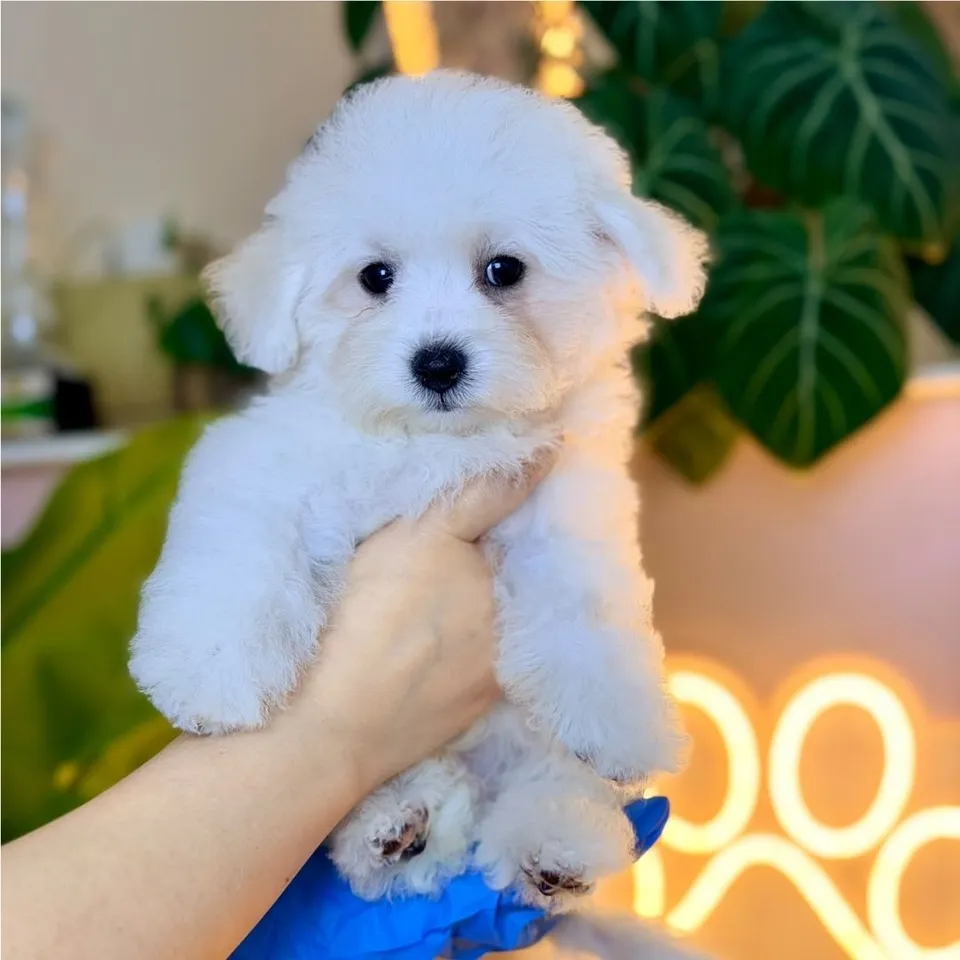 Available
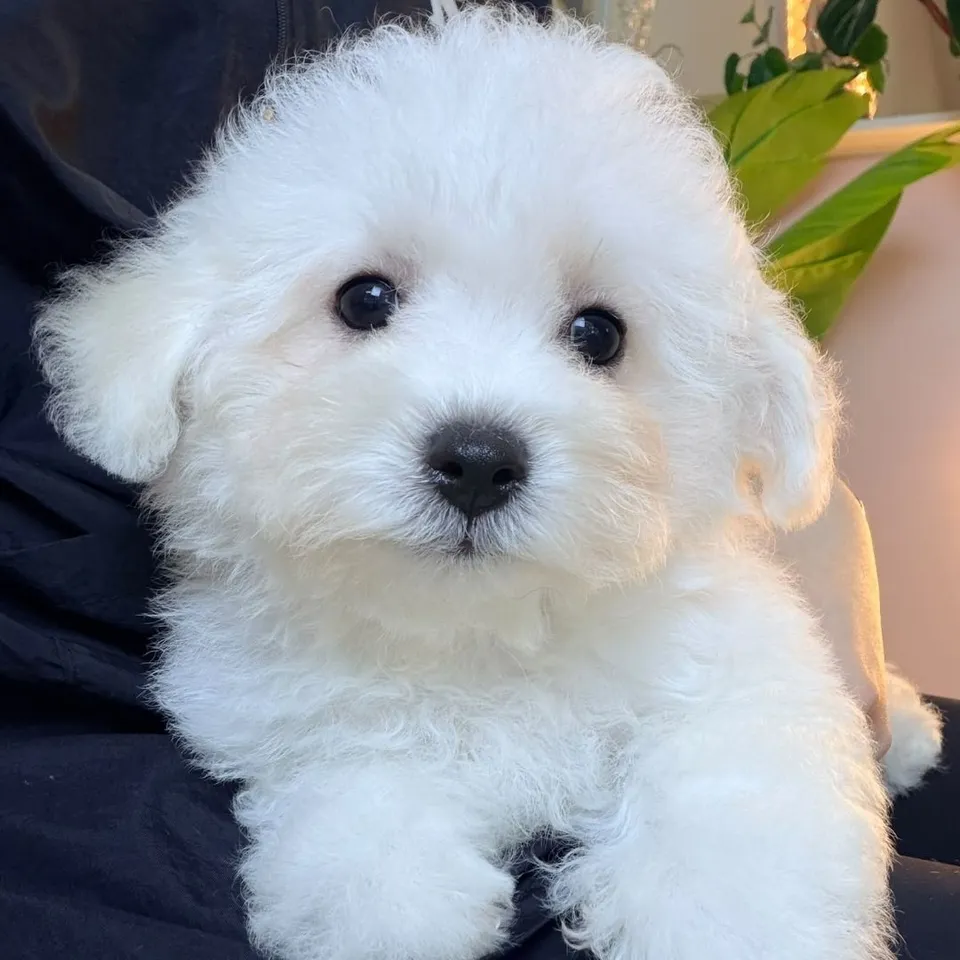 Available
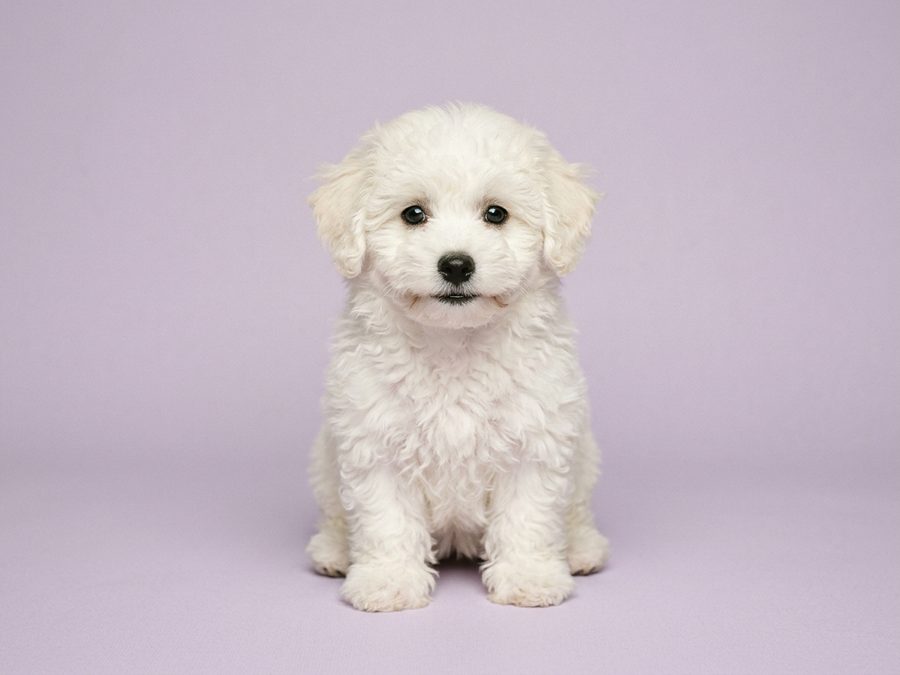
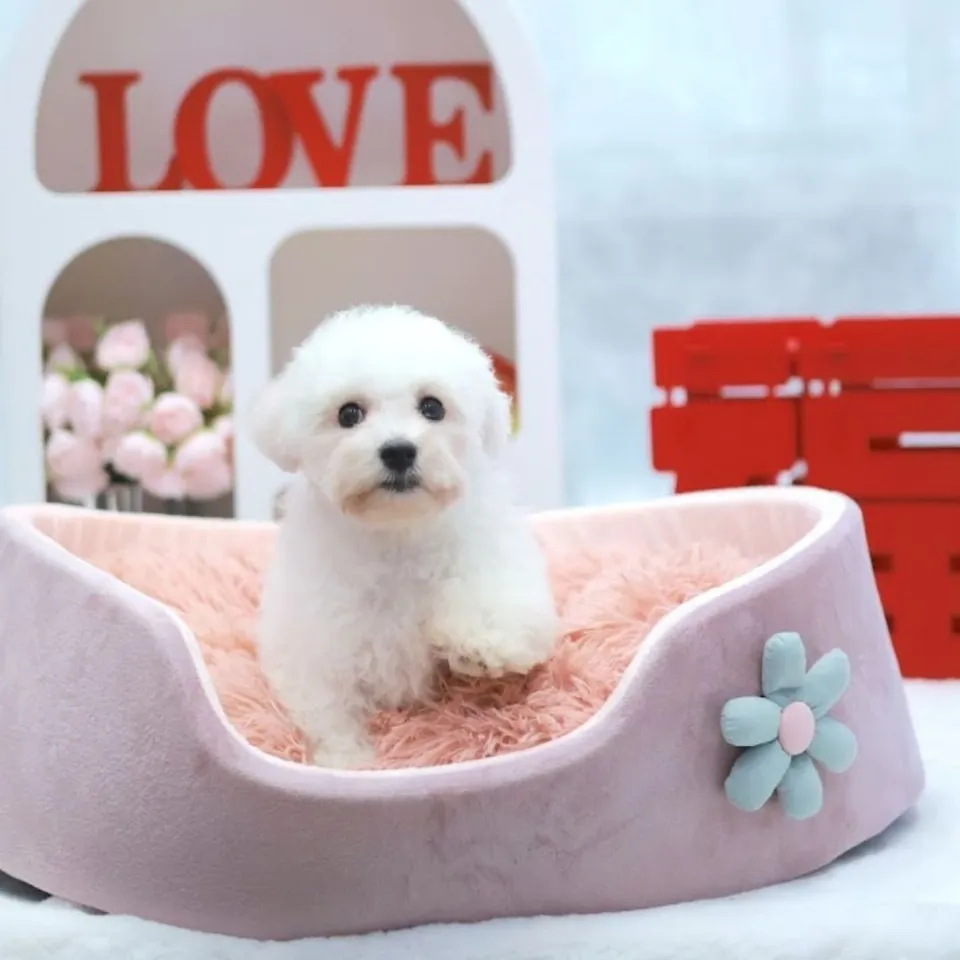
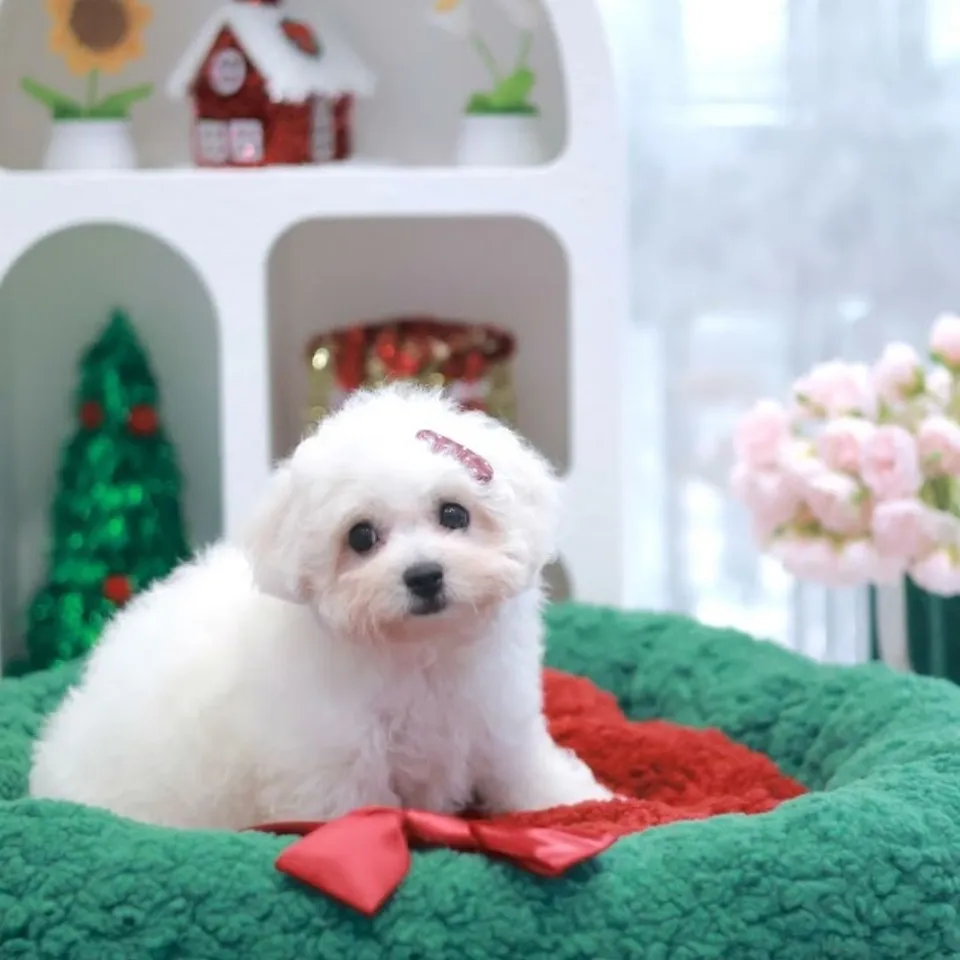
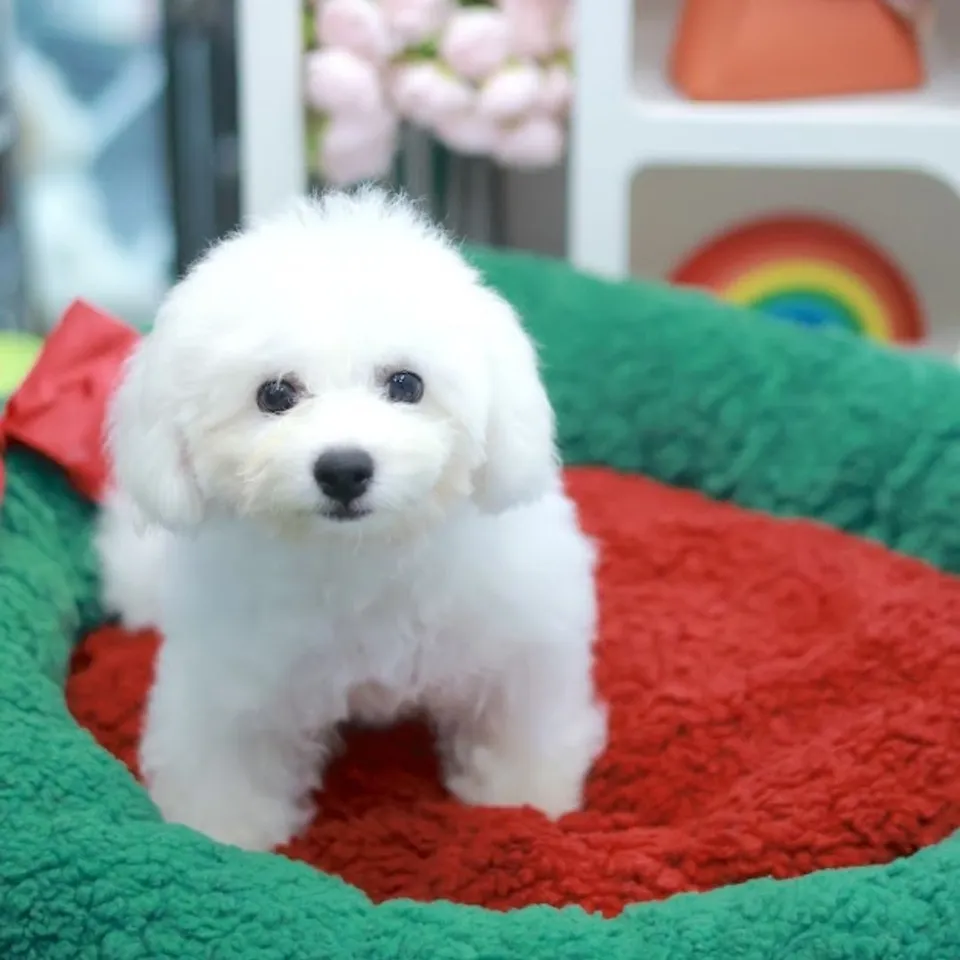
These Bichons have already gone home. They are here so you can see the coats our litters arrive in, not as available stock.
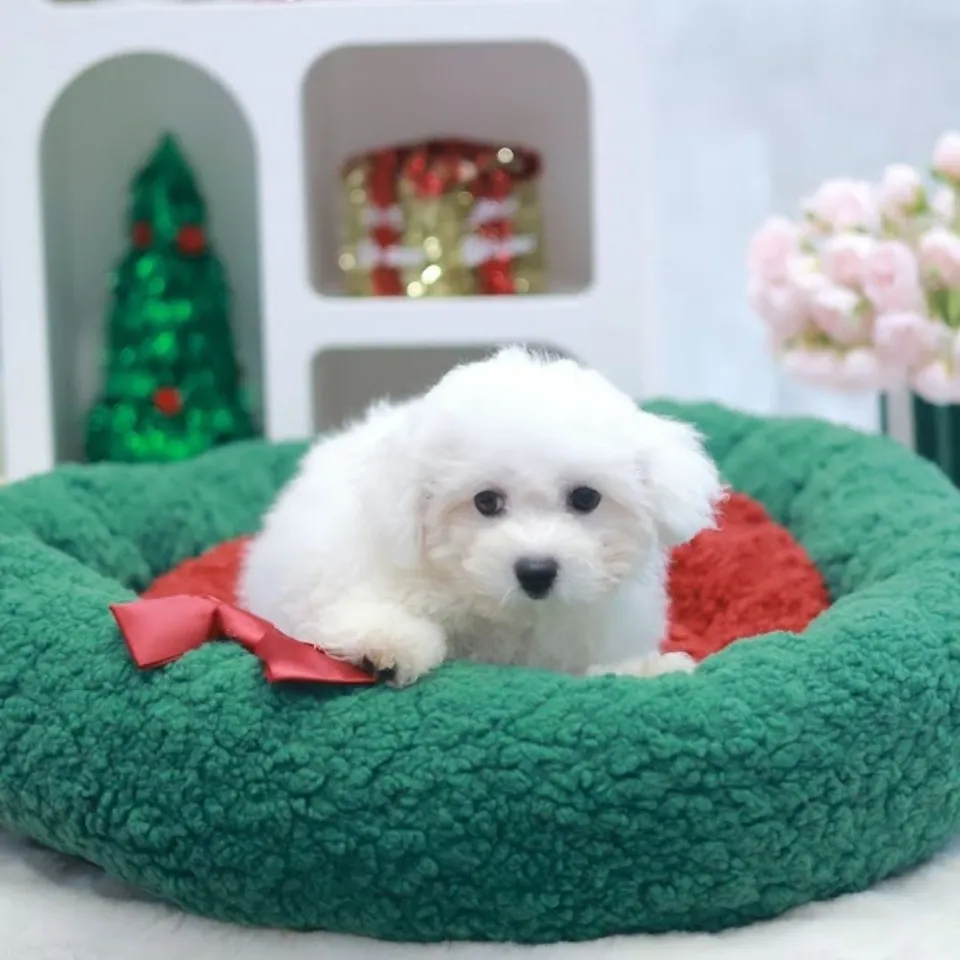

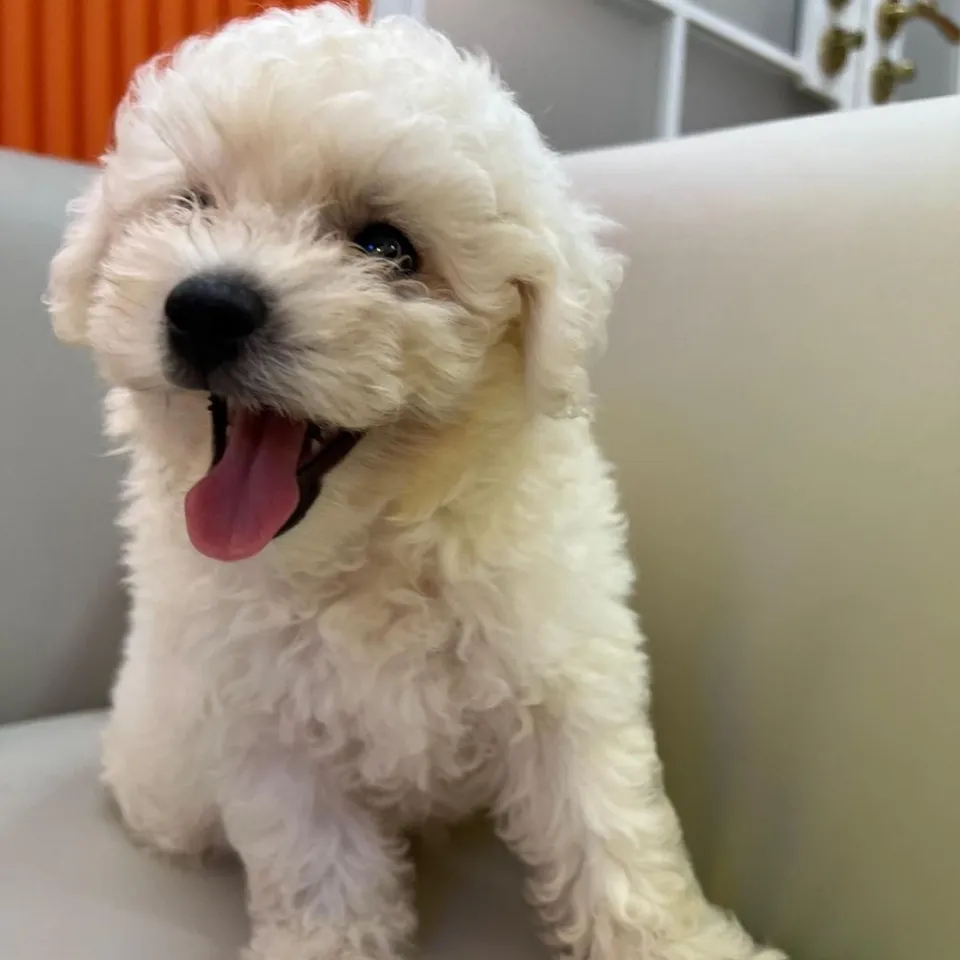
Nine illustrations of the breed: the coat colours a Bichon Frise comes in, the size it grows to, and the coat between grooming appointments. These are drawings of the breed, not photographs of puppies for sale. The 3 puppies we actually have are further up this page, each with its own photograph.
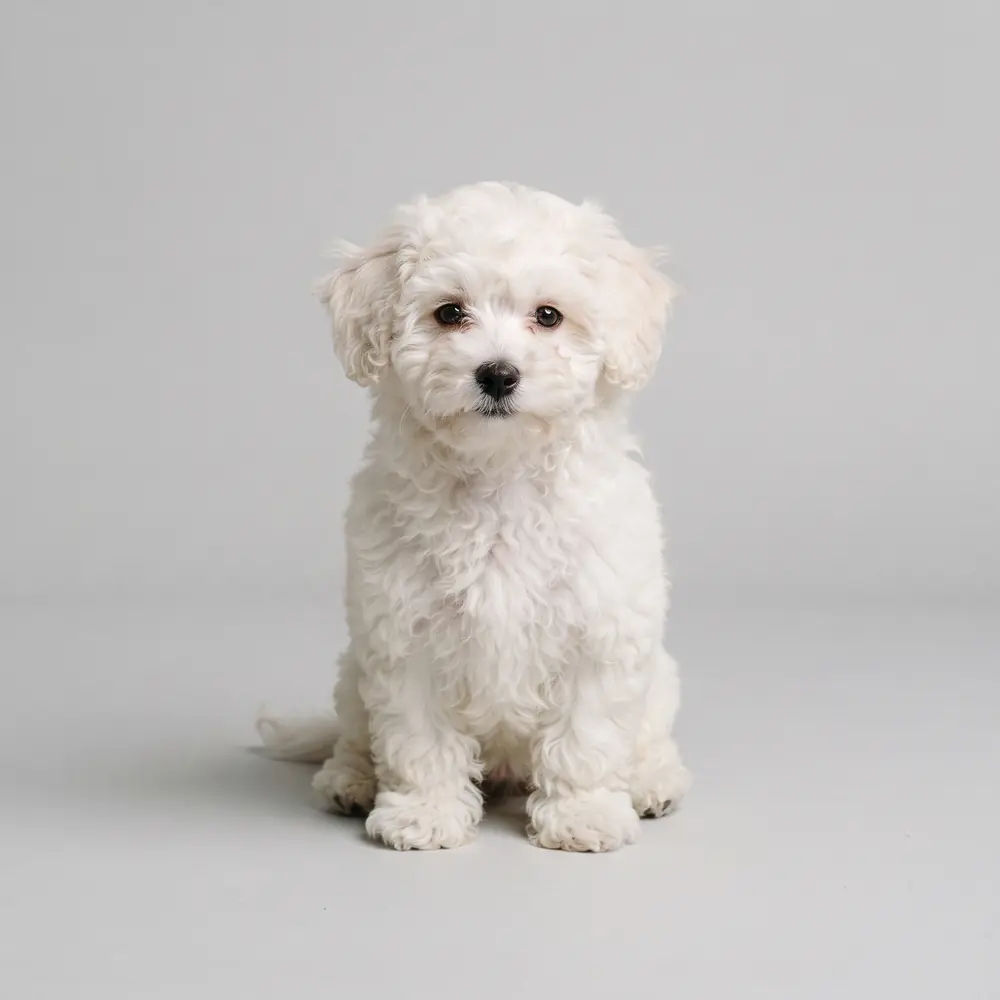
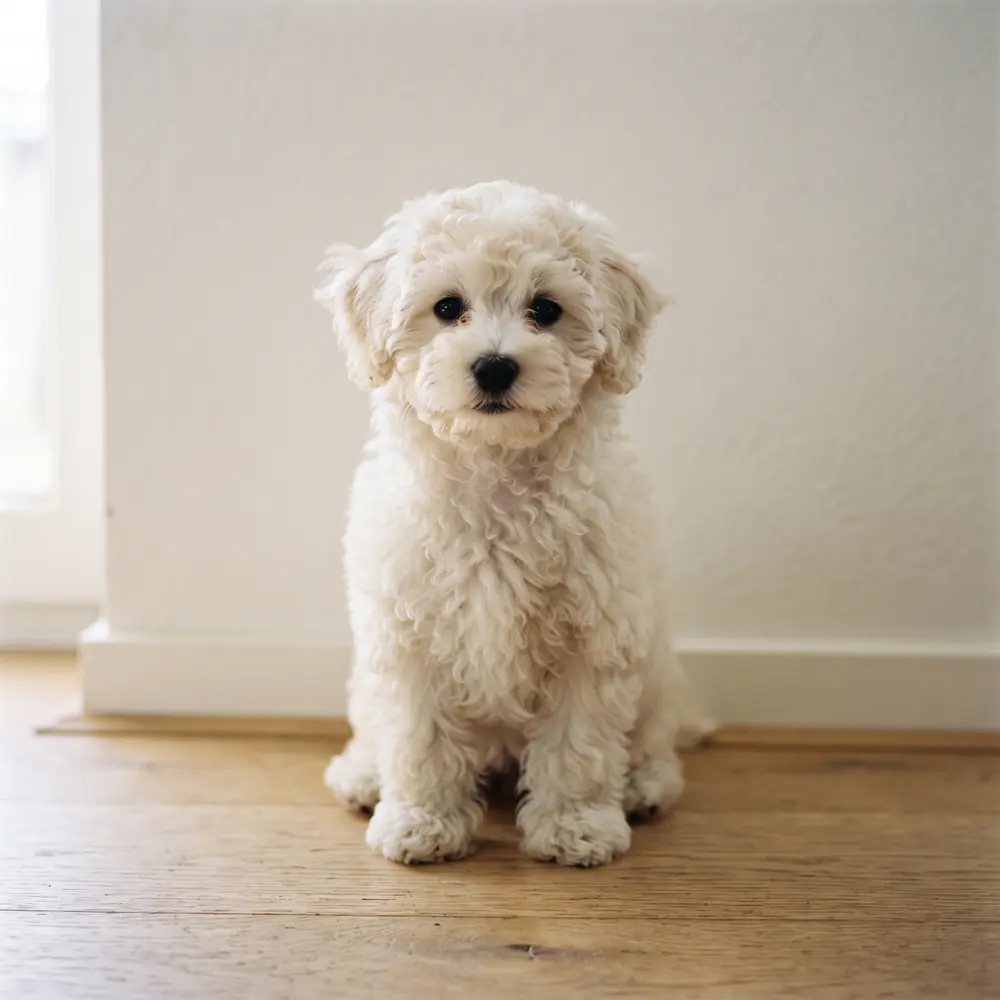
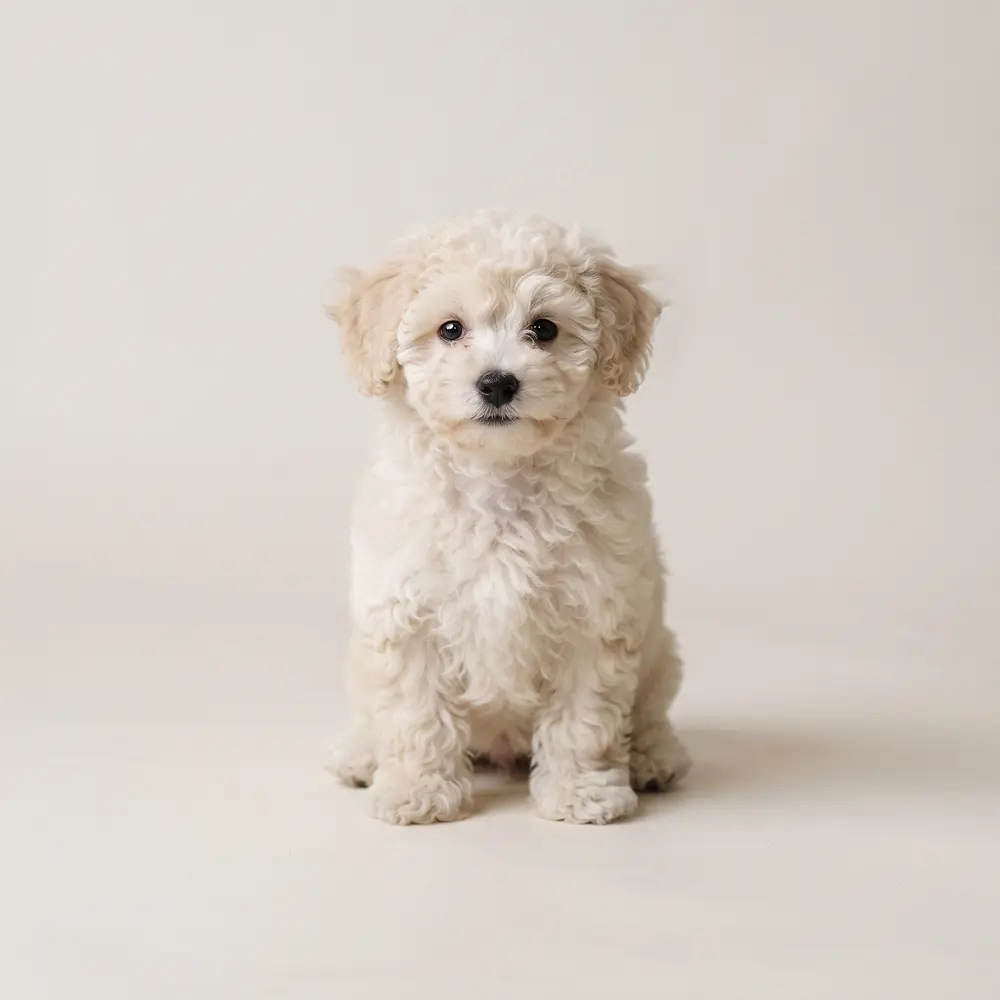
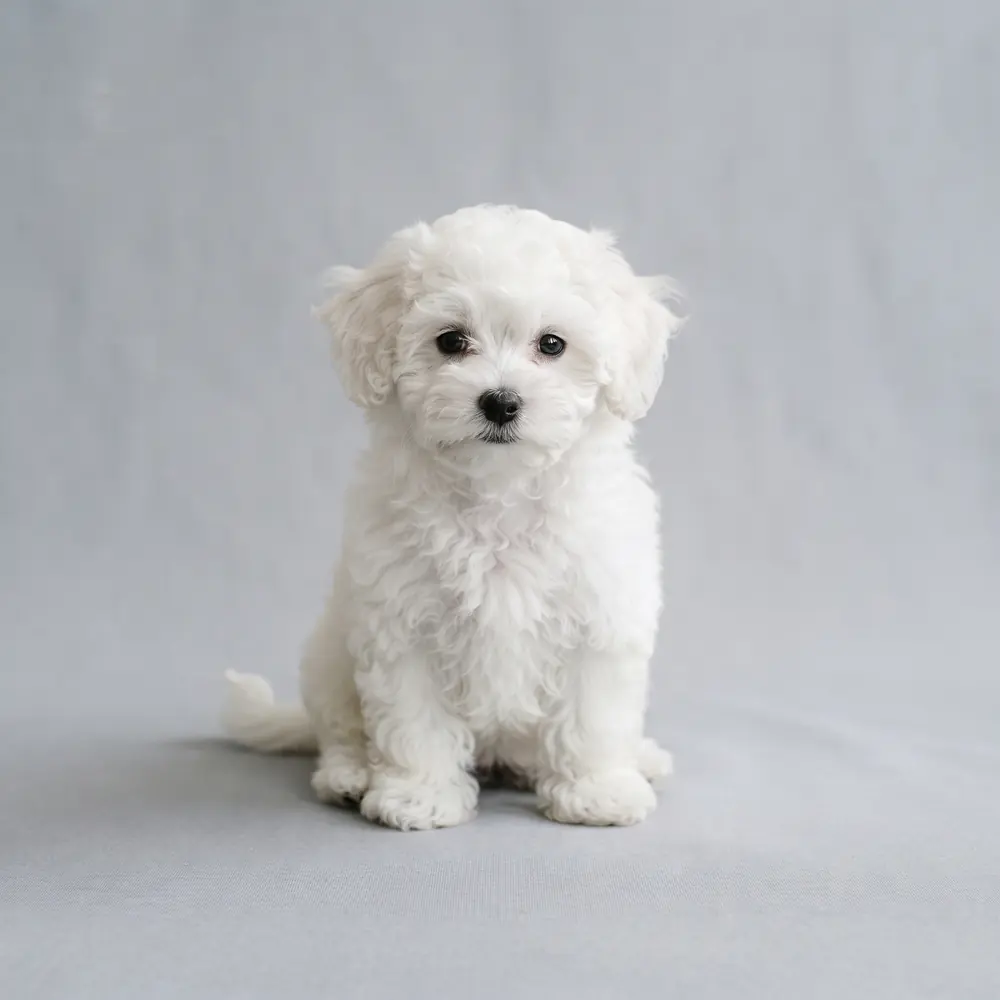
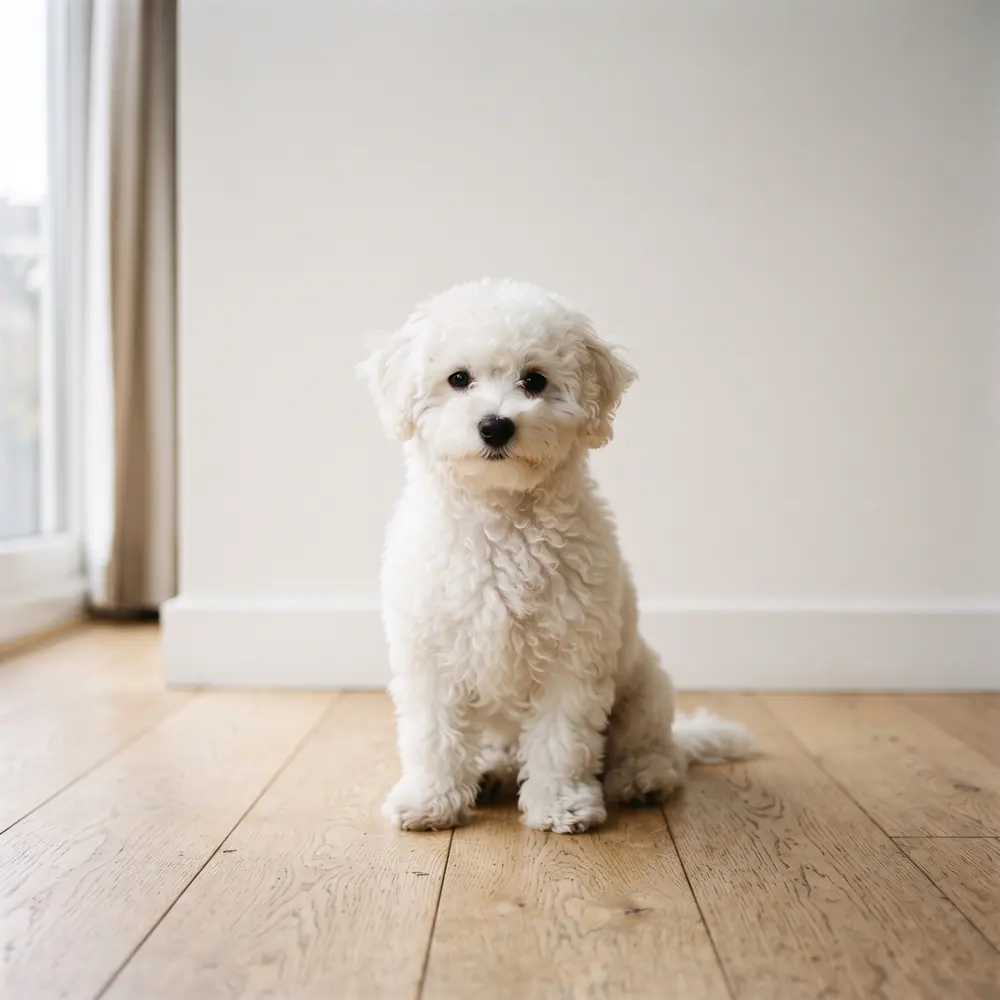
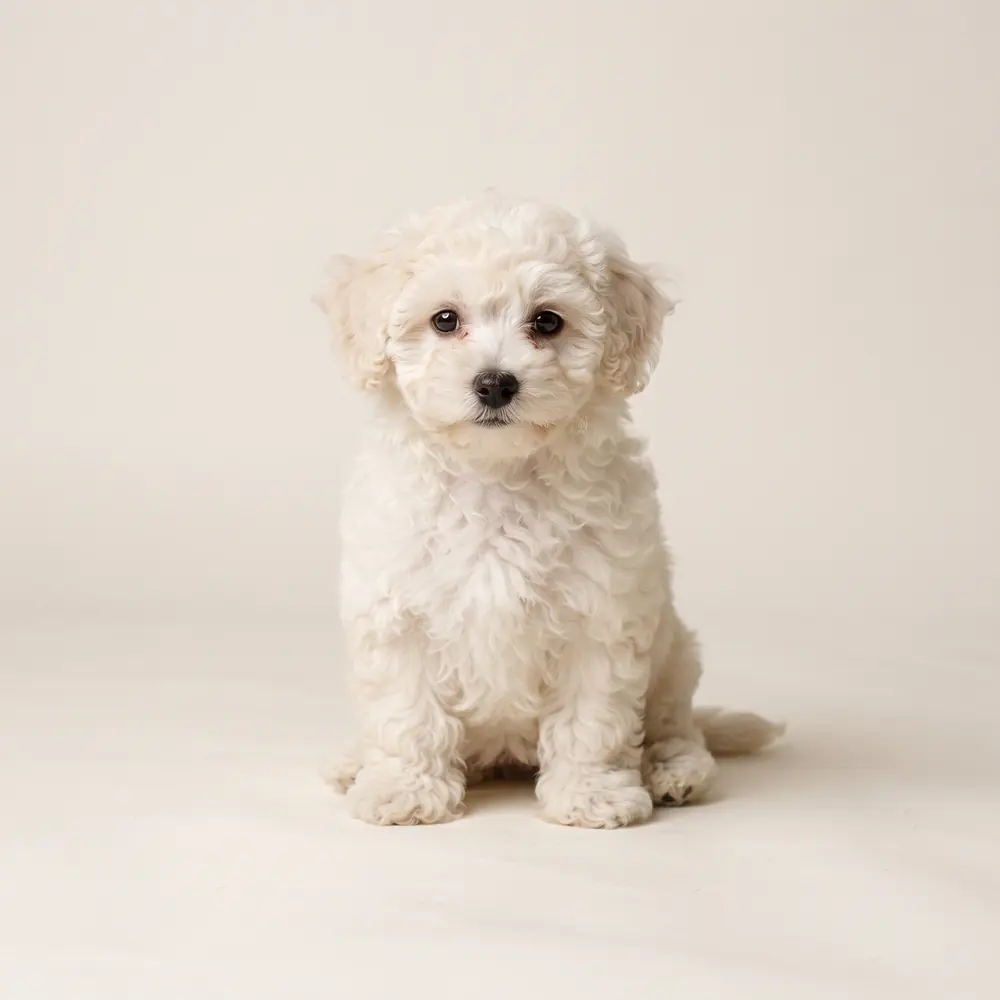
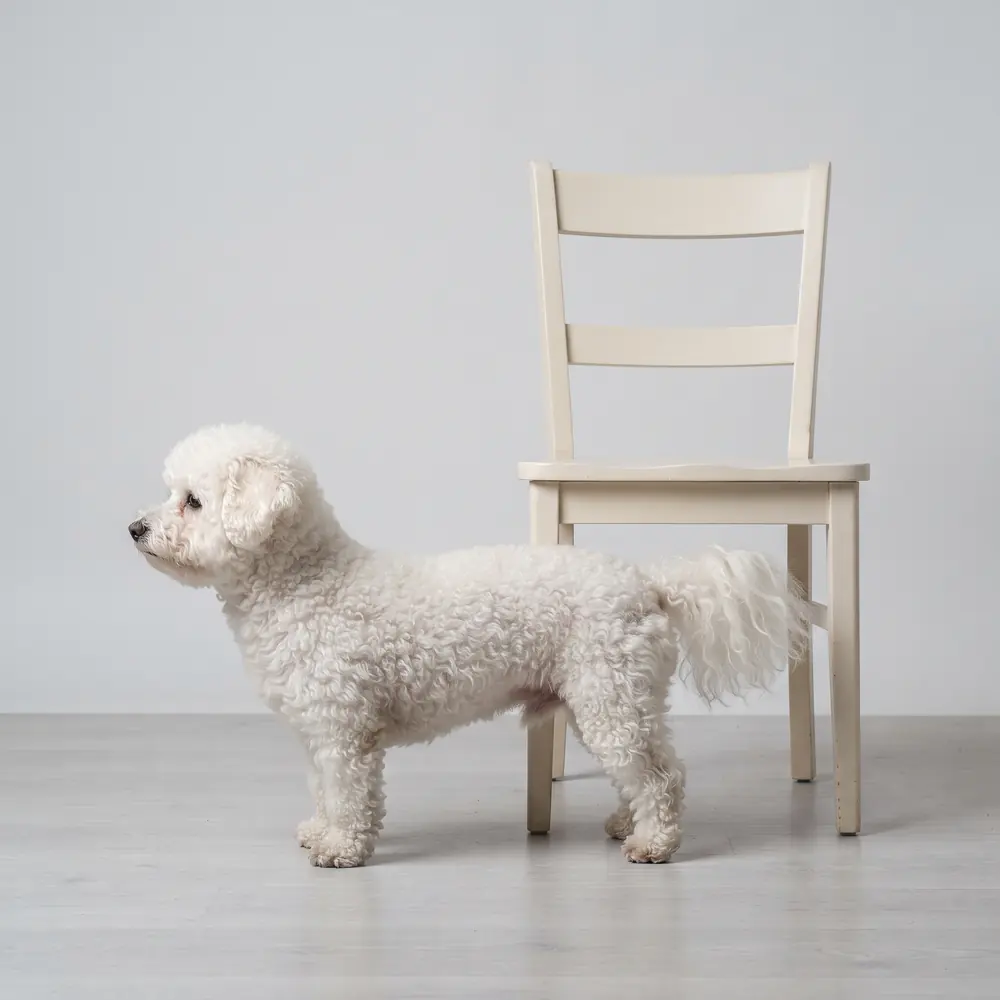
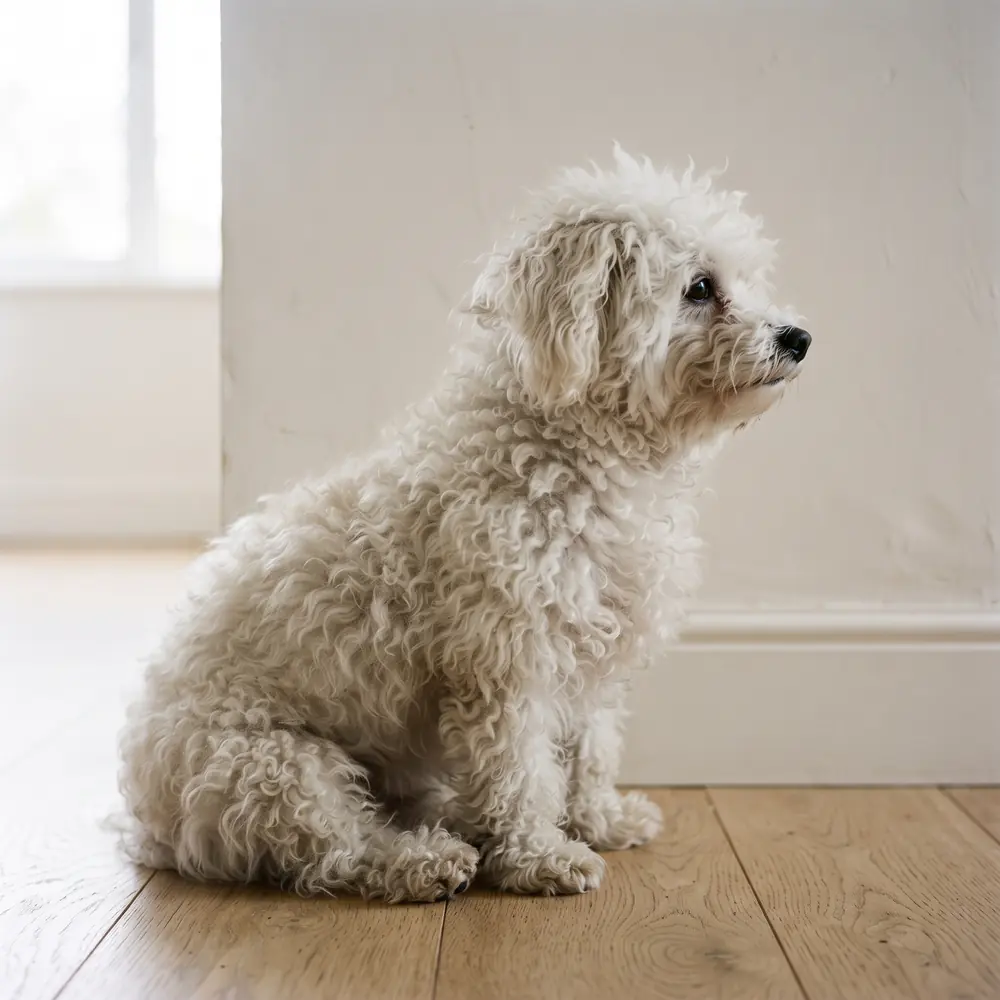
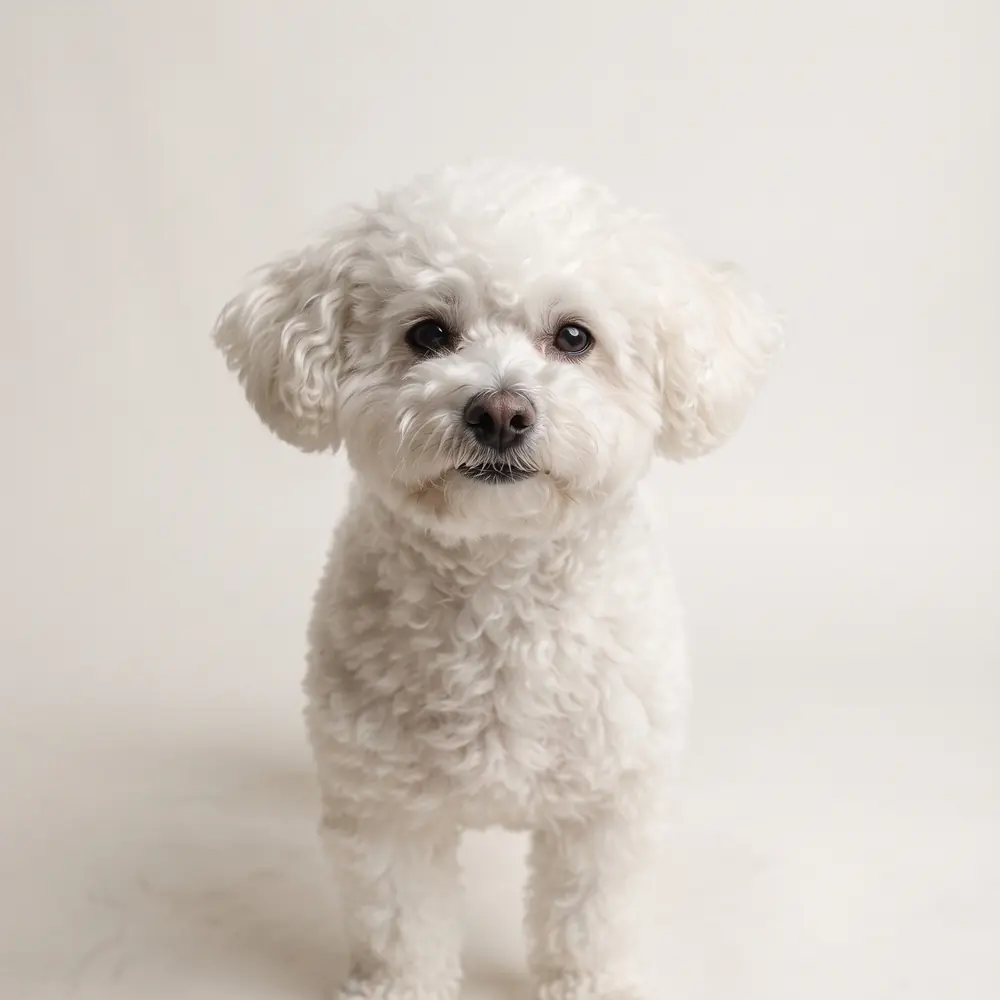
A Bichon Frise puppy costs $3,888–$5,988 from an AVS-licensed seller in Singapore. That price includes vaccinations to date, deworming, a vet health check, a microchip, health certification and ancestry records. Age, sex and litter move a puppy inside the band, and grooming is the recurring cost that follows it home.
Six things travel with every puppy, and each is a document or a procedure rather than a promise.
| Line | Typical cost | What moves it |
|---|---|---|
| Grooming | $50 to $120 a session, every 4 to 6 weeks | How much you brush between visits, and how matted the coat gets |
| Food | The low end of the $30 to $120 a month band | A 5–8 kg dog eats modestly |
| AVS dog licence | $15 a year sterilised, $90 if not | Duration and sterilisation status, less a 10% online rebate |
| Routine vet, skin and dental | Budget yearly from year one | Skin allergies and dental crowding are the two lines that grow |
Grooming is the largest line here, and it is the one buyers underestimate. Our price hub publishes what a Bichon Frise costs here to buy and to keep, breed by breed.
Three real answers, and one of them is work that happens before you ever see the puppy.
What does not justify a premium here: the coat colour, in a breed that comes in one.
The Bichon wins on one fact that matters more in Singapore than almost anywhere else: it is not brachycephalic. The Shih Tzu has a shortened skull and airway, which makes cooling by panting harder in a climate that never has a cool season.
Everything else is a genuine trade. The Shih Tzu is calmer, copes better with a quiet flat during working hours, and is generally less demanding of company. The Bichon is livelier, more playful and needs people around.
| Bichon Frise | Shih Tzu | |
|---|---|---|
| Airway | Normal muzzle, cools normally | Brachycephalic, struggles more in heat |
| HDB flat | Yes, approved | Yes, approved |
| Alone during work hours | Poorly, needs company | Better, more self-contained |
| Coat work | Groom every 4 to 6 weeks | Groom every 4 to 6 weeks |
| Energy | Bouncy and playful | Lower, happy to lounge |
| Typical range | $3,888–$5,988 | $3,988–$5,288 |
We sell both, so there is no winner being sold here. If your household is out all day, read how a Shih Tzu compares on the same budget before you decide.
On the coat, yes, and the number is specific: a professional groom every four to six weeks for 14–16 years, plus brushing two or three times a week at home. On temperament they are one of the easier small breeds.
Brush to the skin, not over the top of the coat. A Bichon coat can look immaculate on the surface while it is felted underneath, and that is the mat a groomer cannot comb out.
Behind the ears, under the front legs and around the rear are the three places that go first. If those are tight, the honest option is a short clip and a fresh start, which this breed tolerates perfectly well.
The Bichon Frise is one of the breeds with a recognised predisposition to calcium oxalate bladder stones. It is the single most useful thing on this page, because it is manageable and almost never mentioned by anyone selling the breed.
The mechanism is simple. Stones form more readily in urine that sits concentrated in the bladder for long stretches, so water intake and toilet access are breed-specific management here rather than generic advice.
A dog straining to urinate and producing nothing is an emergency, not a wait-and-see. A blocked urethra is life-threatening within hours.
Not comfortably, and not as a daily routine. The Bichon Frise was developed as a companion breed and does badly with long stretches alone, which shows up as barking, chewing and indoor toileting. There is a physical reason too: a dog holding its urine for eight hours is concentrating it, in a breed already predisposed to bladder stones.
A working household can still own this breed. What it needs is a break in the middle of the day, and that can be a dog walker, a family member, a neighbour or a daycare day.
We would rather say this before a sale than read about it afterwards. If nobody can break up the day and nobody is willing to pay someone to, a Bichon is the wrong dog.
Partly. The Bichon Frise is sold everywhere as a hypoallergenic dog, and the honest version of that claim matters if someone in your home reacts to dogs. The low-shedding part is true: the loose hair stays in the curled coat rather than landing on your floor and furniture.
The part that is not true is the word itself. The allergen is a protein in dander and saliva, not the hair, so no dog is allergen-free. A Bichon spreads less of it around a room, which is why allergic owners often cope well with the breed, and why some still do not.
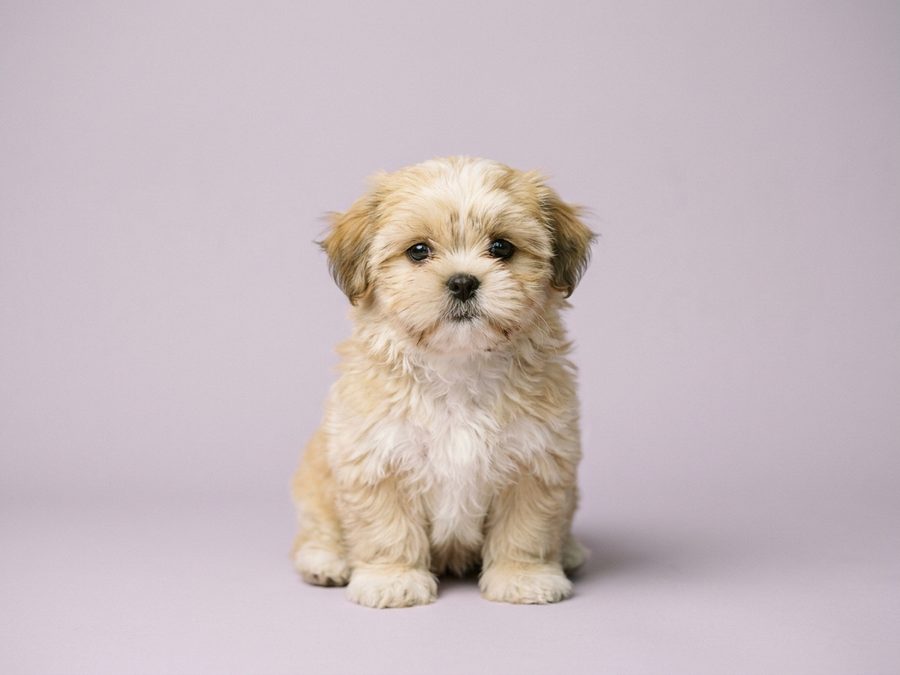
Atopic dermatitis is common in this breed, and Singapore removes the seasonal break that owners elsewhere get. Humidity, dust mites and pollen run all year, so an itchy Bichon here is itchy in March and in November alike.
The signs are paw licking, face rubbing, recurring ear infections and rust-coloured staining on the fur where the dog has been chewing. Treat it early with your vet: the dogs that end up on long-term medication are usually the ones whose owners waited a year.
Tear staining is the cosmetic version of the same visibility problem. Wipe the eye area daily with plain water, keep the hair around the eyes trimmed, and have a vet look at any eye that runs constantly rather than reaching for a whitening product.
Written by a seller, so read the right-hand column with that in mind: it is the one that costs us sales when it is honest. Anyone weighing this breed against another should start there rather than with the price.
| Pros | Cons | |
|---|---|---|
| Housing | HDB-approved, fits any flat | One dog per flat still applies |
| Coat | Sheds very little, good for tidy homes | Mats fast, and a groomer every 4 to 6 weeks for life |
| Temperament | Cheerful, sociable, easy with strangers and children | Does badly alone all day |
| Size | Portable at 5 to 8 kg, sturdier than a toy breed | Still a small dog around rough play |
| Lifespan | 14–16 years | A very long commitment, grooming included |
| Health | No brachycephalic airway problems | Skin allergies, bladder stones, knees and teeth |
They alert rather than yap. Doors, lifts and the corridor get announced, and then it stops. That is a manageable amount of noise in an HDB block.
The barking that becomes a complaint is different: it is the sustained barking of a dog left alone too long, and it starts after you leave. If a neighbour tells you your dog barks all day and you have never heard it, believe the neighbour.
Bichons are long-lived at 14–16 years. Four things are worth asking about, and two of them change what you do in the first week.
The timeline is set by the vaccination schedule, not by us. Core vaccinations run at weeks 6, 8 and 12, with an optional dose at week 16, and deworming happens at every visit.
Your own vet takes over the schedule from week 12, and the booklet that goes home with the puppy records everything already given.
A Bichon Frise Singapore rescue listing, or one posted for adoption, does appear from time to time, usually an adult and often badly matted. The grooming commitment is exactly what defeated the previous home.
Adopt Bichon Frise dogs rather than buy a puppy and the route is different: the local rehoming groups and the Bichon Frise Club of Singapore are where those dogs surface.
Either way the grooming budget is the same, and it is the thing to settle before the dog arrives. A rescued adult whose temperament and skin you can already see is a lower-risk dog than any puppy.
The Bichon Frise descends from Mediterranean lapdogs favoured by French and Spanish nobility, bred purely for its cheerful, affectionate company.
That history explains the dog you get. It was never a working breed, so it has no job it is frustrated about not doing, and its whole selection history was for company. The coat is the price of the looks.
Royal Canin and Purina both publish Bichon Frise characteristics and health summaries, and they are good on the breed in the abstract. Neither can tell you what one costs here, how the coat behaves at 80% humidity, or which flats the breed is allowed in.
Our litters come in White, Ivory, Cream White and Snow White. At 14–16 years this is one of the longest-lived breeds we sell, which is worth pausing on: a puppy bought this year is a dog you will be grooming into the 2040s.
All four are HDB-approved, so the choice comes down to coat work, shedding and how much company the dog needs. If coat shedding is the deciding factor, read our Toy Poodle guide alongside this one.
| Breed | HDB flat | Shedding | Grooming | Typical range |
|---|---|---|---|---|
| Bichon Frise | Yes, approved | Very low | High, every 4 to 6 weeks | $3,888–$5,988 |
| Maltese | Yes, approved | Low | High, cut regularly | $4,288–$5,988 |
| Toy Poodle | Yes, approved | Very low | High, cut every 4 to 8 weeks | $3,488–$5,988 |
| Shih Tzu | Yes, approved | Low | High, and a flat face in the heat | $3,988–$5,288 |
If the white coat is the appeal but you want a smaller dog, read about the Maltese, the other small white coat: a straight coat rather than a curled one, and a lighter dog.
Figures last checked 25 August 2026.