
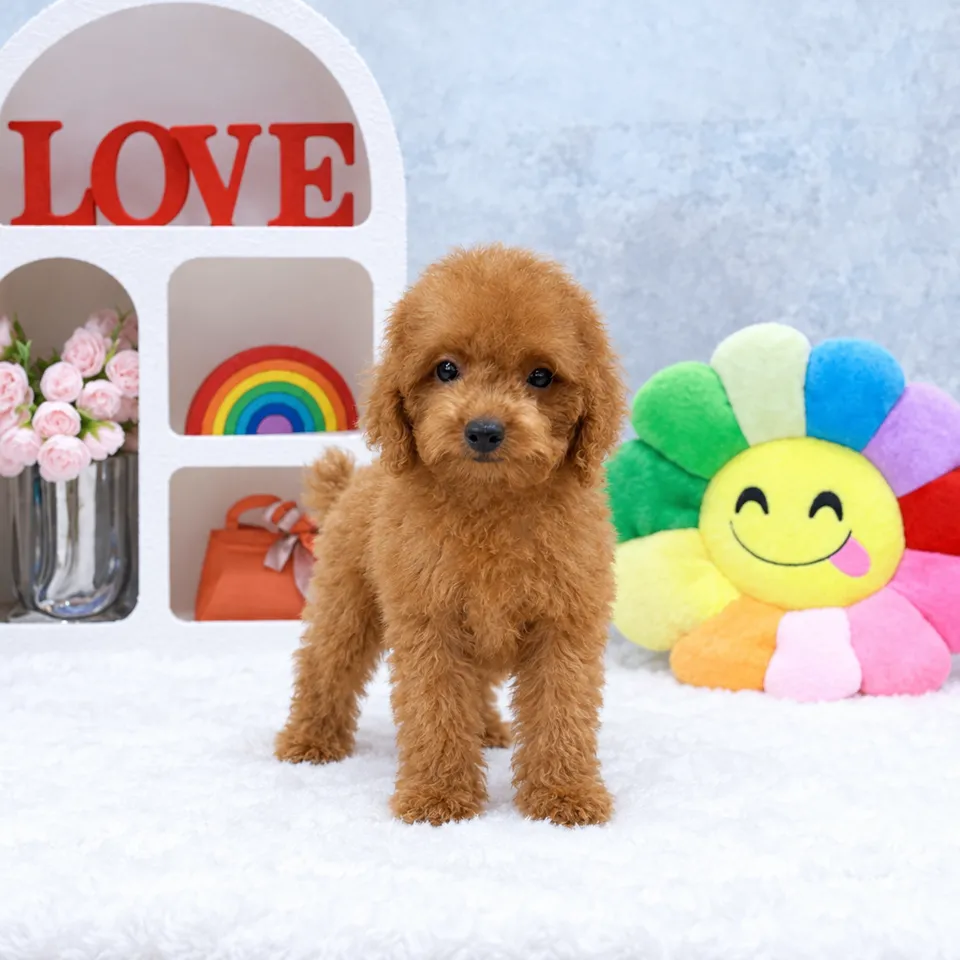
 Available
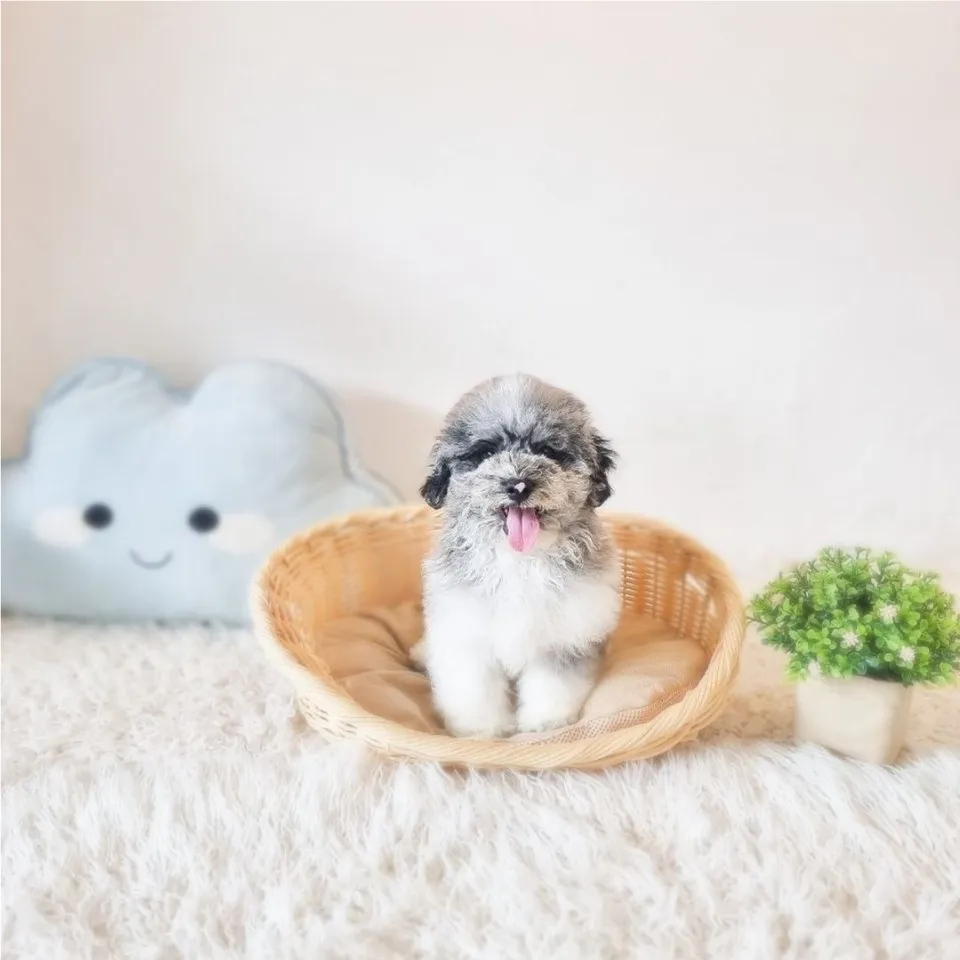
Apricot Maltipoo puppy
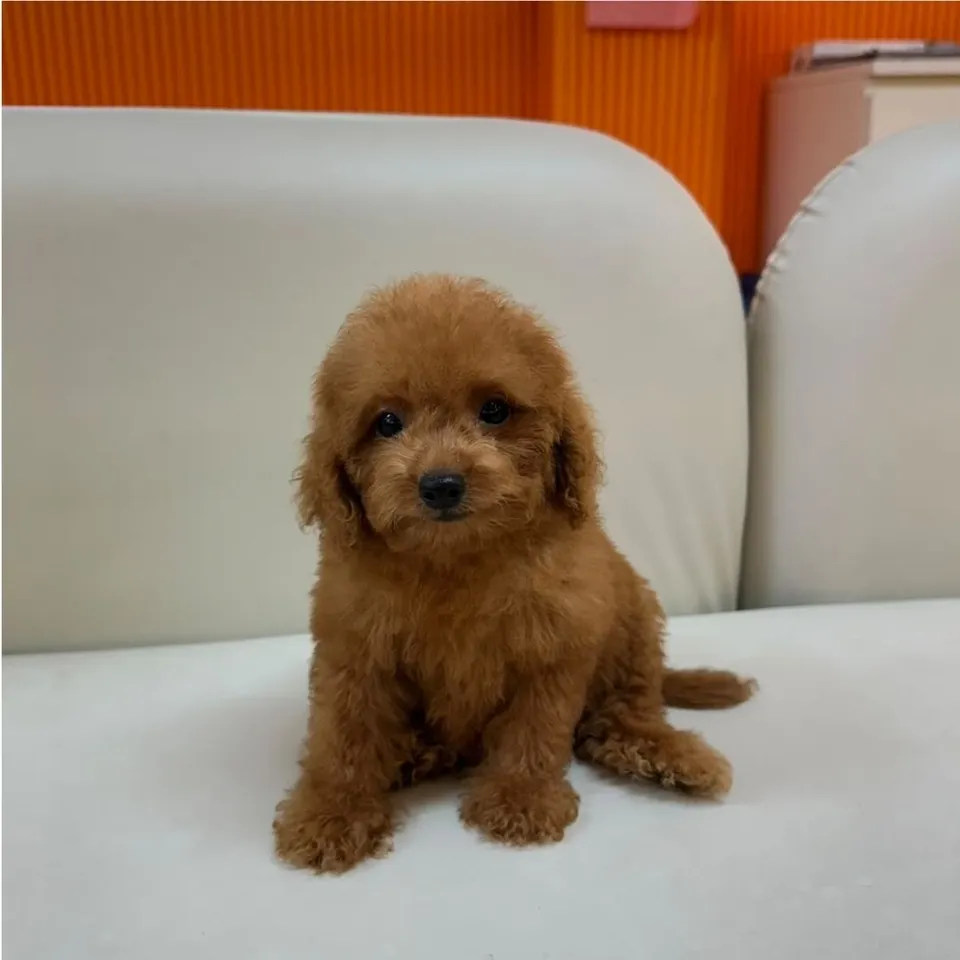
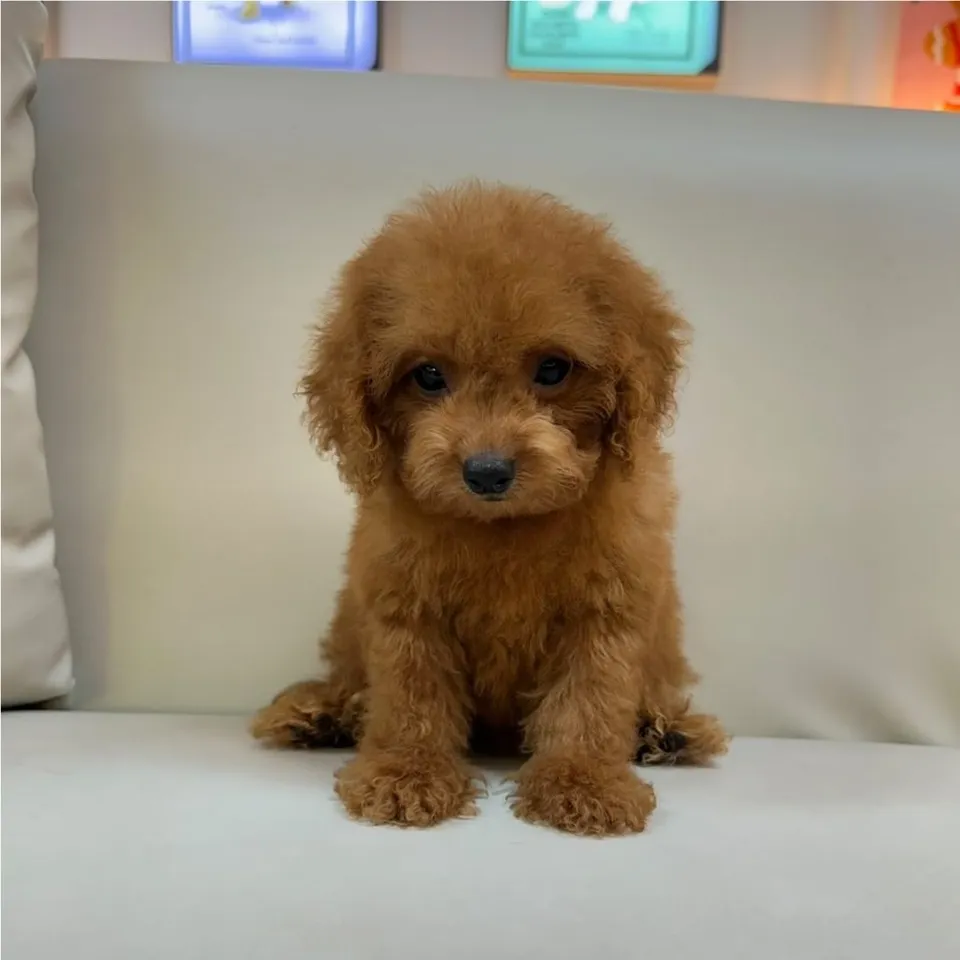
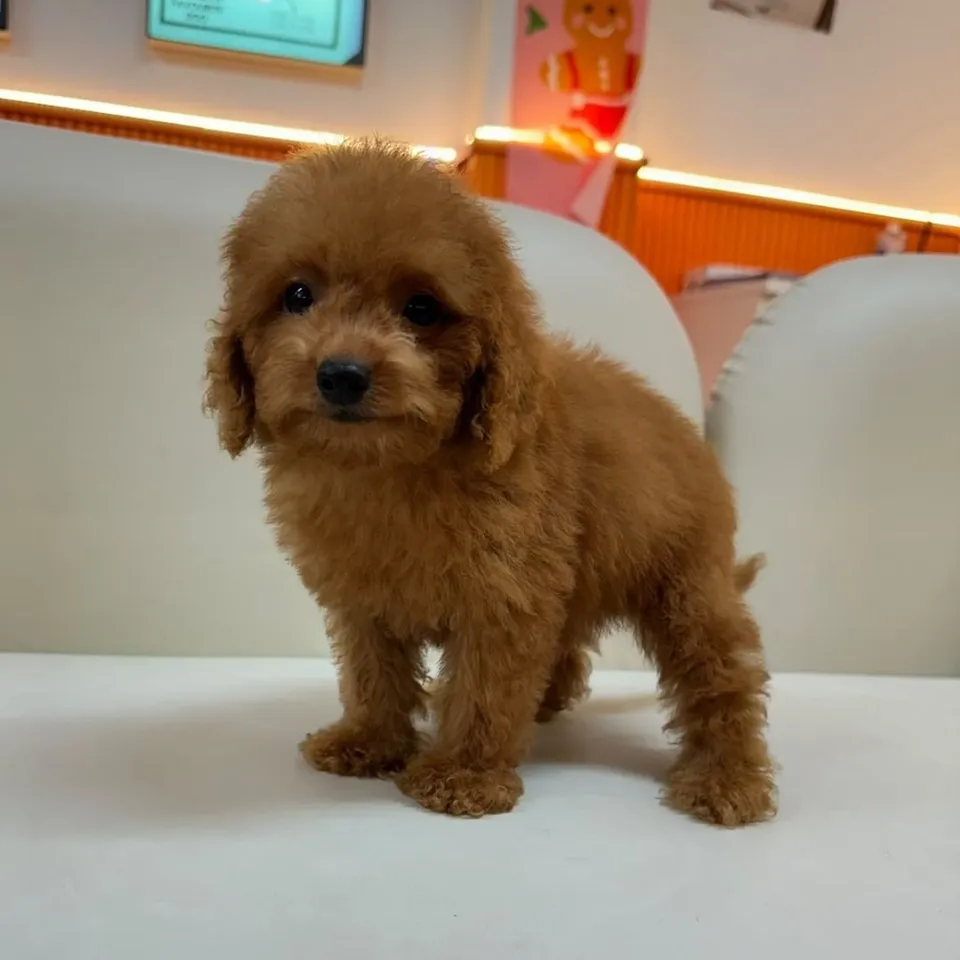
Female2 monthsHDB approved
From $3,288
Ask about Apricot Maltipoo puppyPhotos and price for Apricot Maltipoo puppyPapillon puppy Singapore, the short answer: $4,088–$6,088 from Puppy Singapore, an AVS-licensed seller, vet-checked, vaccinated and microchipped under licence BR25052. The breed is HDB-approved at 2–4.5 kg and lives 14–17 years, which is among the longest on this site.
One thing below is on no other page for this breed, and it is the thing most likely to change your mind: this is not really a lap dog, and our own data says so.
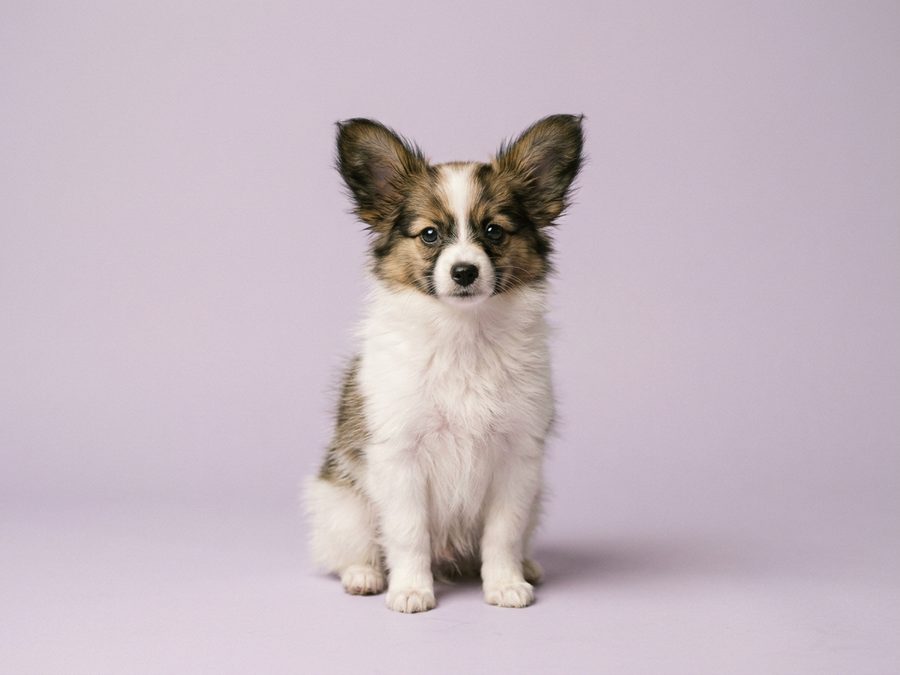
Every Papillon puppy for sale here carries the price on the card, before any enquiry, and that is the price you pay. Papillon dog Singapore price searches usually end at an enquiry form; this Papillon puppy Singapore listing ends at a number. Papillon puppies Singapore buyers can actually view are listed below rather than described.
We have no Papillon right now, and the last litter has gone home. Papillon puppies in Singapore are uncommon and litters are infrequent, so gaps here run longer than on most pages of this site.
With us this week, for an HDB flat
These are not Papillons and they are not a substitute for one. They are the breeds we have puppies of today that suit the same kind of home, counted from the same roster the availability page renders.
The puppies that come closest
Real puppies at the farm today, photographed and priced, from the breeds above. Message us about one and we will send video the same day.
Available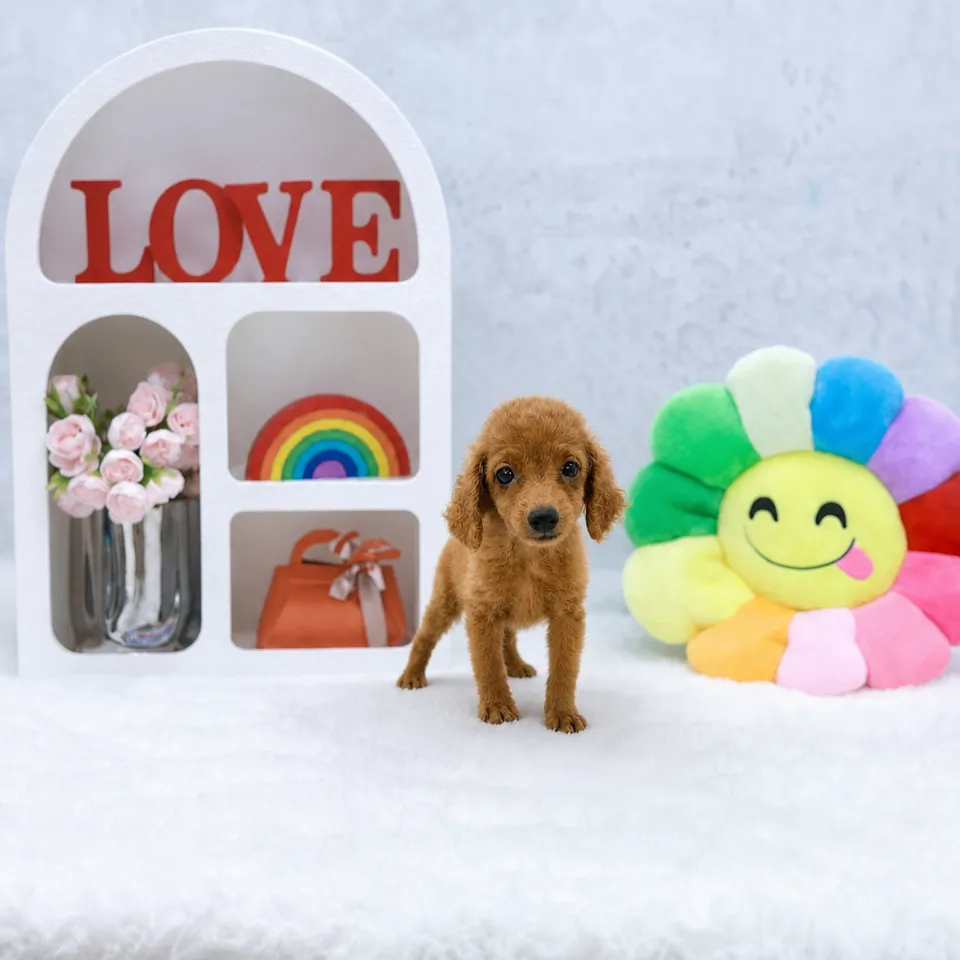 Available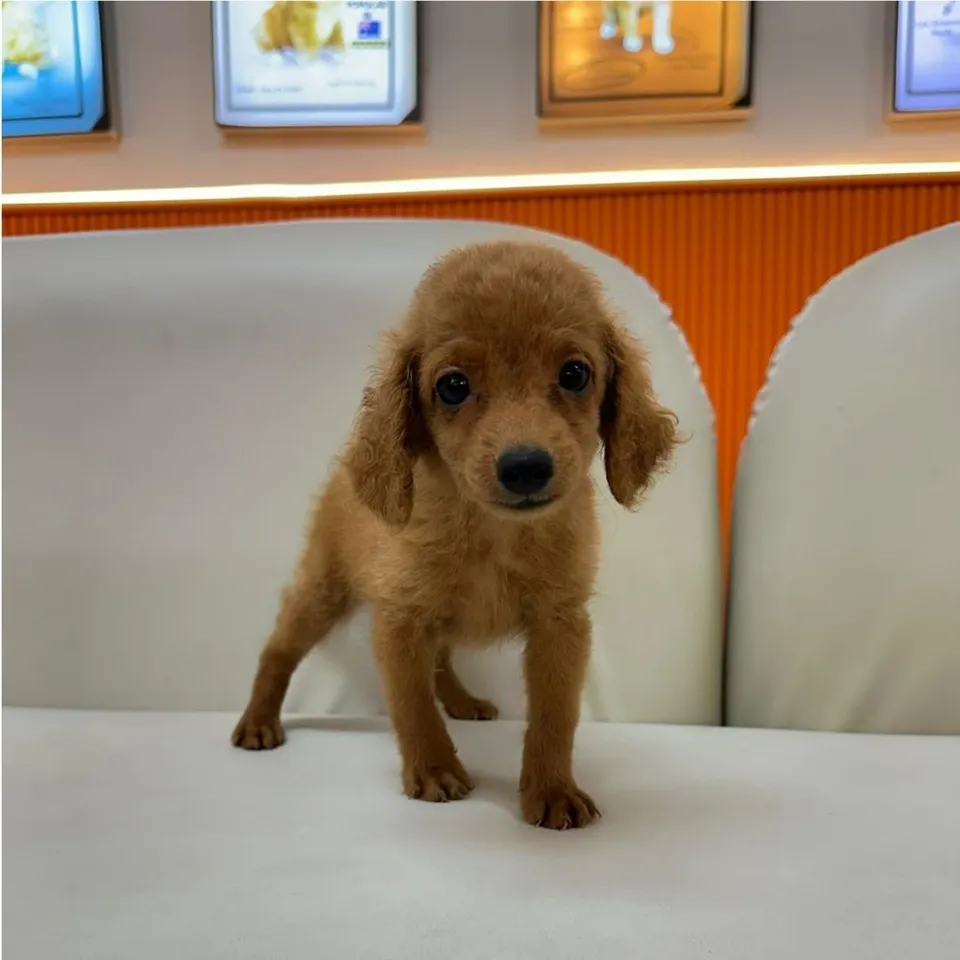
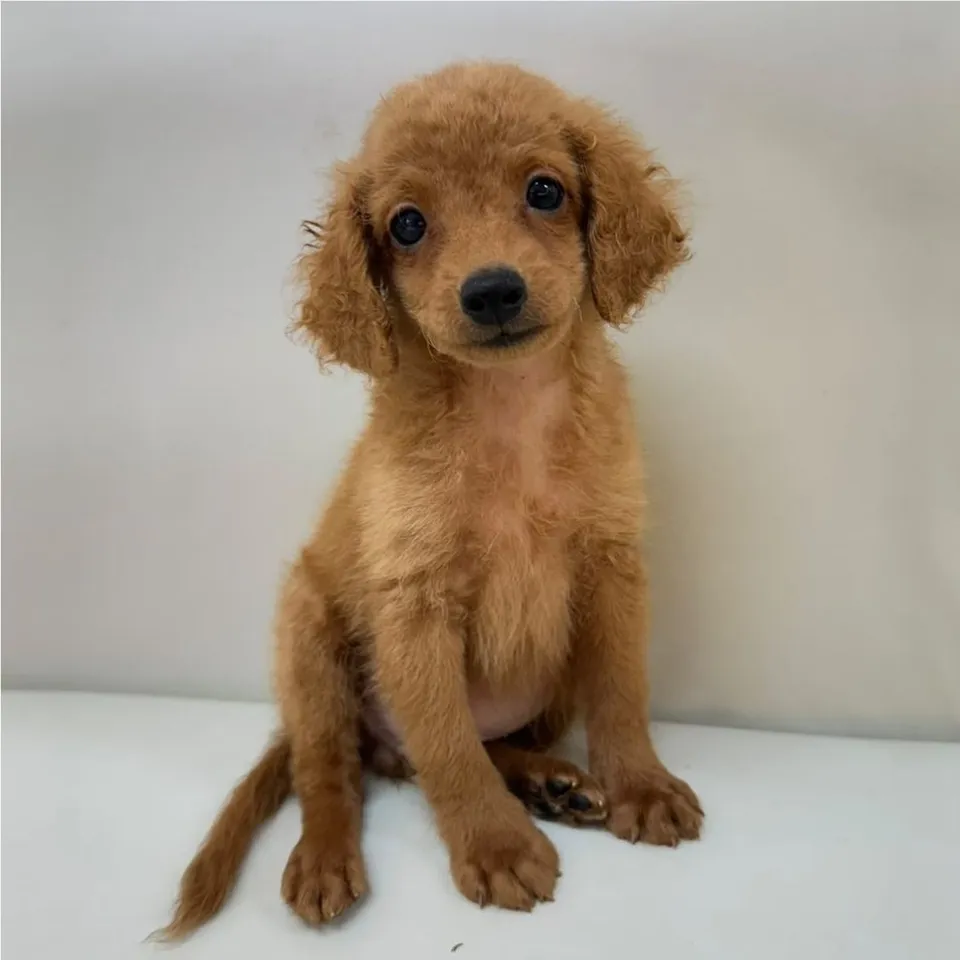
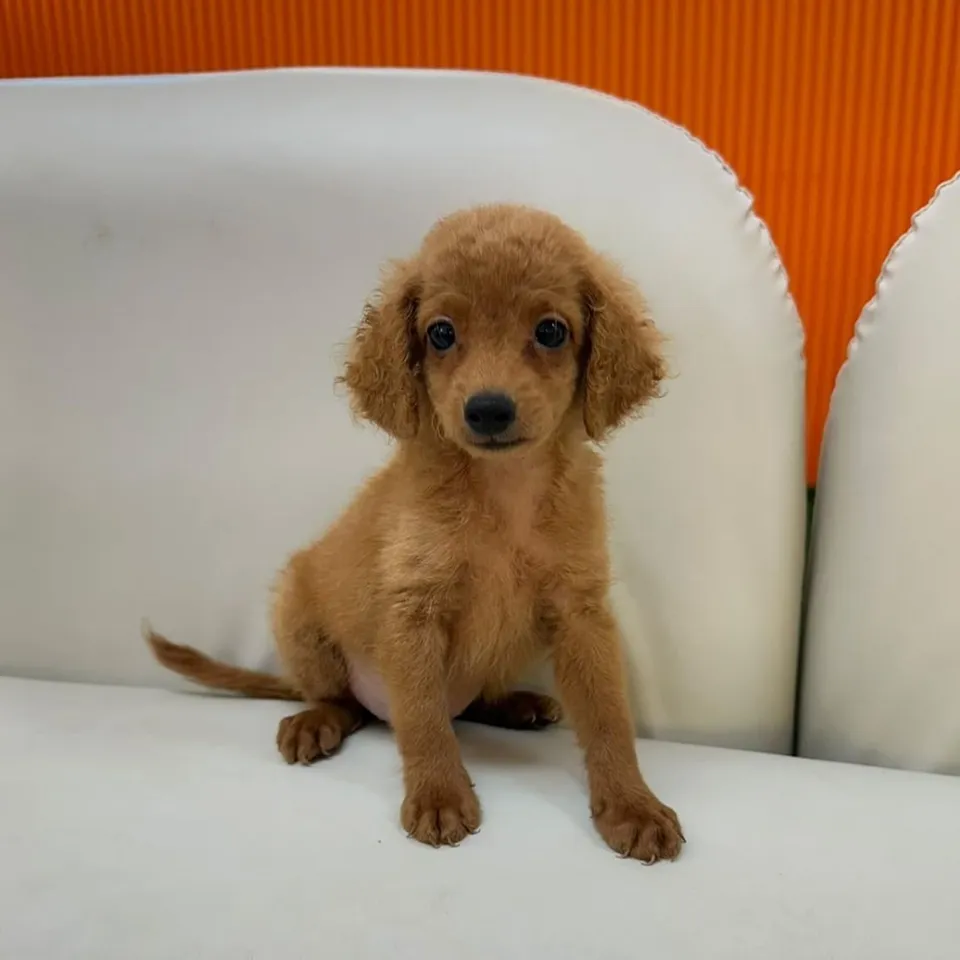
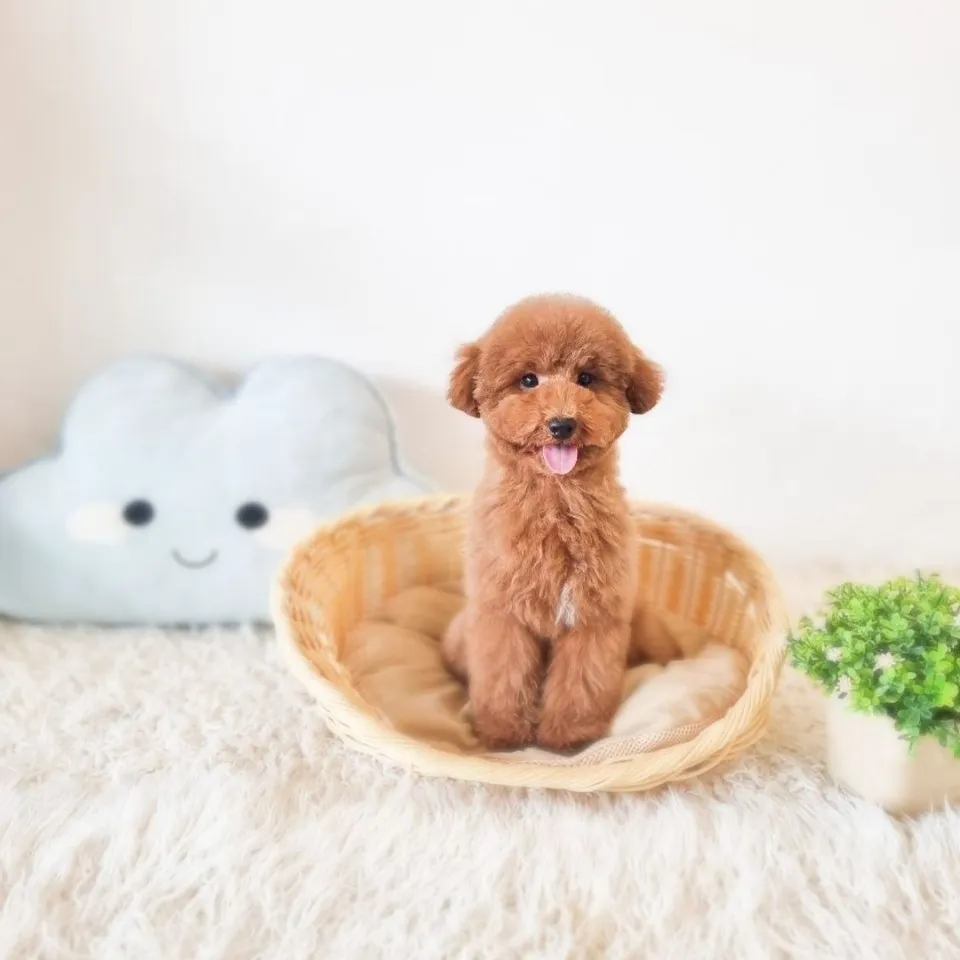 Available
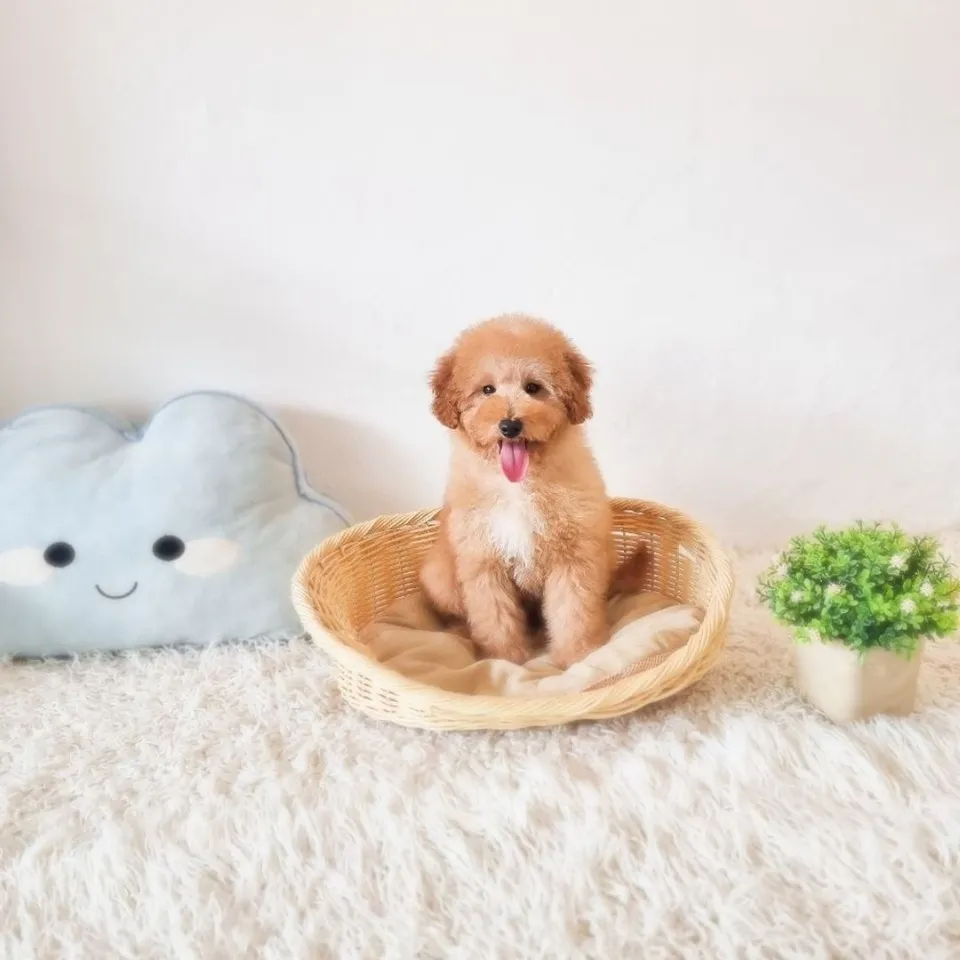 Available
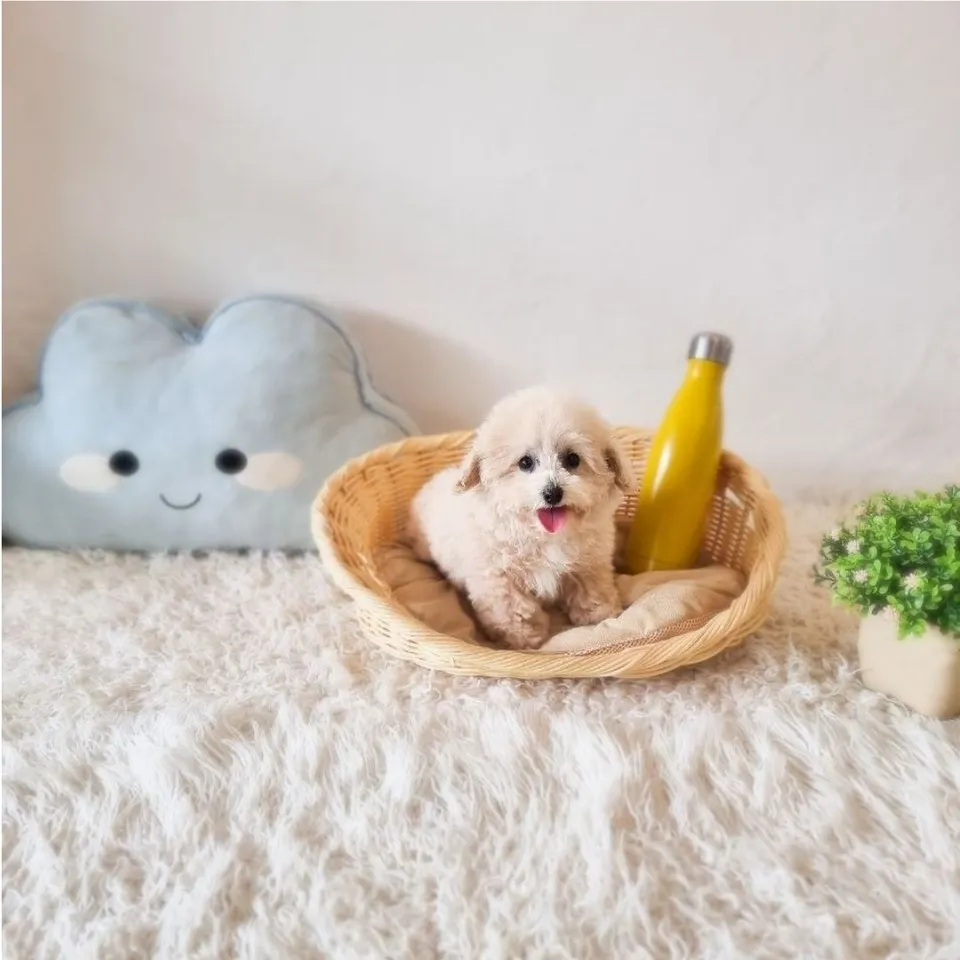 Available
 Available
Nine illustrations of the breed: the coat colours a Papillon comes in, the size it grows to, and the coat between grooming appointments. These are drawings of the breed, not photographs of puppies for sale. Every puppy we really have is photographed and listed on the availability page.
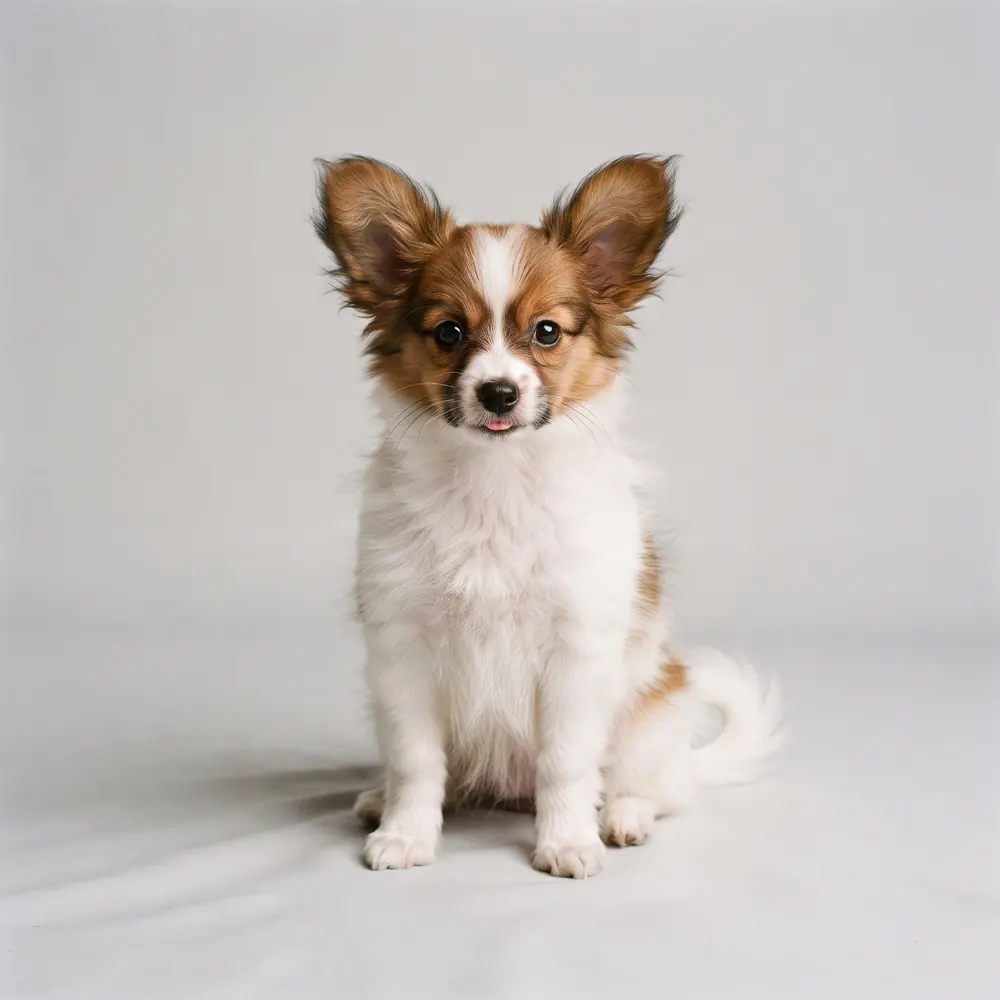
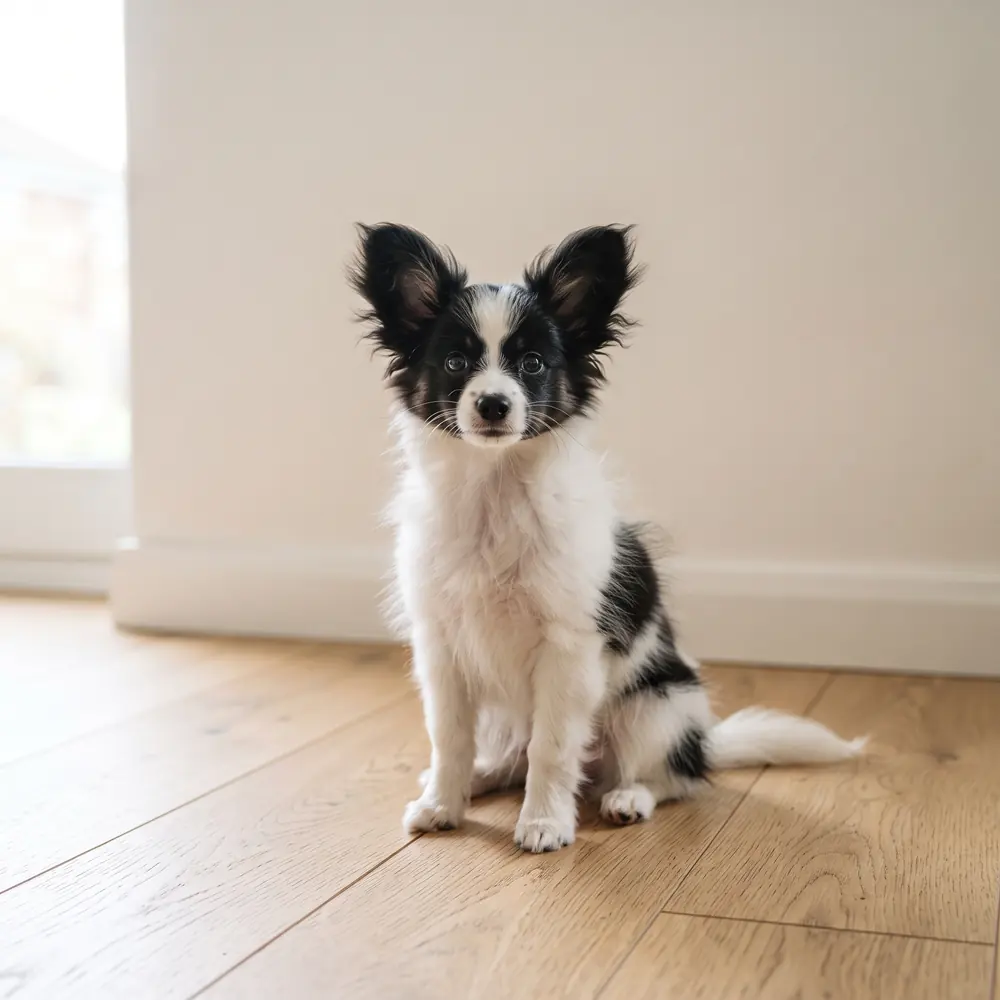
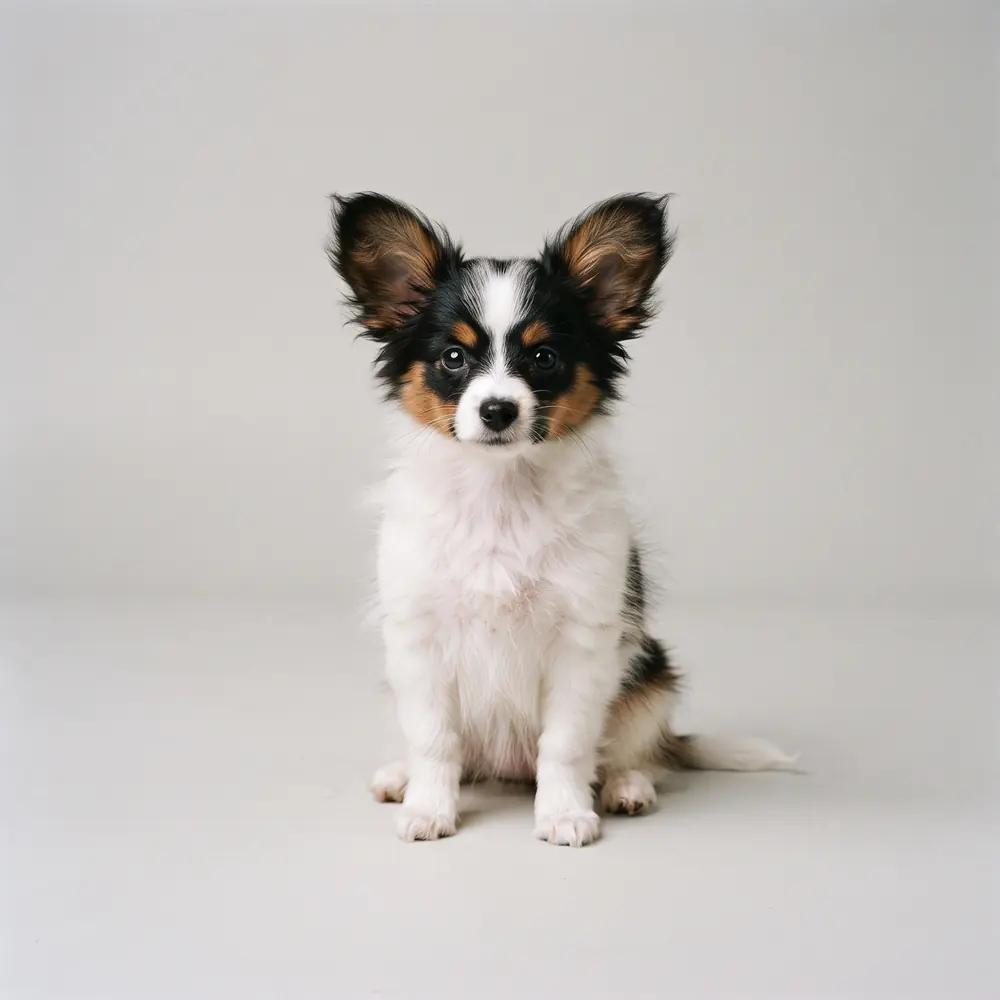
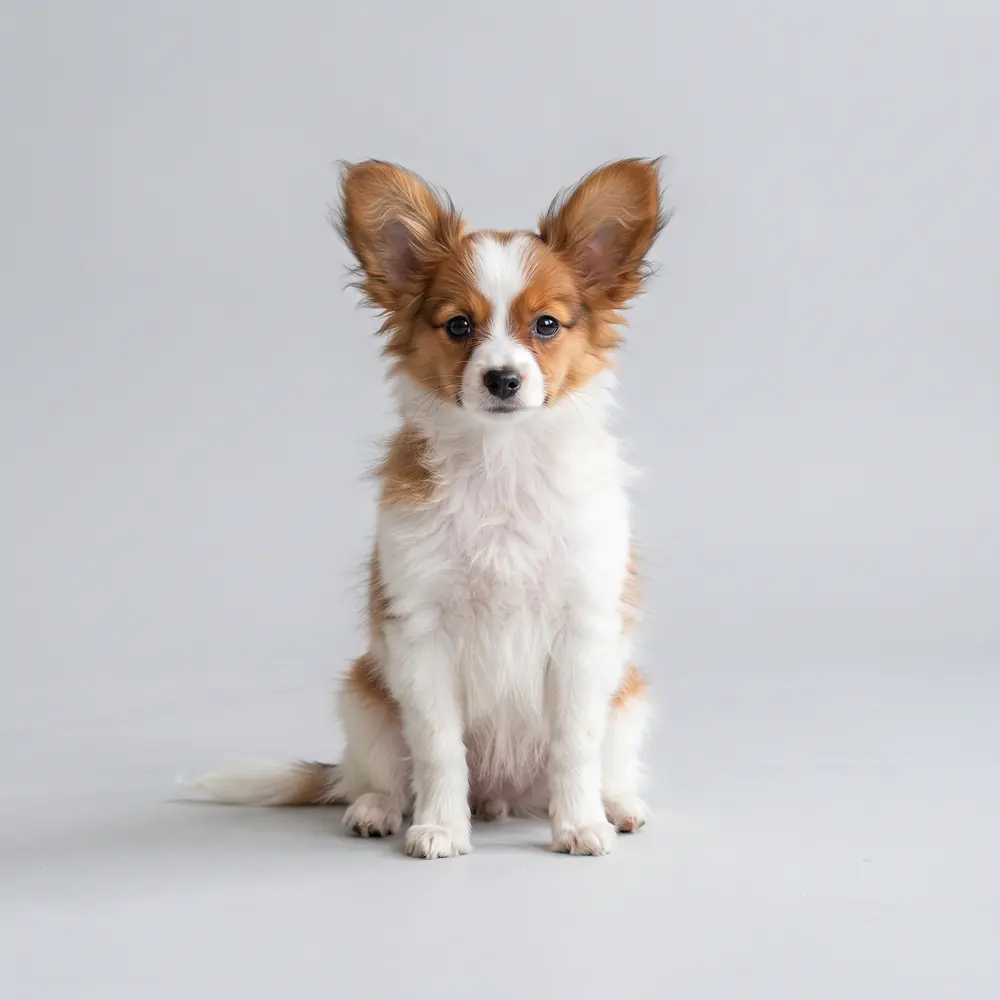
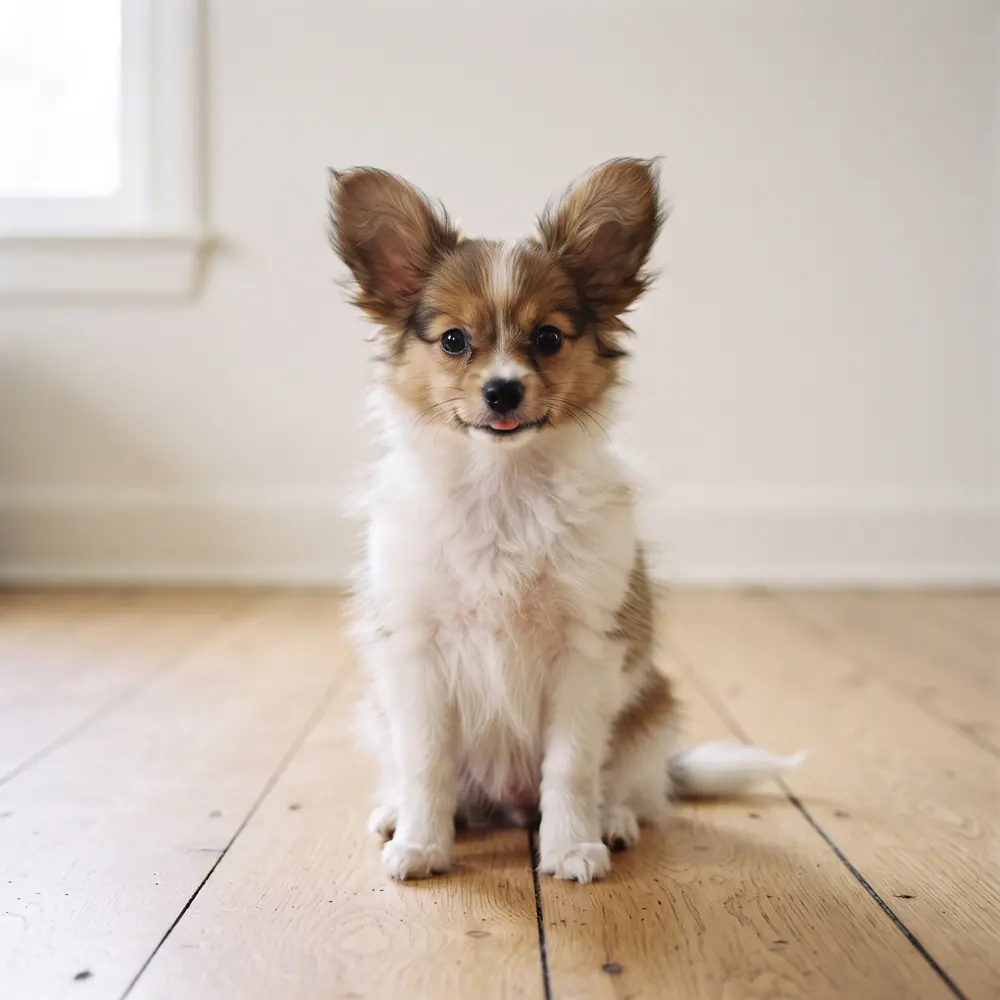
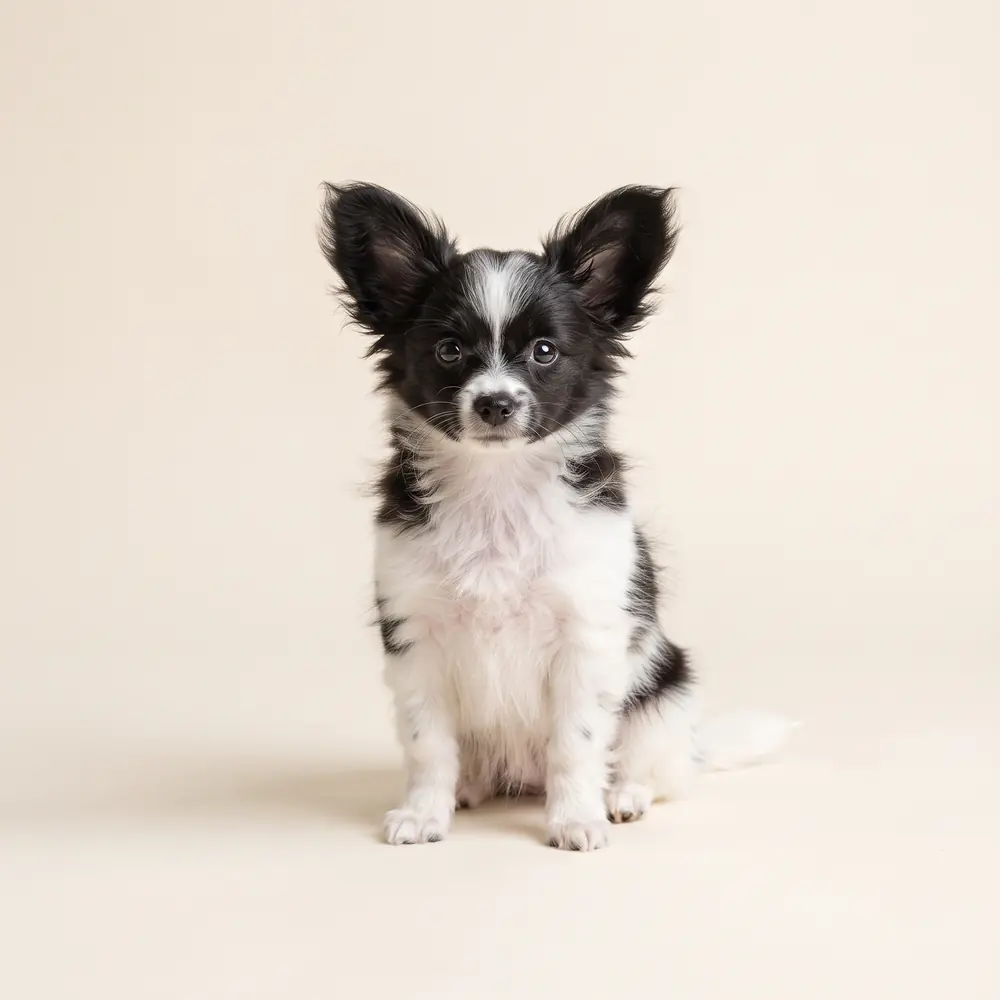
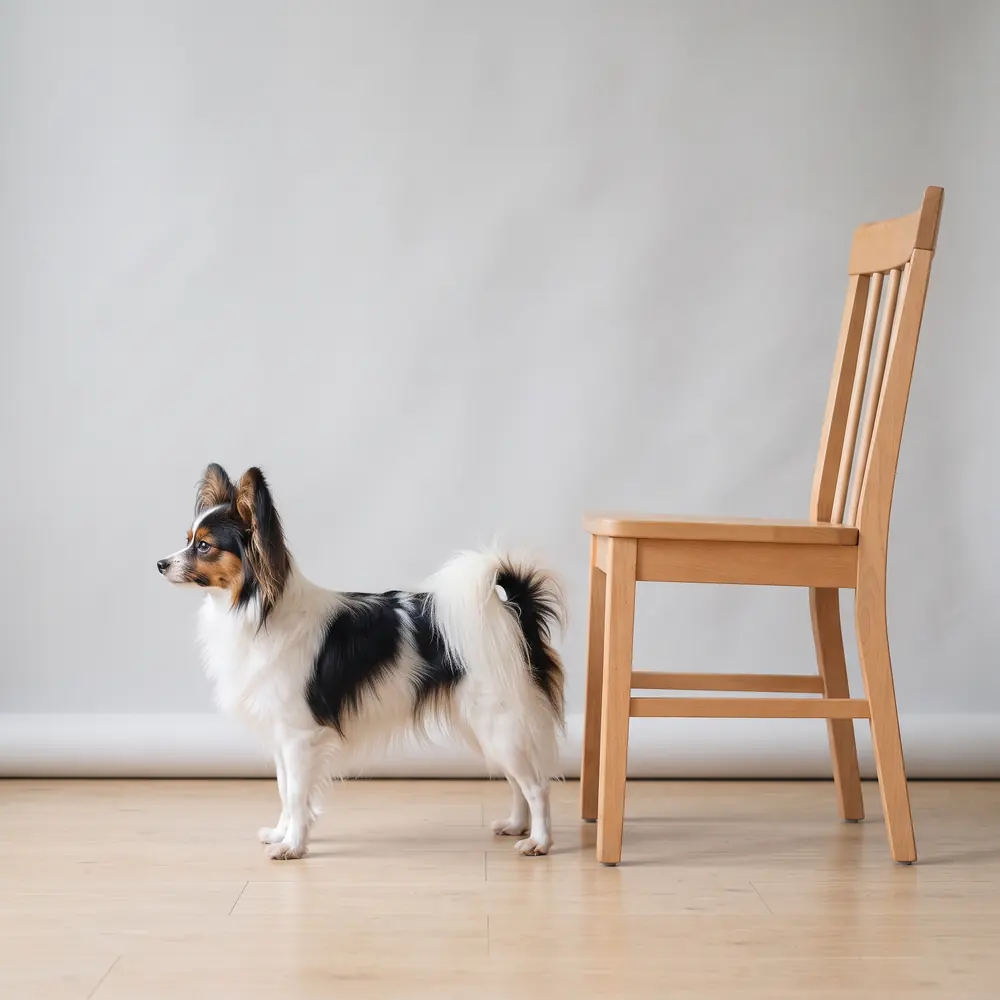
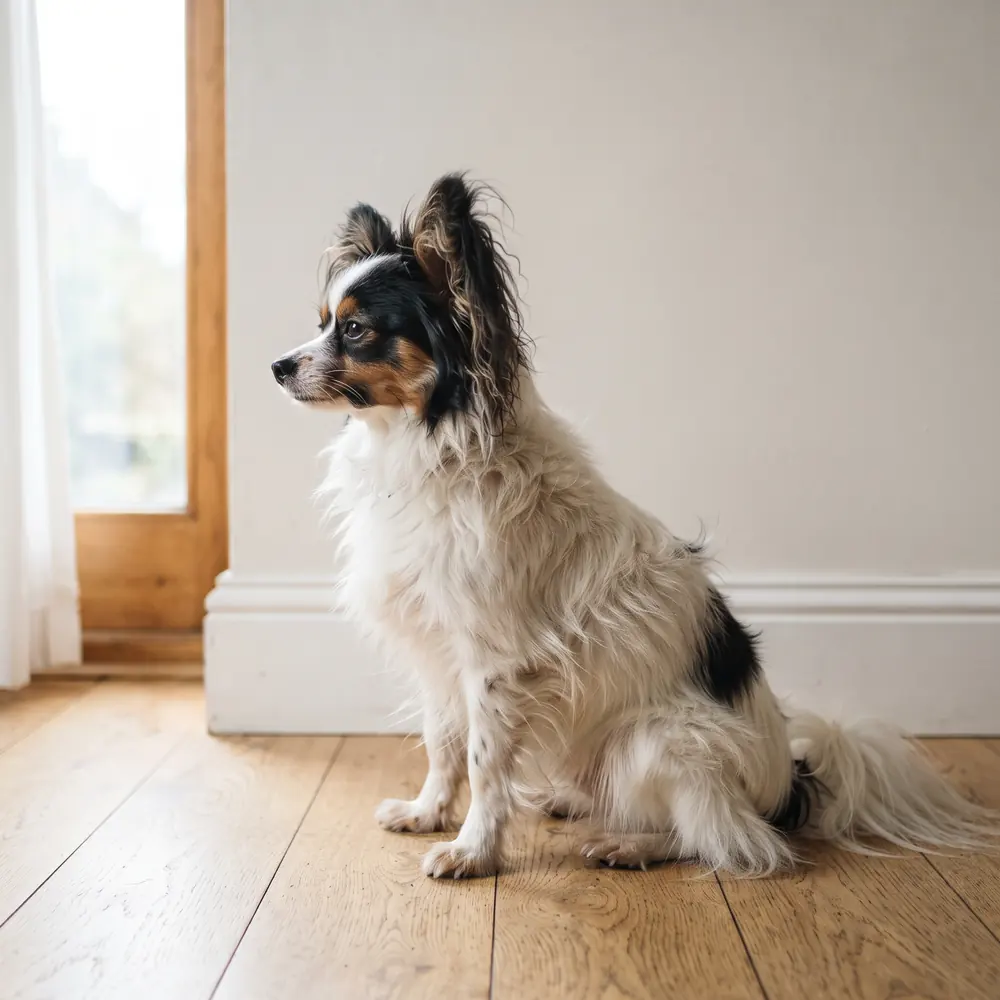
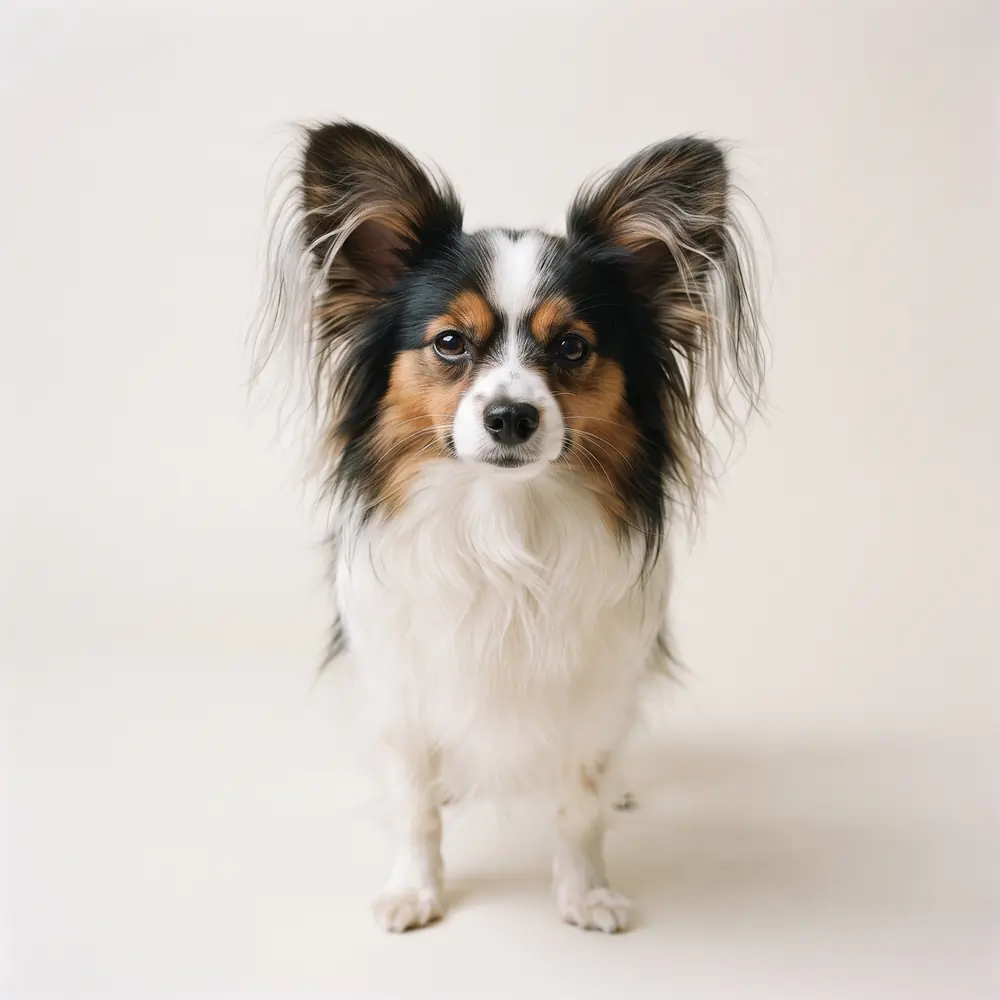
A Papillon puppy costs $4,088–$6,088 from an AVS-licensed seller in Singapore. That price includes vaccinations to date, deworming, a vet health check, a microchip, health certification and ancestry records. Age, sex and litter move a puppy inside the band, and being an uncommon breed here does not add a premium.
Every photograph of this breed sells a lap dog: two kilos of silk and fringed ears, sitting on a cushion. Our own data tells a different story, and it is the most useful thing on this page.
Of the 22 HDB-approved toy and small breeds we sell, only three are rated above medium energy, and one of those is a toy breed. It is this one.
The clearest evidence is not our data at all, it is the sport. Papillons are consistent front-runners in dog agility, competing against breeds many times their size. A dog that wins at agility is not a dog that sleeps on a cushion all day.
If a genuine lap dog is what you are after, the toy breed that really is a lap dog is a better fit, and it is on the same approved list.
Not in the way people expect, and the surprise runs the opposite direction from most long-coated toys on this site.
| Area | Demanding? | What it means day to day |
|---|---|---|
| Coat | No | No undercoat, brushed rather than cut, and rated medium in our own data |
| Shedding | No | Low in our data, and there is no seasonal coat blow to manage |
| Exercise | Yes, and this is the real one | A proper daily outing, in the cool hours, every day |
| Training | Yes, in the good sense | A clever dog that needs a job, and enjoys having one |
| Food | No | Among the smallest food bills on this site |
That is worth putting beside the trade a Yorkshire Terrier asks for, where the coat is the standing cost and the exercise is modest. Here it is the other way round: you pay this breed in walks and training rather than in grooming appointments.
This turns up in the questions people ask around this breed, which makes sense once you picture somebody shopping and wondering where the ceiling is. We will not claim to know the market, and we can answer for our own list, which is published in full.
The Coton de Tulear is the dearest breed we sell, at $9,888–$12,888. The Papillon is thirteenth on that list at $4,088–$6,088.
Uncommon in Singapore rather than rare. You will not meet many on a walk here and our litters are infrequent, and worldwide this is a long-established breed with a stable population.
The price list above is the practical proof that rarity is not doing much work. If scarcity set prices, this breed would be at the top of it rather than in the middle.
Papillon is French for butterfly, and it names the ears rather than the dog: large, fringed and carried upright, like a pair of open wings either side of the face.
The drop-eared variety of the same breed has its own name. It is the Phalene, French for moth, because the ears fold down the way a moth holds its wings at rest.
They can be, and the root is the thing worth knowing. This is boredom barking from a clever dog with nothing to do, rather than the distress of a dog that cannot bear to be left.
That is a different problem from the one a Maltese has, and it has a different fix. Exercise and mental work reduce it. More correction does not.
For a normal working stretch, yes, on one condition: the dog has been properly exercised and has something to occupy it while you are out.
A long empty day with no outlet is what produces the barking in the section above. Build alone time deliberately in short stretches from the first week, rather than after the first conversation with a neighbour.
No. What people are usually seeing in a small confident dog is undersocialisation rather than temperament.
A Papillon that has not met enough people, dogs and situations gets loud and defensive, and the same dog properly socialised is friendly and outgoing. In a small breed that gap is wider than in a large one, because a nervous 3 kg dog is easy to carry away from the thing that worried it rather than work through it.
We publish no bite statistics and no breed rankings, in either direction. Those numbers get quoted by people arguing, and we hold none we can stand behind.
Written by a seller, so read the right-hand column with that in mind: it is the one that costs us sales when it is honest.
| Pros | Cons | |
|---|---|---|
| Housing | HDB-approved and genuinely small | One dog per flat still applies |
| Energy | Up for anything you want to do | The only toy breed on our flat-legal list above medium, and it shows daily |
| Coat | No undercoat, medium grooming, brushed not cut | The fringing still needs regular attention |
| Intelligence | Exceptionally trainable, and a joy to teach | A clever dog with nothing to do invents a job |
| Size | Portable and cheap to feed | Genuinely fragile around feet, doors and larger dogs |
| Lifespan | 14–17 years | A very long commitment, and the energy does not taper for years |
| Household | Verdict | Why |
|---|---|---|
| Active household, flat or landed | Excellent | The dog fits an existing routine rather than requiring a new one |
| Family with school-age children | Very good | Playful and sturdy for its size, with children taught to handle a small dog |
| Anyone who enjoys training | Ideal | One of the most trainable breeds on this site, at any size |
| Household with toddlers | No | A 2 to 4.5 kg dog and a small child are a bad combination for both |
| Anyone wanting a cushion dog | Wrong breed | The whole of this page is about that mismatch |
Generally, and the lifespan is the evidence rather than an opinion: our own breed data gives 14–17 years, which is among the longest of any breed we sell.
| Line | Typical cost | What moves it |
|---|---|---|
| Food | The very low end of the $30 to $120 a month band | A 2–4.5 kg dog eats very little |
| Grooming | Moderate rather than heavy | Brushing at home does most of it, with no cutting cycle |
| Dental care | A predictable expense in a toy mouth | Whether anyone brushes from week one, over 14–17 years |
| AVS dog licence | $15 a year sterilised, $90 if not | Duration and sterilisation status, less a 10% online rebate |
Our price hub publishes what a Papillon costs here to buy and to keep, breed by breed.
The timeline is set by the vaccination schedule, not by us. Core vaccinations run at weeks 6, 8 and 12, with an optional dose at week 16, and deworming happens at every visit.
Papillon adoption is a real search and the honest answer is that this breed very seldom appears in local rescue. There are not many of them here to begin with.
If you want one, the realistic routes are a waitlist with a licensed seller or a breed-specific rescue overseas, and the second of those is a considerable undertaking. Neither is a quick answer, and pretending otherwise would waste your time.
Named for its butterfly-shaped ears (papillon is French for butterfly), this toy spaniel appears in European noble portraits from the 1500s.
Centuries as a companion to European nobility produced a dog bred for company and for cleverness rather than for a working job, and the cleverness is what survived most intact. That is why it wins at agility and why it needs a job in a flat.
All four are HDB-approved toys, so energy is the column that actually separates them.
| Breed | HDB flat | Adult weight | Energy | Typical range |
|---|---|---|---|---|
| Papillon | Yes, approved | 2–4.5 kg | Medium–high | $4,088–$6,088 |
| Pomeranian | Yes, approved | 1.5–3.5 kg | Medium | $4,888–$5,388 |
| Chihuahua | Yes, approved | 1.5–3 kg | Medium | $4,288–$4,888 |
| Toy Poodle | Yes, approved | 2–4 kg | Medium | $3,488–$5,988 |
Same list, same flat, four very different daily routines. The energy column is the one to read if you are choosing between them.
Figures last checked 26 August 2026.