
Puppy Singapore
Menu
$4,288–$5,988 · HDB-approved · AVS licence BR25052 · updated September 2026

Maltese Puppy for Sale Singapore

Maltese puppy for sale Singapore, the short answer: $4,288–$5,988 from Puppy Singapore, an AVS-licensed seller, vet-checked, vaccinated and microchipped under licence BR25052. The breed is HDB-approved at 2–4 kg and lives 12–15 years.

Two answers below are on no other page for this breed: why this dog copes with the heat better than the one it is usually compared with, and why colour can never move its price.

Available now

Maltese puppy for sale Singapore: available now

Maltese puppies for sale here carry the price on the card, before any enquiry, and that is the price you pay. Maltese dog price Singapore searches usually end at an enquiry form; this one ends at a number.

We have no Maltese right now, and the last litter has gone home. Gaps are normal in a toy breed rather than a sign that something is wrong.

Recently placed

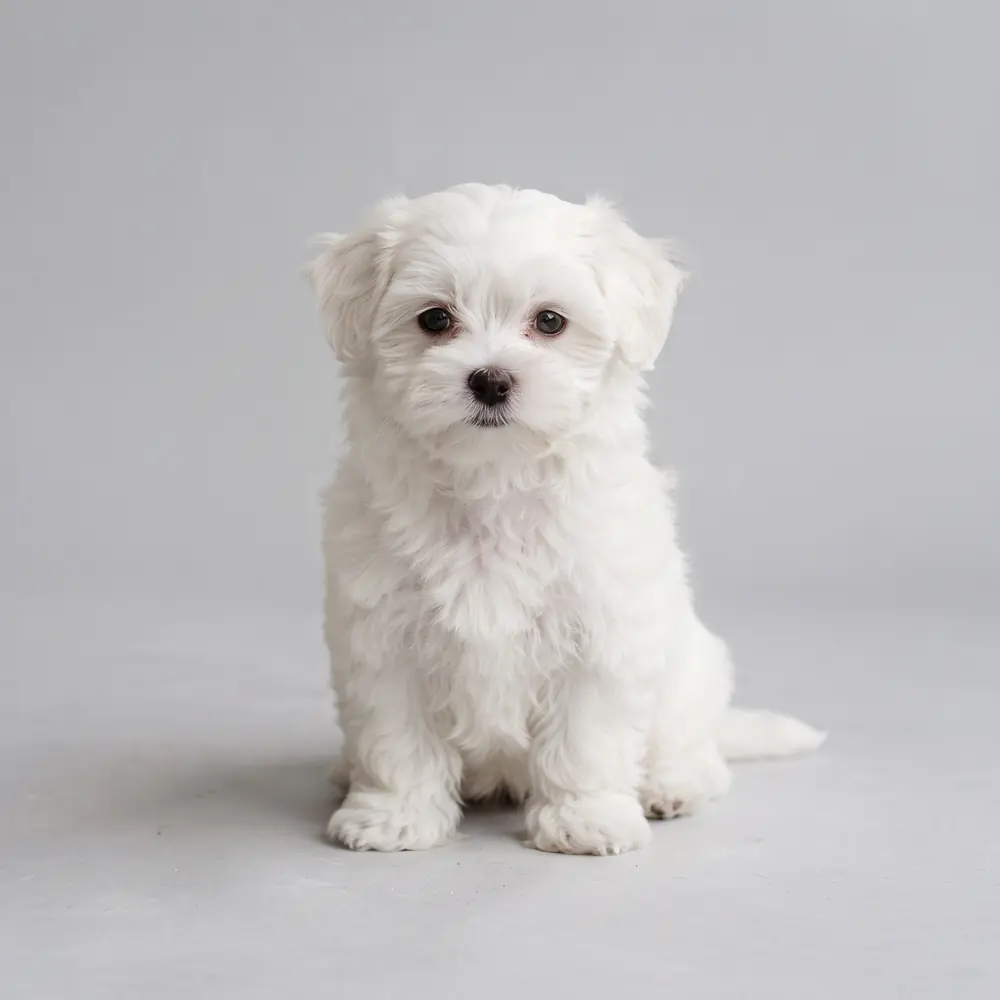
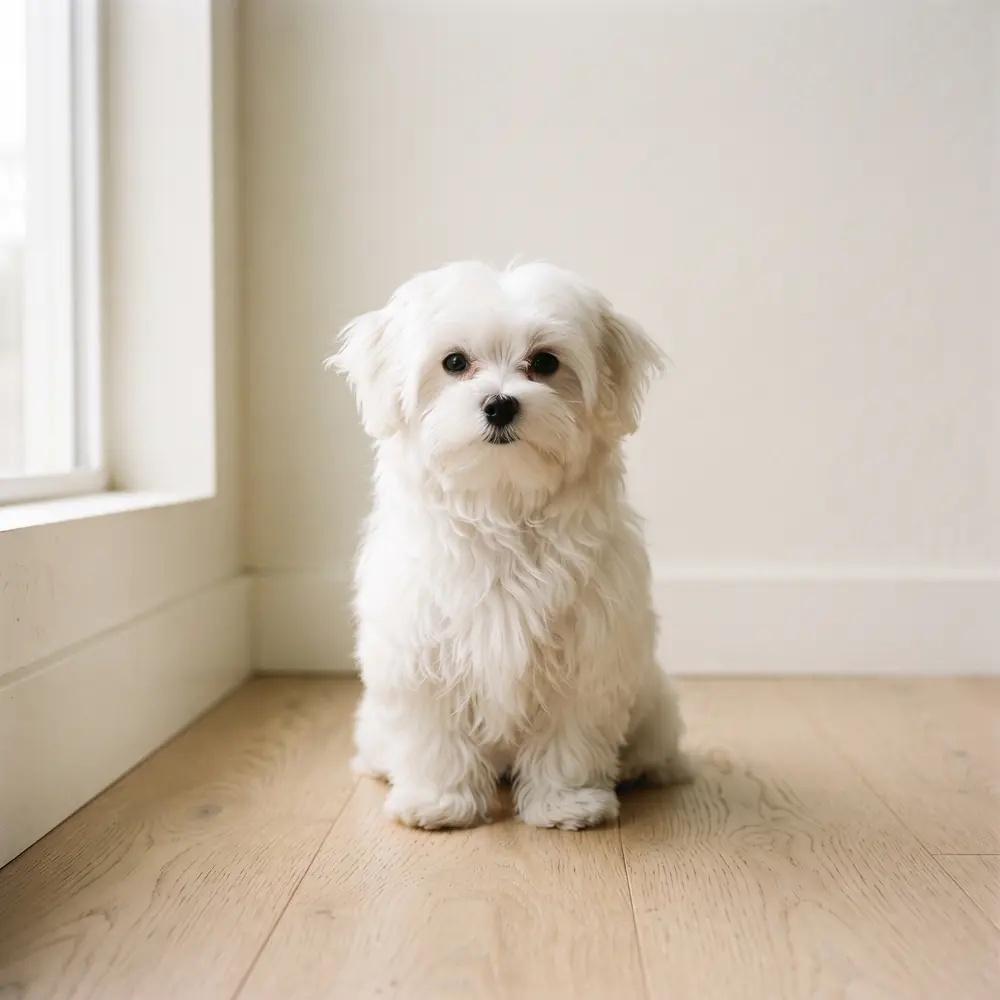
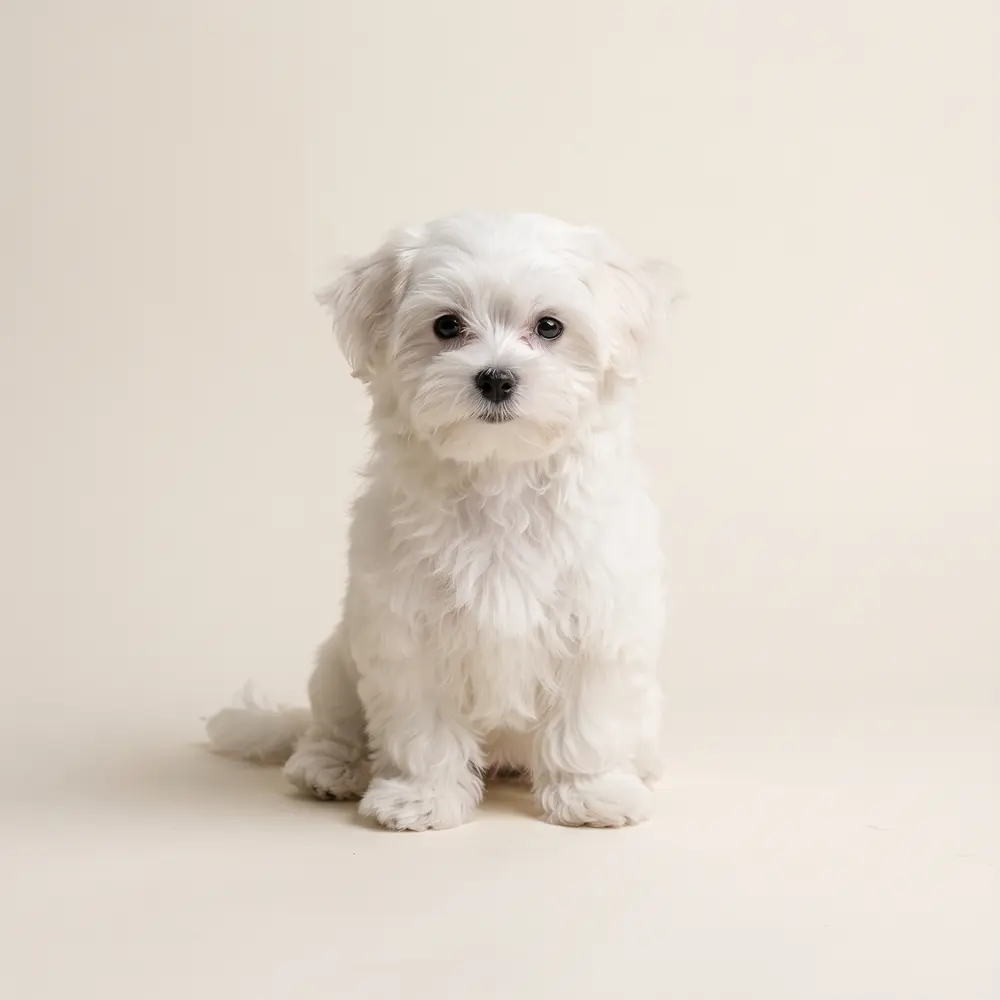
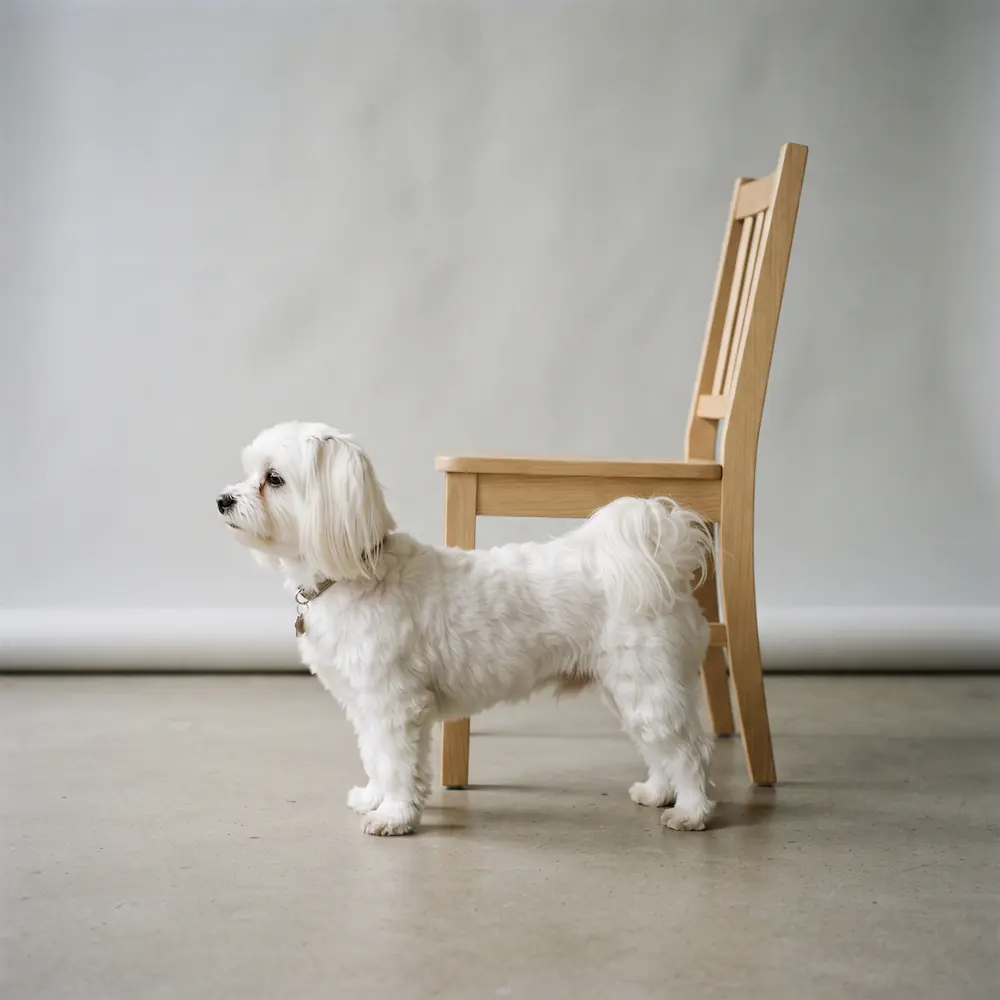
These placed Maltese puppies have already gone home. They are here so you can see what our litters look like, not as available stock.


The three facts that decide this breed for a Singapore buyer

Price: $4,288–$5,988
Published per breed before you enquire. Colour cannot move it, because this breed comes in one colour only.
Housing: HDB-approved
The Maltese HDB answer is yes: it is on the HDB-approved breed list at 2–4 kg, one dog per flat, with a valid AVS dog licence.
It needs company
Bred for nothing but companionship for two thousand years. A flat that is empty all day is the one thing this breed genuinely cannot do.

How much should I pay for a Maltese puppy?

A Maltese puppy costs $4,288–$5,988 from an AVS-licensed seller in Singapore. That price includes vaccinations to date, deworming, a vet health check, a microchip, health certification and ancestry records. Age, sex and litter move a puppy inside the band, and colour cannot, because there is only one.

What a Maltese puppy price includes

Every Maltese puppy for sale Singapore buyers find on this site carries its price in public. Six things travel with the puppy, and each is a document or a procedure rather than a promise.

  • Vaccinations to date, in the booklet that goes home with the puppy.
  • Deworming, at every vet visit through the schedule.
  • A vet health check before the puppy is cleared to travel.
  • A microchip, implanted and registered.
  • Health certification and ancestry records, signed and dated.
  • Kennel club registration where the litter qualifies.

Why is Maltese so expensive?

Our band is $4,288–$5,988, and it is published before you enquire rather than quoted after. What moves a Maltese puppy inside it is age, sex and which litter it came from, and the Maltese cost in Singapore does not move with colour at all.

We publish no market average, no rarity claim and no litter-size figure, because we hold none we can stand behind. What we can tell you is the one thing that never moves the price on this breed, and it has a section of its own below.

What a Maltese costs to keep, every month

Recurring costs for a Maltese in Singapore
LineTypical costWhat moves it
FoodThe very low end of the $30 to $120 a month bandA 2–4 kg dog eats very little
GroomingThe real recurring line in this breedA trim on a regular cycle, plus brushing at home between visits
Dental careA predictable expense in a toy mouthWhether anyone brushes from week one, over 12–15 years
AVS dog licence$15 a year sterilised, $90 if notDuration and sterilisation status, less a 10% online rebate

The food bill is among the smallest on this site and the grooming bill is not. Our price hub publishes what each breed actually costs to buy and to keep, breed by breed.

Pricing, published
$4,288–$5,988
Published price for this breed (SGD).
  • Vet health check & vaccinations to date
  • Deworming (done with every vaccination visit)
  • Health certification & ancestry records
  • Microchipped before homecoming
  • Door-to-door delivery available
WhatsApp for availability

Where a Maltese owner's yearly cost actually goes

Recurring yearly costs for a Maltese in SingaporeGrooming is the largest recurring line because the coat grows continuously and is trimmed on a cycle. Dental care follows in a toy mouth. Food is very small for a dog of this weight, and the dog licence is the smallest line.Groominga trim on a cycle, for the dog's whole lifeDentala toy mouth over a long lifeFoodamong the smallest food bills hereLicence$15 a year sterilised
The recurring lines for a 2 to 4 kg dog with a continuously growing white coat. Grooming dominates and food barely registers. Source: the cost bands published on this site's price hub.

Is a Shih Tzu or Maltese better?

We sell both and publish both prices, so there is no reason to steer you toward whichever one is in stock this week. On temperament these two are more alike than different, which is why comparing them on personality gets nobody anywhere.

In Singapore the decisive difference is the muzzle. The Shih Tzu is a brachycephalic, or flat-faced, breed and the Maltese is not, and a dog cools itself mainly by panting.

The same two dogs, compared on what actually differs

Maltese compared with Shih Tzu on the points that differBoth are approved for flats and both need regular grooming, so those are not differences. The Maltese has a normal muzzle and cools itself more efficiently in the heat. The Shih Tzu is the sturdier dog, is less dependent on company, and starts cheaper.MuzzleMaltese: normal, and cools better in this heatSturdinessShih Tzu: the heavier, less fragile dogAlone timeShih Tzu: copes better with a quiet houseFloor priceShih Tzu starts lowerFlat and coatboth approved, both groomed regularly
Both breeds are HDB-approved and both are long-coated toys that need regular grooming. The muzzle, the size and the floor price are where they genuinely separate. Source: this site's own breed data for both breeds, reviewed 26 August 2026.
Maltese and Shih Tzu, side by side
MalteseShih Tzu
HDB flatYes, approvedYes, approved
MuzzleNormal, not flat-facedFlat-faced
Adult weight2–4 kg4–7 kg
GroomingHighHigh
Left aloneThe weakest point of the breedCopes better
Typical range$4,288–$5,988$3,988–$5,288

So: if you walk in the heat, or your flat runs warm, the Maltese is the more comfortable dog and it is not close. If your household is out a good deal, or you want the sturdier animal, or the floor price matters, the Shih Tzu is the easier choice.

What a flat face actually costs a dog is a longer subject than this section, and it is set out properly on what a flat face costs a dog in this heat. We publish no figure for how much less efficiently a flat-faced breed cools itself, because we hold none.

White is the only colour a Maltese comes in

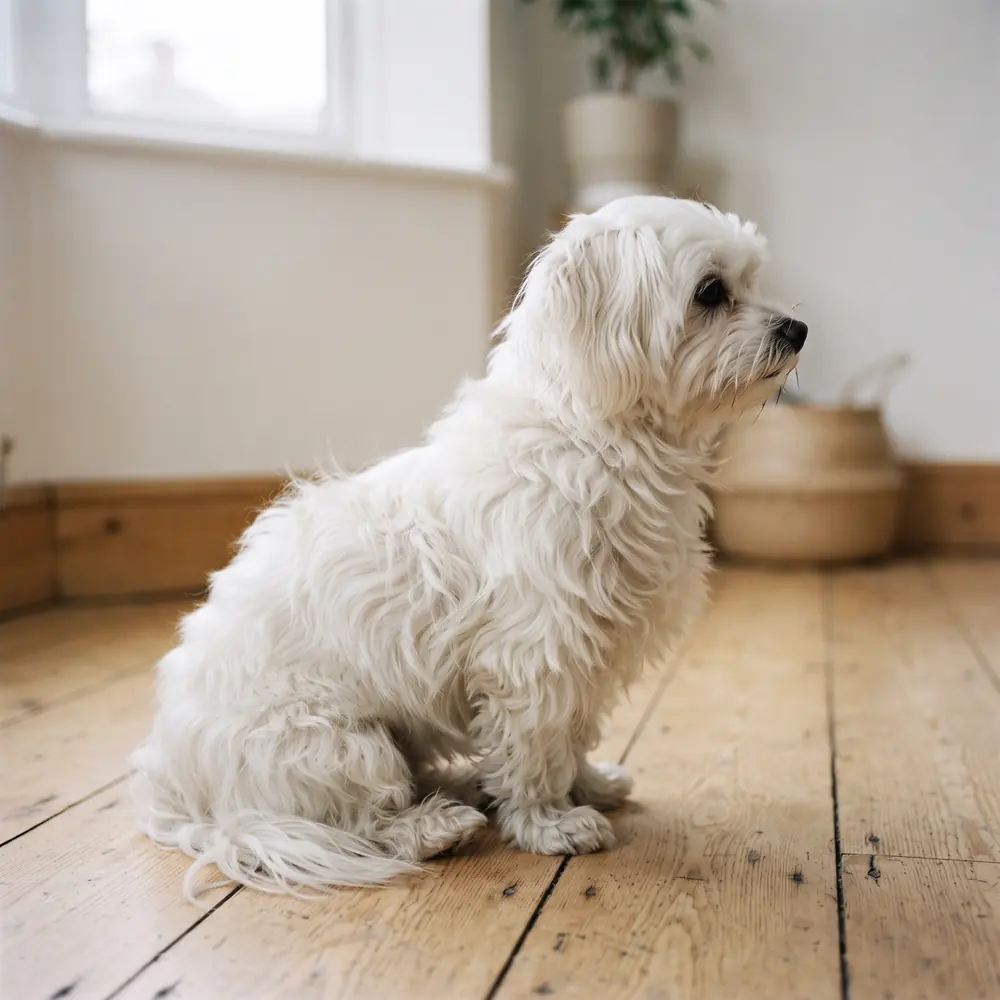
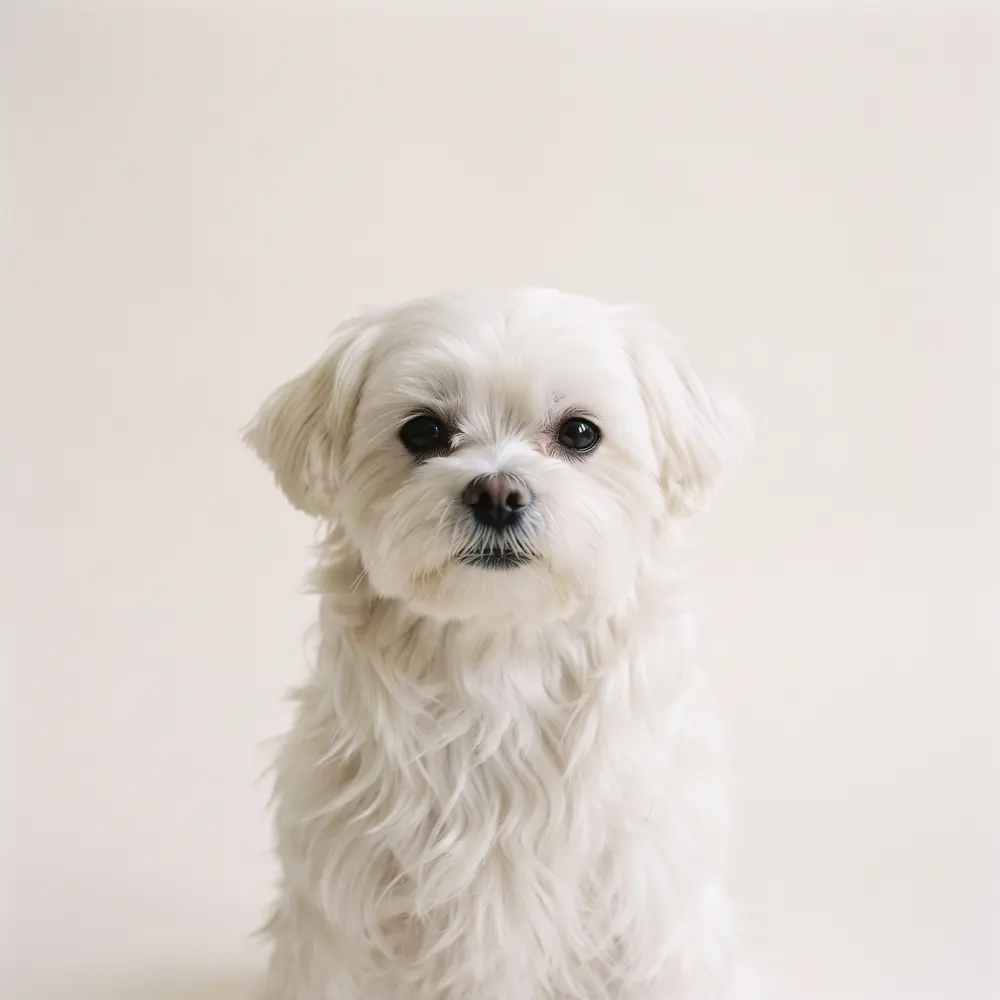
The breed standard permits pure white and nothing else. That makes the Maltese unusual on this site, where most breeds come in several colours and buyers are used to being asked to pay more for one of them.

Here there is nothing to pay more for. A puppy may carry faint lemon or tan shading on the ears, and that usually clears as the adult coat comes through.

In a one-colour breed, a colour premium is a premium for something the breed does not have.

Can a Maltese be left alone all day?

No. That is the honest answer, and this breed has a more specific reason behind it than most.

The Maltese has been kept purely as a companion for roughly two thousand years, with no working job anywhere in its history. It did not learn to want company; company is what it was selected for, generation after generation.

A distressed Maltese in an empty flat is not a training failure and not a badly bred dog. It is the breed doing exactly what it was shaped to do, with nowhere to put it.
  • What makes it work: someone breaking the day up, whether that is family, a walker or daycare.
  • What helps: building alone time in short stretches from the first week rather than after the first complaint.
  • What it looks like when it does not work: barking, and a dog that never fully settles.
  • Worth noting: this is a different problem from a bored working breed, which needs a job rather than a person.

Is Maltese a high maintenance dog?

The coat is. The dog is not. Those are two different questions that get answered as one everywhere else.

Where the maintenance actually falls on a Maltese
AreaDemanding?What it means day to day
CoatYes, genuinelyMaltese grooming in Singapore means brushing through the week, a trim on a cycle, and white shows everything
ExerciseNoA daily walk in the cool hours is enough for the body
FoodNoOne of the smallest food bills on this site
TrainingNoWilling and quick, if a little stubborn about the toilet schedule
CompanyYes, and this is the real oneIt wants to be with you, and that does not soften with age

Is a Maltese an indoor dog?

Yes, and it is one of the reasons the breed fits a flat so well. It is happiest indoors with its household and has no ambition to be an outdoor dog in this climate.

Indoors is not the same as sedentary. It still needs a daily walk in the cool hours at either end of the day, as much for its head as for its legs.

How long can a Maltese hold its pee?

An adult usually manages a normal working stretch. A puppy cannot, and on a 2 to 4 kg dog the bladder is genuinely small, so the familiar one-hour-per-month-of-age guide runs optimistic at this size.

Plan a tight schedule rather than more correction, keep the toilet spot close in the first months, and expect it to improve quickly once the dog is grown.

What is the downside of owning a Maltese?

Written by a seller, so read the right-hand column with that in mind: it is the one that costs us sales when it is honest.

Maltese pros and cons for a Singapore household
ProsCons
HousingHDB-approved and genuinely flat-sizedOne dog per flat still applies
ClimateA normal muzzle, so it copes with the heatThe white coat shows every bit of Singapore dust
CoatSheds very littleBrushing through the week and a trim on a cycle, for life
TemperamentGentle, affectionate, quick to learnDoes not cope with an empty house, and an anxious one barks
SizePortable and cheap to feedGenuinely fragile around feet, doors and larger dogs
Lifespan12–15 yearsA long commitment, and the grooming runs the whole length of it
A Shih Tzu, the flat-faced breed Singapore buyers most often weigh against a Maltese

Is it better to get a male or female Maltese dog?

Neither, and we hold no evidence pointing either way, so we are not going to repeat the folklore that fills this question everywhere else.

Teacup Maltese, briefly

Teacup Maltese Singapore is a search rather than a size, and mini Maltese is the same label wearing a different word. There is no teacup or mini size in any standard, and a teacup Maltese puppy is already a 2–4 kg dog before anyone reaches for either. We do not sell, price or advertise them.

The full argument for why that label is refused across this site is set out on why the teacup label is refused here, in the breed where it does the most damage.

Health: what to ask about before you pay

Knees
Patellar luxation is the toy-breed joint risk. Ask what the parents were checked for, and keep a young dog off jumps down from furniture.
Teeth
Periodontal disease is the predictable expense in a toy mouth over a long life. Start brushing in week one, before it is needed.
Eyes
Ask whether the parents' eyes were examined, and have your vet look at the eyes rather than only at the staining around them.
What we do not publish
Incidence percentages for any of the above. We hold no figures we can stand behind, and an invented one is worse than none.

What a good seller answers without hesitating

  • What is your AVS licence number, and may I look it up?
  • What were the parents checked for, particularly the knees?
  • May I meet the puppy in person, and where is it now?
  • May I see the vaccination booklet and the ancestry records?
  • How much of the day has this puppy spent with people?

What comes with every Maltese puppy

Vaccinations to date
Core doses at weeks 6 and 8 before homecoming, recorded in the booklet.
Deworming
Done at every vet visit through the schedule.
Vet health check
A licensed vet clears the puppy before it travels.
Microchip
Implanted and registered, and tied to your AVS dog licence.
Health certification
Written, signed and dated.
Ancestry records
Plus kennel club registration where the litter qualifies.

When your puppy comes home

The timeline is set by the vaccination schedule, not by us. Core vaccinations run at weeks 6, 8 and 12, with an optional dose at week 16, and deworming happens at every visit.

The first month with a Maltese

How to buy a Maltese ethically in Singapore

  1. 1
    Check the licence. Maltese Singapore breeders are licensed individually, so search the AVS public registry for the seller's number. Ours is BR25052, held by William Goh Pet Farm LLP.
  2. 2
    Ask about the knees and the mouth. The two things that decide how the next fifteen years go, and a good seller answers both.
  3. 3
    See the puppy in person. Viewing is by appointment. Watch how it settles with a stranger, which in this breed tells you something useful.
  4. 4
    Read the paperwork before you pay. Vaccination booklet, health certification and ancestry records.

Adoption, honestly

Maltese Singapore adoption is a real search, and people looking to adopt Maltese in Singapore do find them through local rehoming, usually as adults. An adult whose coat and temperament you can already assess carries less unknown than any puppy.

A rehoming fee covers a rescue's costs rather than pricing the dog, which is why those very low advertised figures are almost always an adult being placed rather than a puppy being sold. The dog still needs a licence, a microchip and a vet.

Who a Maltese is not right for

About the breed

One of the oldest lapdogs, the Maltese was prized around the ancient Mediterranean as an aristocrat’s companion, bred for nothing but affection.

Everything on this page follows from that. The Maltese breed was kept beside people for two thousand years, never asked to herd, hunt, guard or retrieve, is a dog whose whole design is company. The grooming bill and the separation problem are the two prices of it, and the affection is what you get back.

Maltese compared with the breeds buyers weigh against it

All four are HDB-approved and all four need regular grooming, so the columns that matter are the muzzle and the size.

Maltese compared with the Shih Tzu, Bichon Frise and Yorkshire Terrier
BreedHDB flatMuzzleAdult weightTypical range
MalteseYes, approvedNormal2–4 kg$4,288–$5,988
Shih TzuYes, approvedFlat-faced4–7 kg$3,988–$5,288
Bichon FriseYes, approvedNormal5–8 kg$3,888–$5,988
Yorkshire TerrierYes, approvedNormal2–3.5 kg$4,688–$5,388

The Shih Tzu is the only flat-faced dog in that group, which in this climate is the column worth reading first.

Where the figures on this page come from

Figures last checked 26 August 2026.

Maltese questions, answered

How much should I pay for a Maltese puppy?
A Maltese puppy from an AVS-licensed seller in Singapore costs $4,288–$5,988. The price includes vaccinations to date, deworming at every visit, a vet health check, a microchip, health certification and ancestry records. Age, sex and litter move a puppy inside the band, and colour cannot, because the breed comes in one colour only.
Is a Shih Tzu or Maltese better?
We sell both and publish both prices, so here is the straight answer. On temperament they are more alike than different, and the decisive difference in Singapore is the muzzle: the Shih Tzu is a flat-faced breed and the Maltese is not, so the Maltese cools itself more efficiently in this heat and handles a midday walk or a warm flat better. The Shih Tzu wins on sturdiness, on being less clingy, and on price at the floor, $3,988 against $4,288. If your household is out a lot, the Shih Tzu is the easier dog. If you walk in the heat, the Maltese is.
Why is Maltese so expensive?
Our published band is $4,288–$5,988, and what moves a puppy inside it is age, sex and which litter it came from. Colour cannot move it, because there is only one colour in this breed. We publish no market average, no rarity claim and no litter-size figure, because we hold none we can stand behind.
What colours do Maltese come in?
White, and only white. The breed standard permits pure white, so unlike almost every other breed on this site there is no colour to pay a premium for. A puppy can carry faint lemon or tan shading on the ears that usually clears as the adult coat comes in. An advertisement for a rare-coloured, apricot or party-coloured Maltese is describing a dog that is either not a Maltese or is being sold outside the standard, and either way the colour is not a reason to pay more.
Can a Maltese be left alone all day?
No, and the reason is specific to this breed rather than general advice. The Maltese has been kept purely for company for roughly two thousand years and has no working job anywhere in its history, so being with people is not a preference it developed but the thing it was selected for. A full working day alone in a flat, every weekday, tends to produce a distressed and vocal dog. It works if someone breaks the day up, and it does not work on hope.
Is Maltese a high maintenance dog?
The coat is, and the dog is not. A single white coat that grows continuously needs brushing through the week and a trim on a regular cycle, and white shows everything. Everything else about this breed is undemanding: it is small, it eats very little, its exercise needs are modest, and it asks for company rather than activity.
Is a Maltese an indoor dog?
Yes, and that is what makes it such a good flat dog. It is happiest indoors with its household and it has no interest in being an outdoor dog in this climate. Indoors does not mean sedentary though: it still needs a daily walk in the cool hours at either end of the day, for its head as much as its legs.
How long can a Maltese hold its pee?
An adult usually manages a normal working stretch, and a puppy cannot. The bladder on a 2 to 4 kg puppy is genuinely small, so the familiar one-hour-per-month-of-age guide is optimistic at this size. Plan a tight schedule rather than more correction, keep the toilet spot close in the first months, and expect it to improve quickly once the dog is grown.
What is the downside of owning a Maltese?
The coat and the attachment, in that order. The coat is a permanent grooming commitment and white hides nothing. The attachment means this is not a dog for a house that is empty all day, and an anxious Maltese is a barking Maltese. It is also a genuinely fragile toy dog around feet, doors and larger dogs.
Is it better to get a male or female Maltese dog?
Neither, and we hold no evidence pointing either way, so we are not going to repeat the folklore. Individual temperament varies far more within each sex than between them, and what shapes the adult dog is socialisation, routine and whether it is sterilised. Meet the actual puppy and choose on what you see.
Is there such a thing as a teacup Maltese?
No. There is no teacup size in any standard, and this breed is already a 2 to 4 kg dog before anyone reaches for a label. We do not sell, price or advertise them, and the full argument for why is set out on our Chihuahua page.
What comes with a Maltese puppy?
Vaccinations to date with the booklet, deworming at every vet visit, a vet health check, a microchip, health certification and ancestry records, plus kennel club registration where the litter qualifies.
WhatsApp us about a puppy