
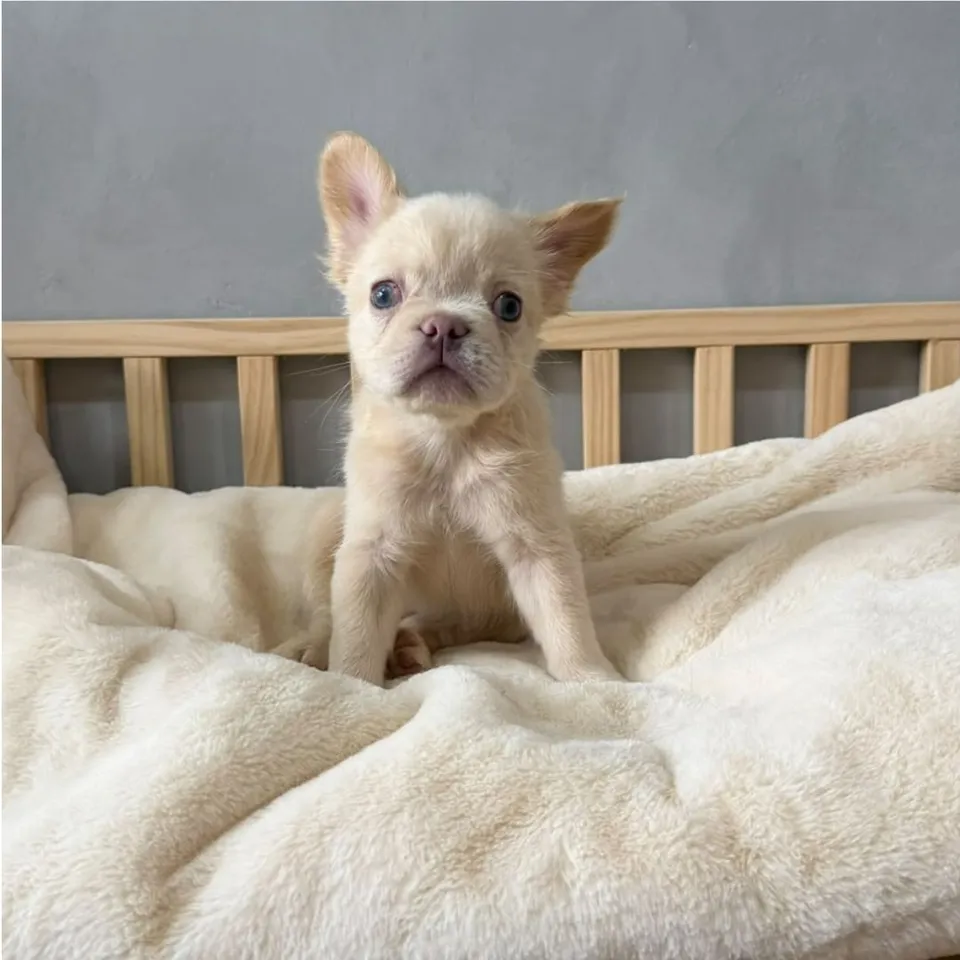
 Available
Pomelo
Platinum Cream French Bulldog puppy
Female4 monthsNot HDB
$7,500
Ask about PomeloPomelo (ID 2900), in fullFrench Bulldog Singapore, the short answer: $6,800–$8,800 from Puppy Singapore, an AVS-licensed seller, vet-checked, vaccinated and microchipped under licence BR25052. At 8–13 kg the breed is not on HDB's approved list, and its flat face makes cooling a health requirement rather than a comfort.
The rest answers the two questions where buyers of this breed lose money, and neither is flattering to the trade: how to tell a real one from a misrepresented one, and what an exotic colour premium is actually buying.

Every puppy on this page is at the farm today, with its own photo, age, colour and price.
Available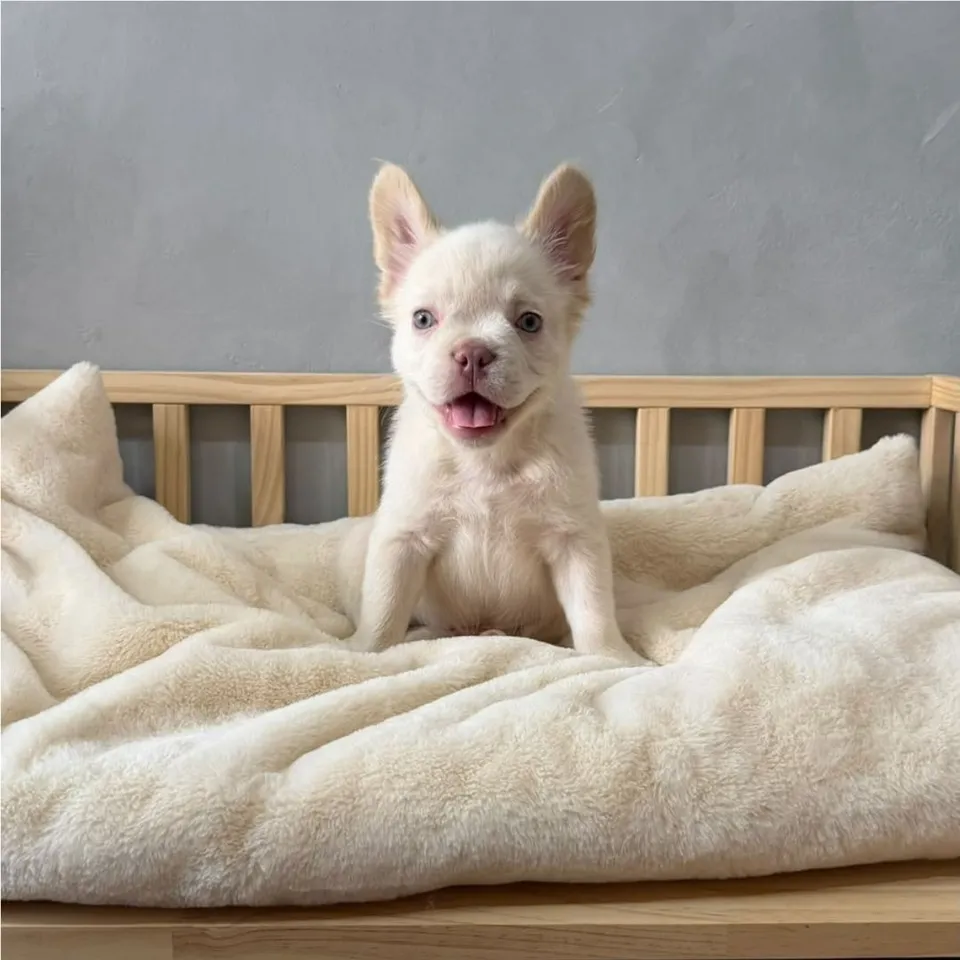 Available
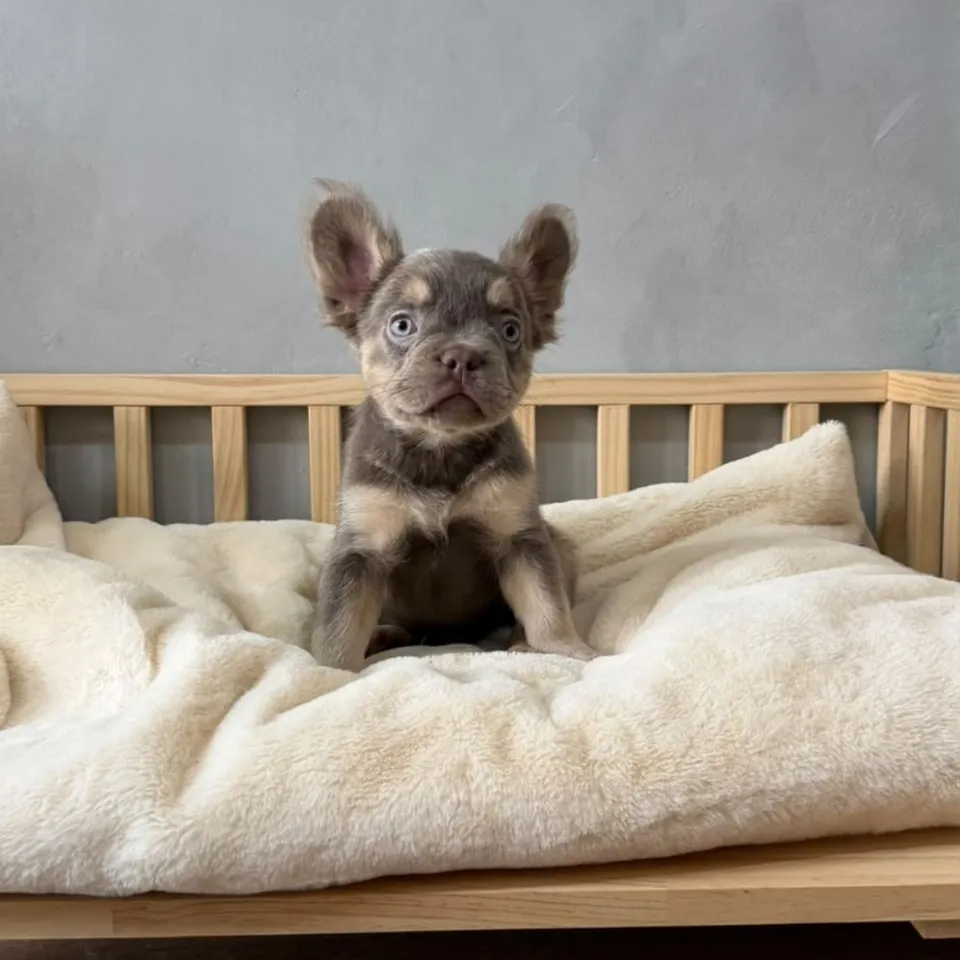 Available
Nine illustrations of the breed: the coat colours a French Bulldog comes in, the size it grows to, and the coat between grooming appointments. These are drawings of the breed, not photographs of puppies for sale. The 3 puppies we actually have are further up this page, each with its own photograph.
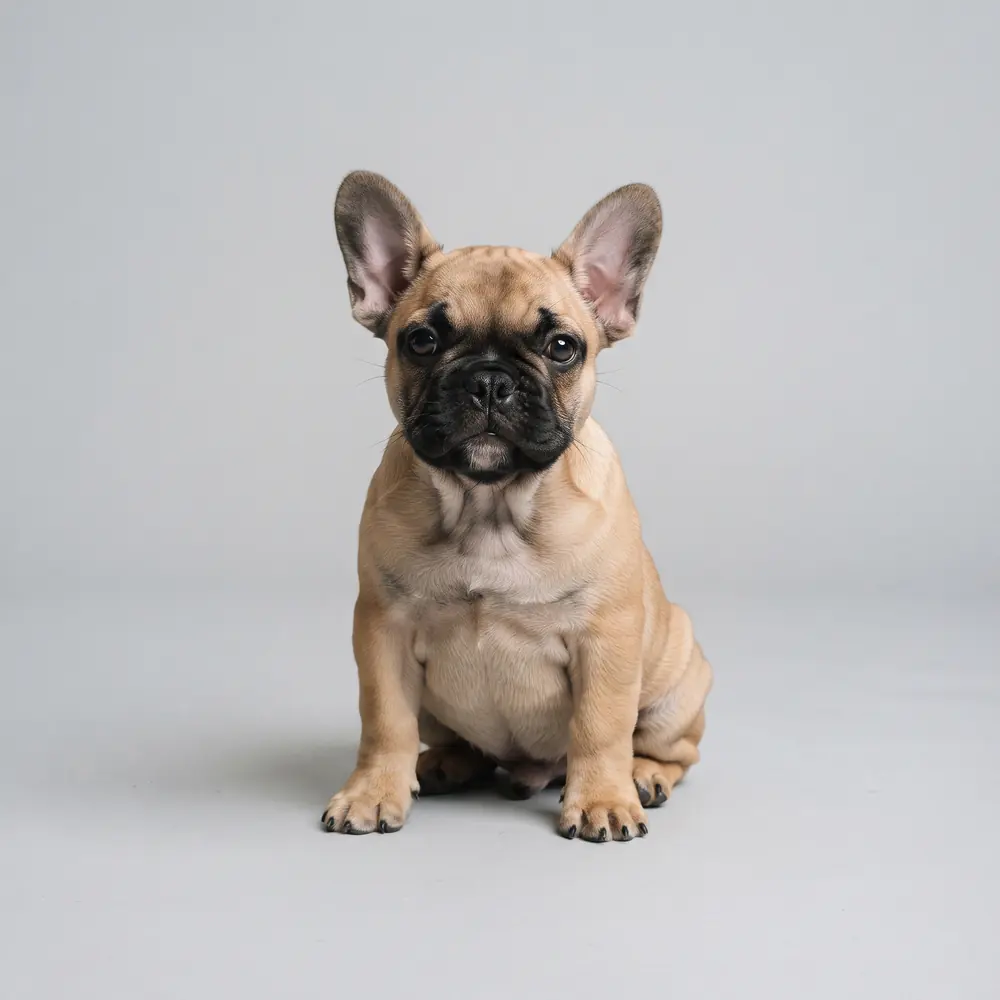
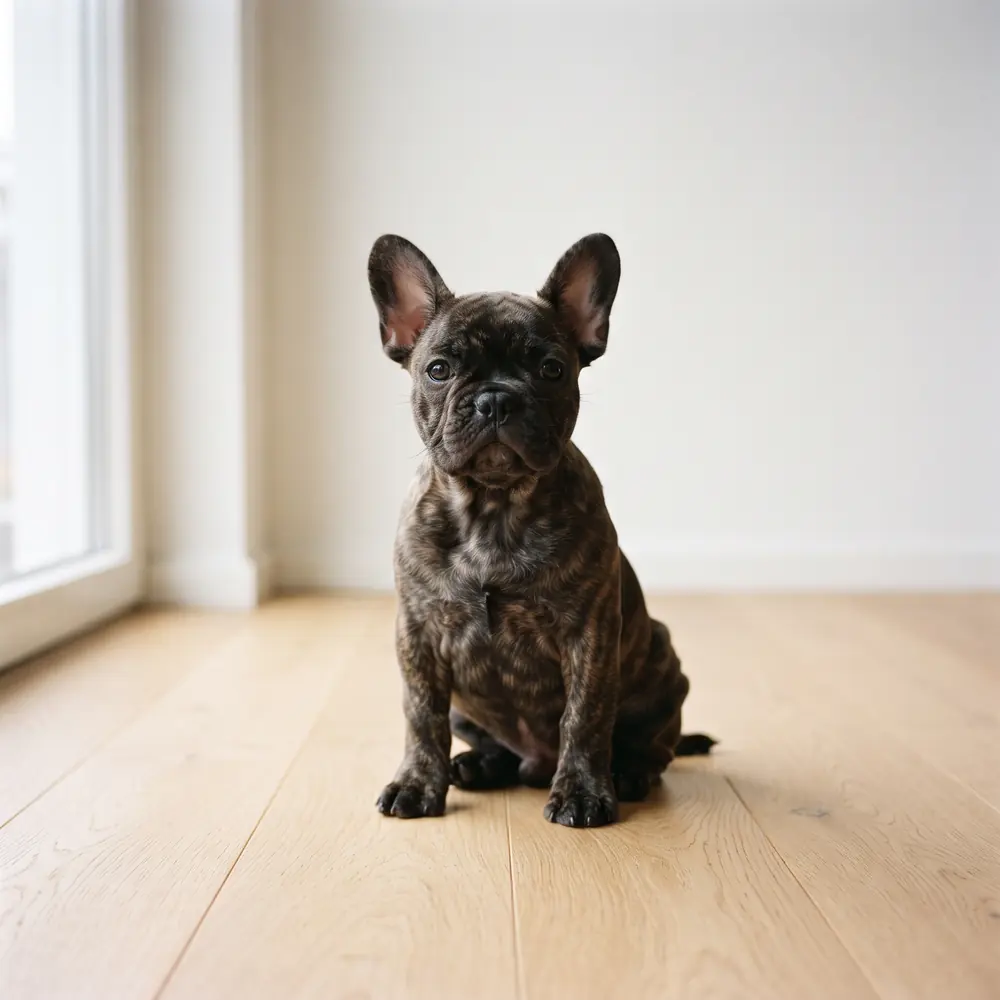
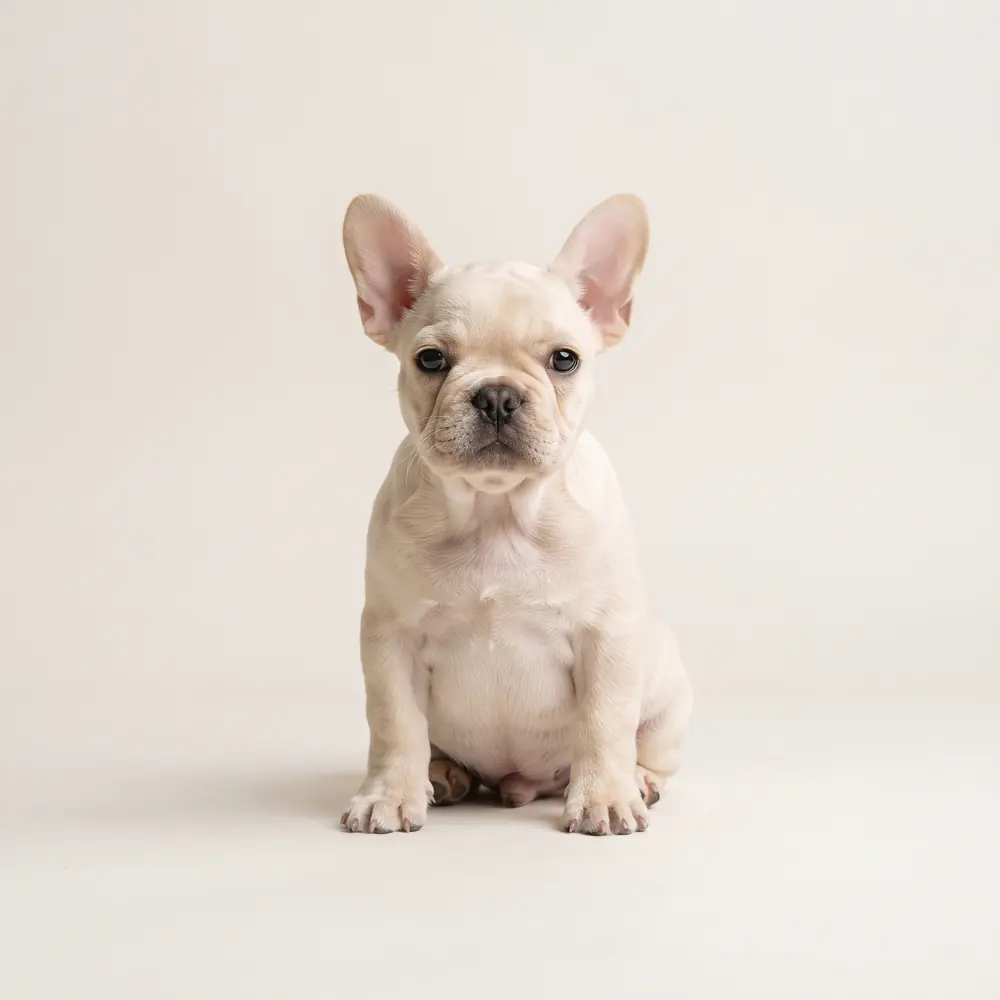
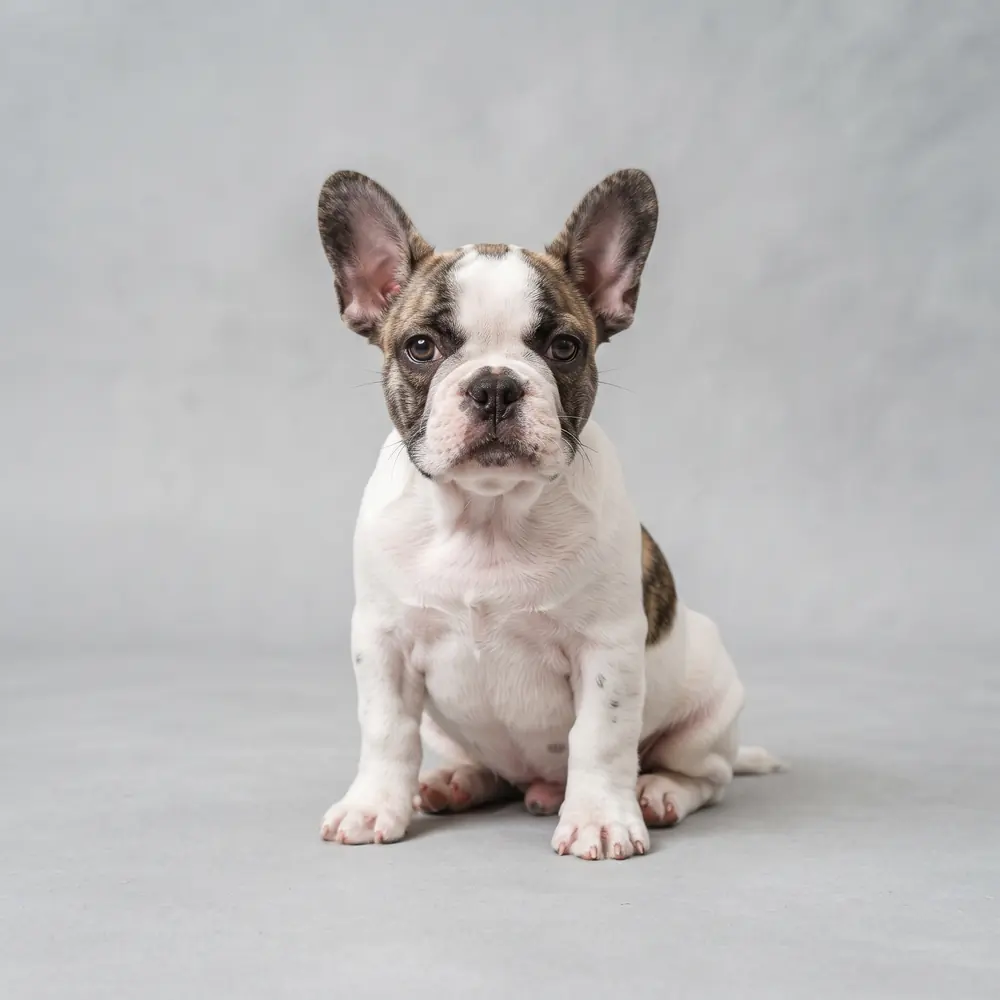
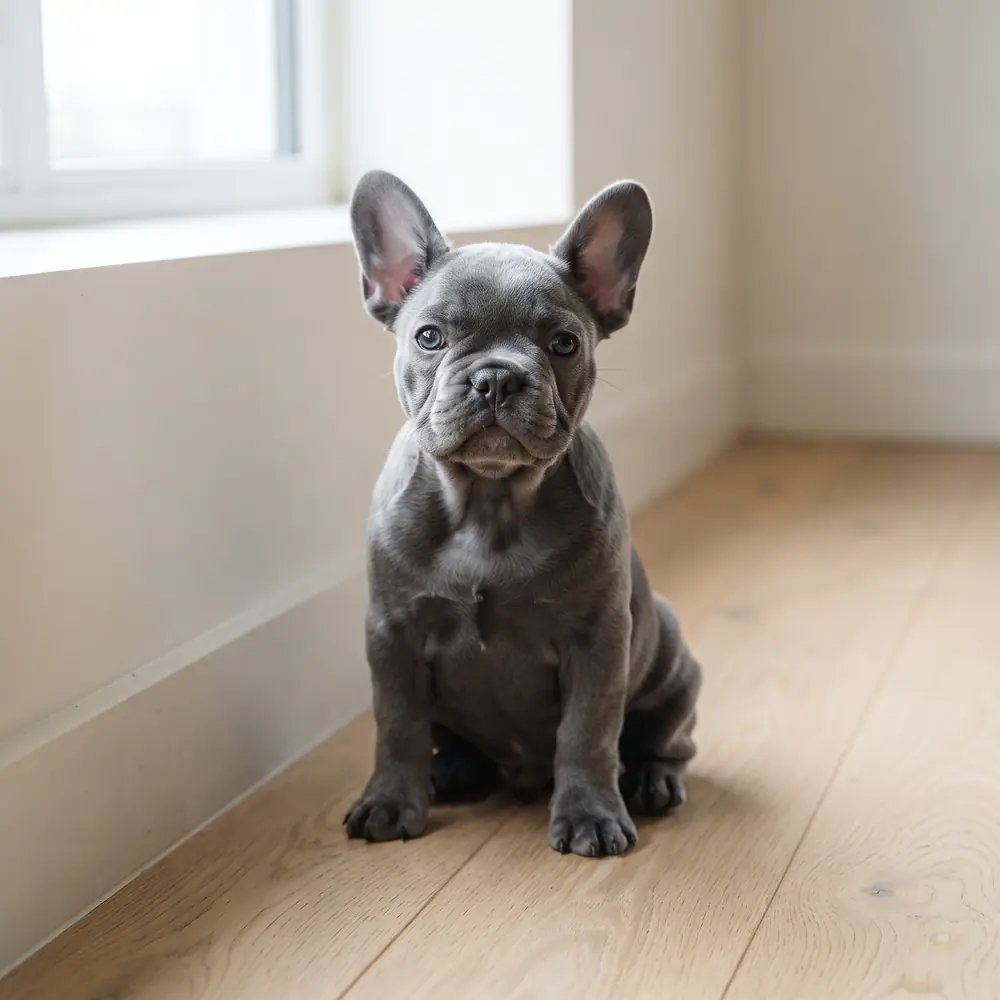
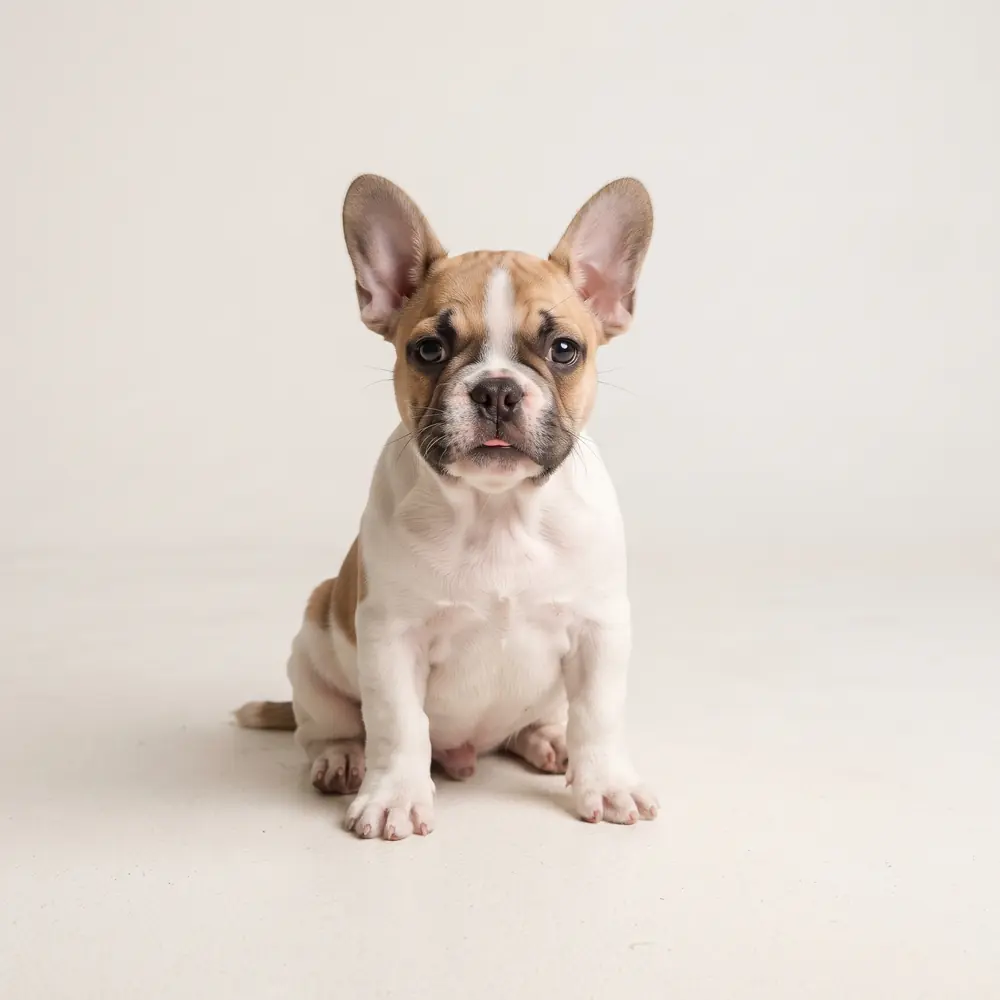
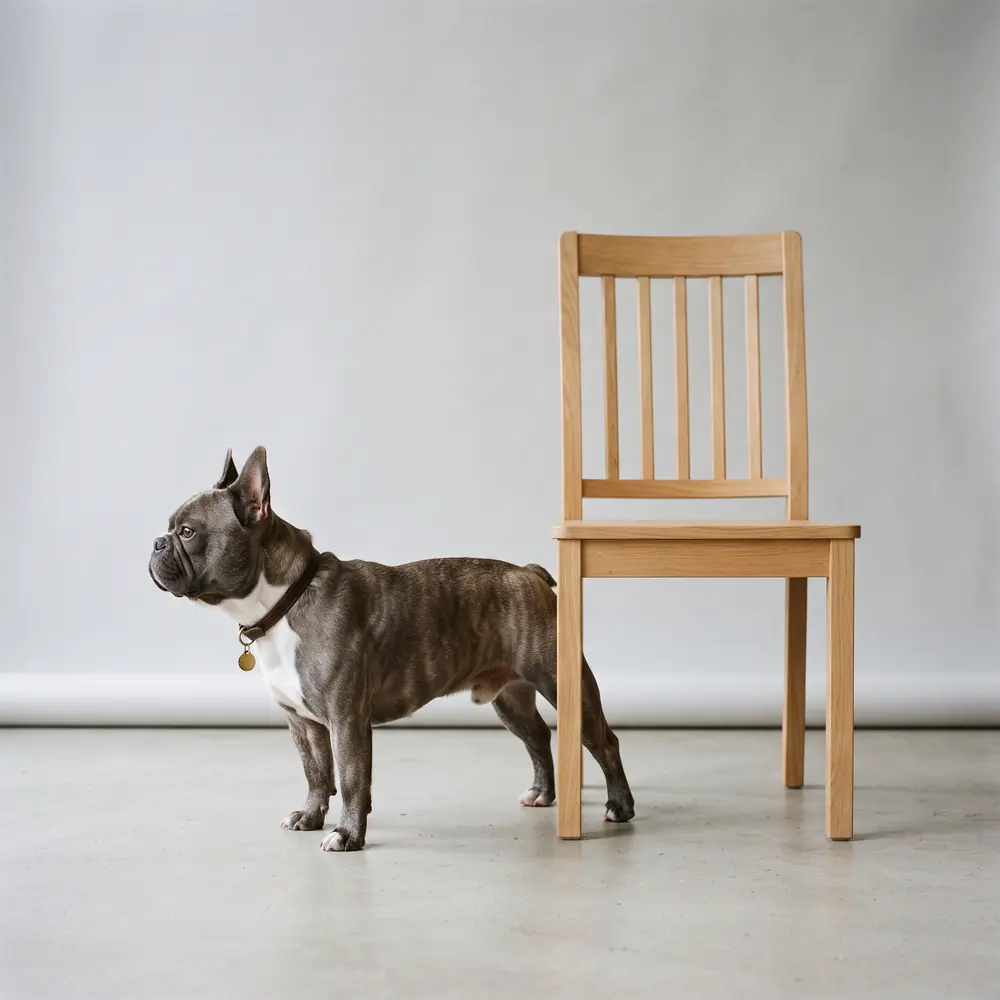
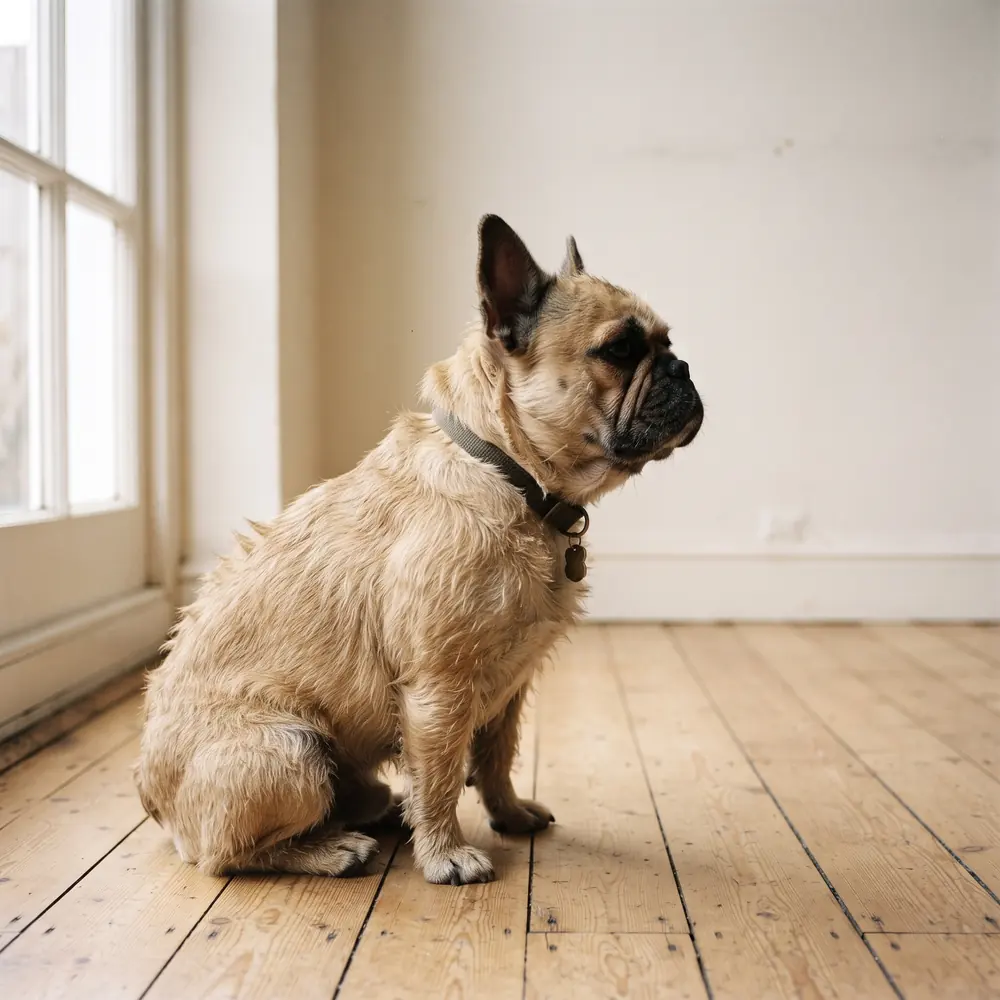
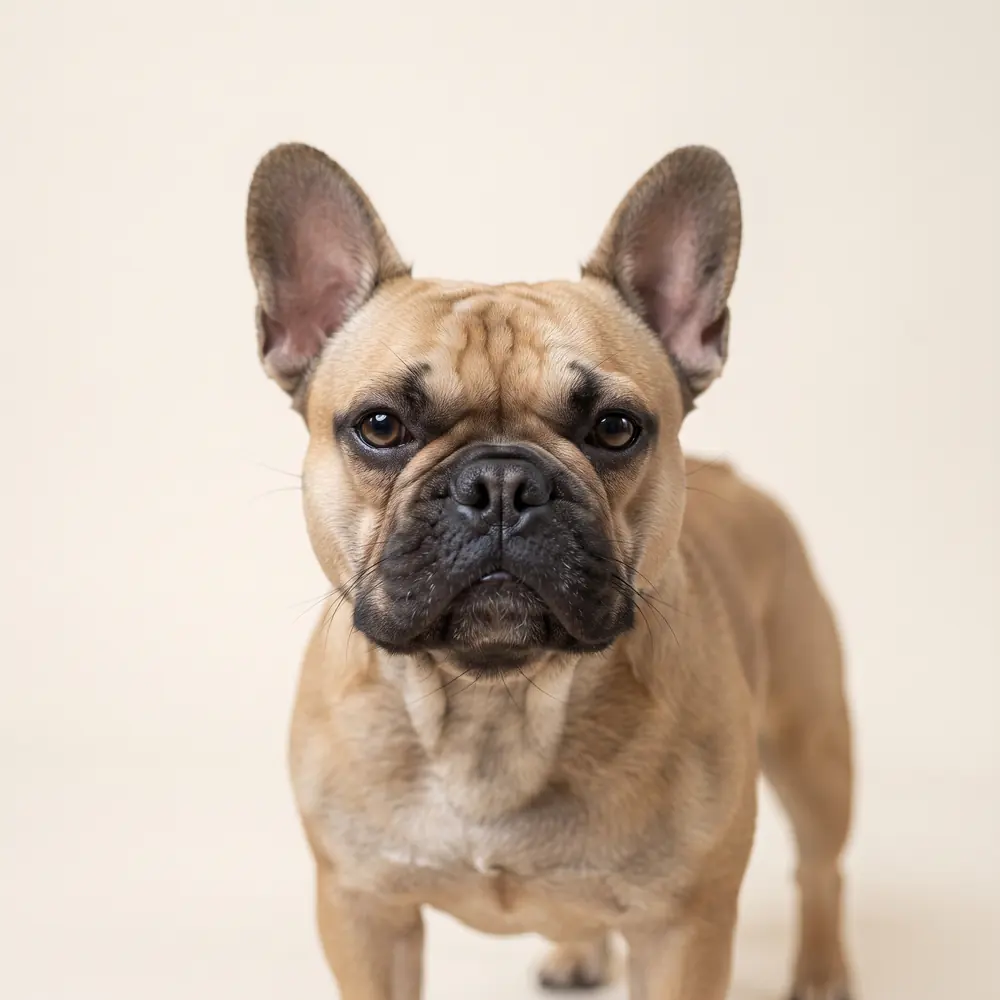
A French Bulldog puppy costs $6,800–$8,800 from an AVS-licensed seller in Singapore, the highest published band on this site. That price includes vaccinations to date, deworming, a vet health check, a microchip, health certification and ancestry records, and coat colour does not change it.
Inside the published band, and the two directions away from it fail for different reasons. This is the most expensive breed on this site, so the question deserves the arithmetic rather than a shrug.
The reason the band sits where it does is not fashion. Litters in this breed are small, births frequently need veterinary help, and demand has not softened in a decade.
| Line | Typical cost | What moves it |
|---|---|---|
| Food | The low end of the $30 to $120 a month band | A 8–13 kg low-energy dog |
| Grooming | Low, a brush and the skin folds | The folds are daily and free; the coat needs almost nothing |
| Air conditioning | The line nobody budgets for | How much of the day the dog needs a cool room |
| Vet | The line that matters in this breed | Airway, skin and spine are the three that generate bills |
| AVS dog licence | $15 a year sterilised, $90 if not | Duration and sterilisation status, less a 10% online rebate |
Our price hub publishes what a French Bulldog costs here to buy and to keep, breed by breed.
| Price | What it usually means | What you carry |
|---|---|---|
| Far below the band | No licence, no vaccination schedule, or no records | A restart at your own vet, and no recourse |
| Inside $6,800–$8,800 | Licensed, vaccinated, chipped, documented | The published price, with nothing to negotiate away |
| Well above the band | Usually an exotic colour premium | A colour, and sometimes a colour-linked problem |
The exotic colours, and merle usually tops the list. This is the part of the trade that makes the most money and explains itself the least, so here is the explanation from a seller that does not charge for colour.
Merle is not a recognised colour in the French Bulldog. Breeding two merle dogs together carries a documented risk of deafness and eye defects in the puppies, and that risk is the reason the pattern is refused by responsible breeders and priced highest by others.
We do not breed or sell merle French Bulldogs at any price. If you are shown one, ask what both parents were, and understand what you may be paying a premium to inherit.
Blue is a dilute colour and it is on our list, so we should be the ones explaining it. Dilute coats across breeds are associated with colour dilution alopecia, a thinning or patchy coat that can appear as the dog matures.
It is manageable and it is not painful, and it is worth knowing before rather than after. We charge no premium for blue, which is the practical version of that position.
Not by looking, which is the answer nobody gives. Coat, ears and face tell you very little at eight weeks, and a confident description tells you nothing at all. The checks that work are documentary and physical.
A photograph proves that a photograph exists. Everything else on this list is checkable by you, before any money moves.
A French Bulldog has a normal amount of soft tissue packed into a shortened skull. That produces narrowed nostrils, a longer soft palate than the space allows, and a narrower windpipe, which together are called brachycephalic airway syndrome.
The practical consequence matters more here than anywhere with a winter. Panting is how a dog sheds heat, and a restricted airway makes panting less effective, so this breed heats up faster and cools down slower than almost any other.
We publish no incidence percentage for airway syndrome, because we do not hold a figure we can stand behind. The mechanism is not in doubt and that is what changes your daily routine.
Not the French Bulldog. The HDB question appears in this breed's own search results because buyers are checking, and the answer is that this breed is absent from the approved list and needs a condo that permits dogs of this size, or a landed home.
If a flat is your housing, the approved list is where to start rather than the breed you had in mind. More than sixty breeds sit on it, and several of them are small, affectionate and far better suited to this climate than a flat-faced dog.

Frenchies live 10–12 years. Four things are worth asking about, and the first two are the ones that generate bills.
Written by a seller, so read the right-hand column with that in mind: it is the one that costs us sales when it is honest.
| Pros | Cons | |
|---|---|---|
| Housing | Fine in a condo that permits dogs of this size, or landed | Not permitted in an HDB flat |
| Temperament | Affectionate, funny, easy-going, superb with people | Attaches hard, and dislikes being left |
| Exercise | Low needs, no long walks required | Cannot exercise in the heat at all |
| Coat | Low grooming, no clipping | Skin folds need daily attention |
| Health | Robust in temperament and sturdy in build | Airway, spine, skin and eyes |
| Cost | Holds its value in demand terms | The highest purchase band here, and the vet line to match |
Grapes and raisins, first and absolutely. They are toxic to dogs and there is no safe quantity, which makes them the one item on this page worth memorising.
Often, and it is one of the reasons people love the breed. A Frenchie attaches hard, usually to whoever feeds and walks it most, and follows that person from room to room.
It is not fixed. If several people share the feeding, the walking and the training in the first month, the attachment spreads out across the household rather than settling on one person by default.
One first, always. Two puppies raised together is harder than one rather than easier: they bond to each other instead of to you, training takes twice as long, and every problem arrives in stereo.
A second dog works well once the first is grown, settled and trained. In this breed the vet line doubles too, which is not a small consideration at this price band.
The timeline is set by the vaccination schedule, not by us. Core vaccinations run at weeks 6, 8 and 12, with an optional dose at week 16, and deworming happens at every visit.
French bulldog Singapore rescue is a real search. Dogs of this breed come through rehoming as adults, sometimes with an airway or skin history already known, which is information a puppy cannot give you.
Bred in England as a miniature bulldog for lacemakers, then popularised in Paris, the French Bulldog was developed as a compact, bat-eared companion.
Bulldogs in Singapore are a common sight now, so the breed needs no introduction.
The bat ears and the flat face are the two things everyone recognises, and they are also the two things that explain most of this page. One is cosmetic and harmless. The other is the airway.
None of these three is HDB-approved, and two of them share the same airway question, so the comparison is about degree rather than kind.
| Breed | HDB flat | Airway | Energy | Typical range |
|---|---|---|---|---|
| French Bulldog | No | Brachycephalic | Low to medium | $6,800–$8,800 |
| British Bulldog | No | Brachycephalic, and heavier built | Low | $6,988–$9,988 |
| Pug | Yes, approved | Brachycephalic, and smaller | Low to medium | $4,588–$5,288 |
English Bulldog Singapore searches land on the same shortlist, and that is the British Bulldog under its other name. If you want the bulldog character in a larger dog, read how a British Bulldog compares: the same airway question at a heavier build, with the same housing answer.
Figures last checked 25 August 2026.