
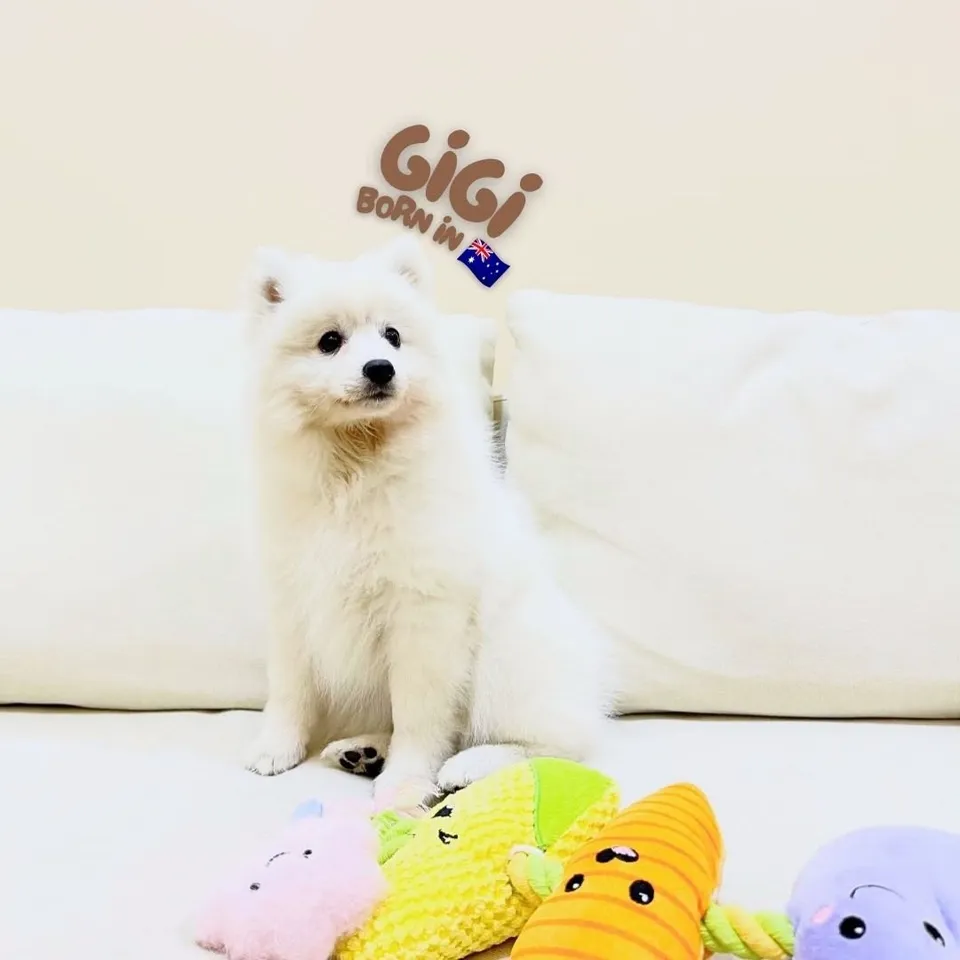
 Available
Muah Chee
White Japanese Spitz puppy
Female4 monthsHDB approved
$5,200
Ask about Muah CheeEverything we know about Muah CheeJapanese Spitz puppy for sale Singapore, the short answer: $4,888–$5,088 from Puppy Singapore, an AVS-licensed seller, vet-checked, vaccinated and microchipped under licence BR25052. The breed is HDB-approved at 5–10 kg and lives 12–16 years.
Two things below are not on any other page for this breed: what the five-hundred-dollar listings actually are, and which spitz breeds a flat will let you keep.
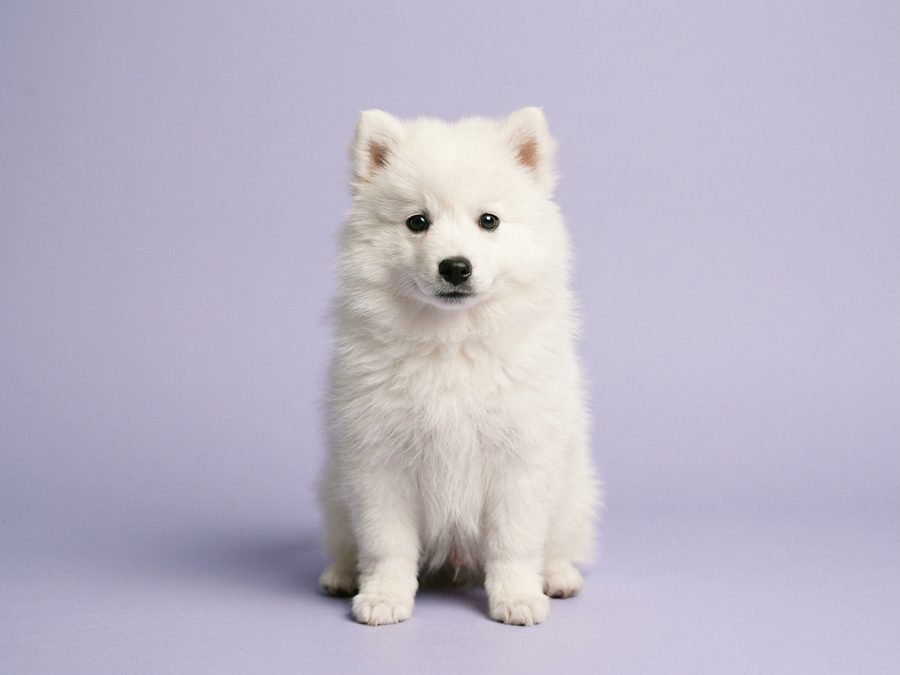
Every Japanese Spitz for sale on this page carries its price on the card, before any enquiry, and what you see is what is on the farm right now. The Japanese Spitz puppy for sale Singapore price shown is the price you pay.
The Japanese Spitz puppies here are at the farm today, each with its own photo, age, colour and price.
Available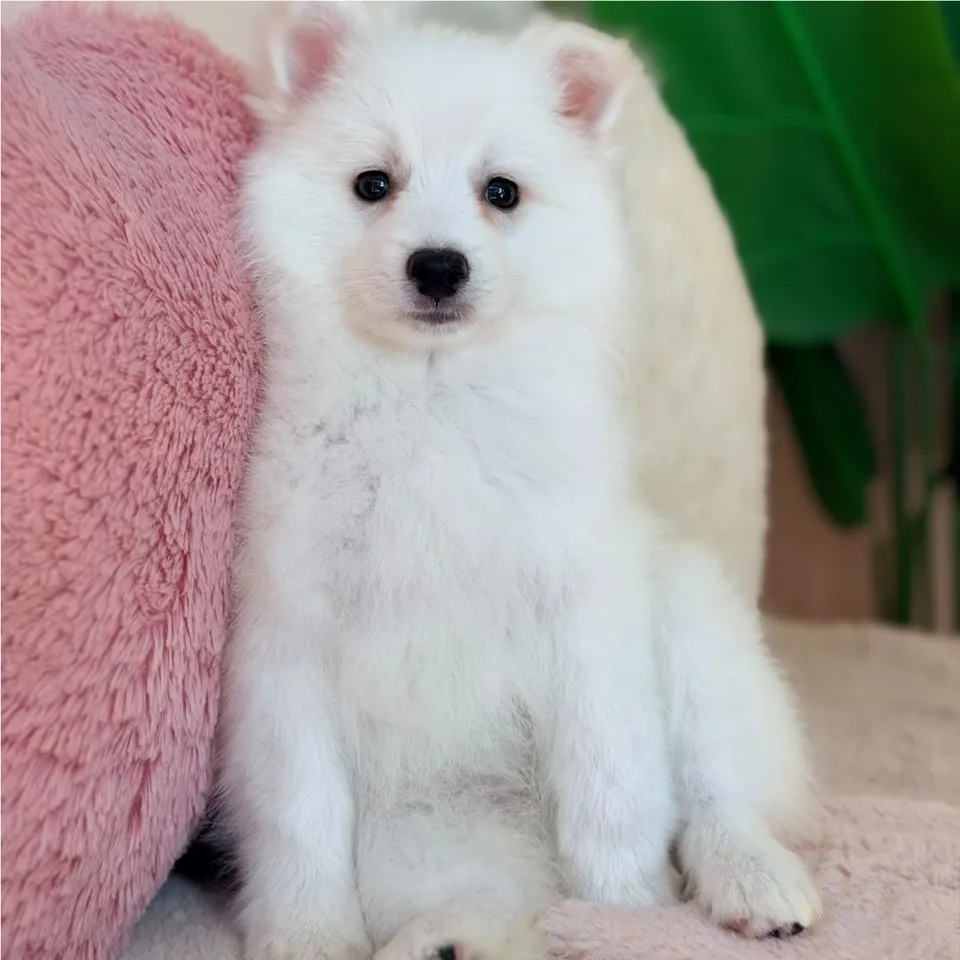 Available
These placed Japanese Spitz have already gone home. They are here so you can see what our litters look like, not as available stock.
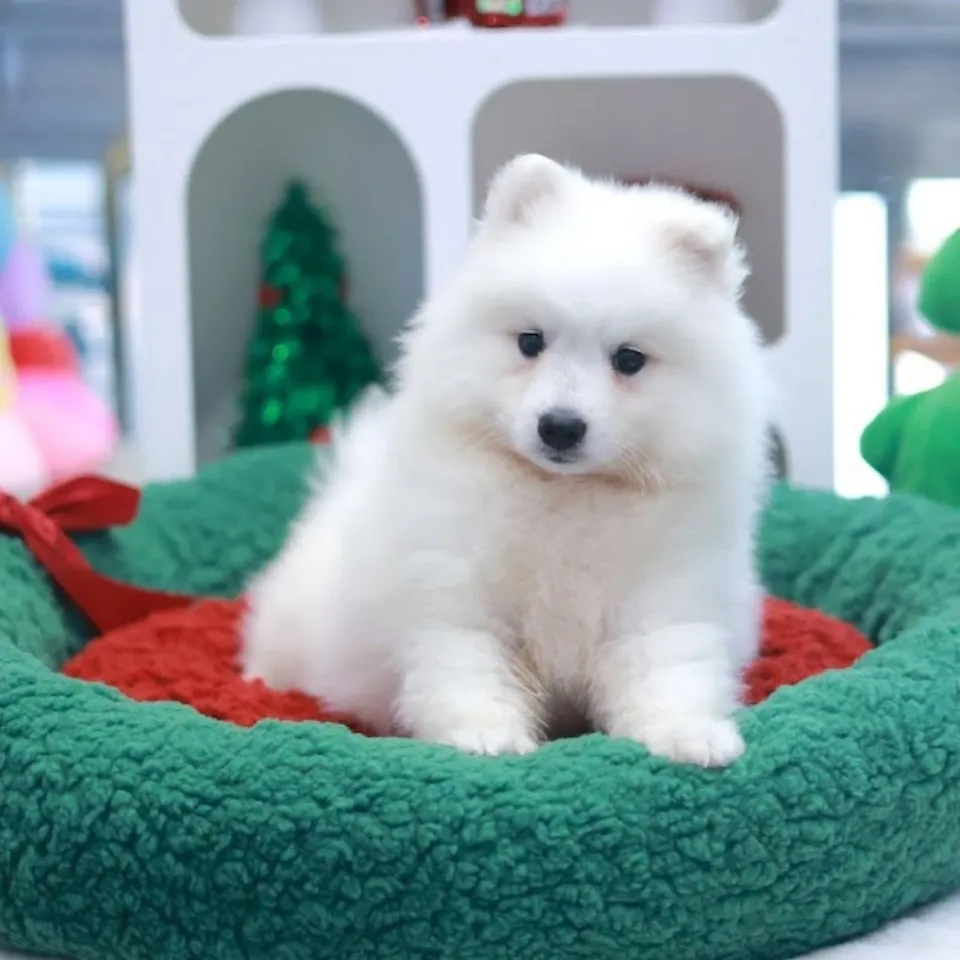
Nine illustrations of the breed: the coat colours a Japanese Spitz comes in, the size it grows to, and the coat between grooming appointments. These are drawings of the breed, not photographs of puppies for sale. The 2 puppies we actually have are further up this page, each with its own photograph.
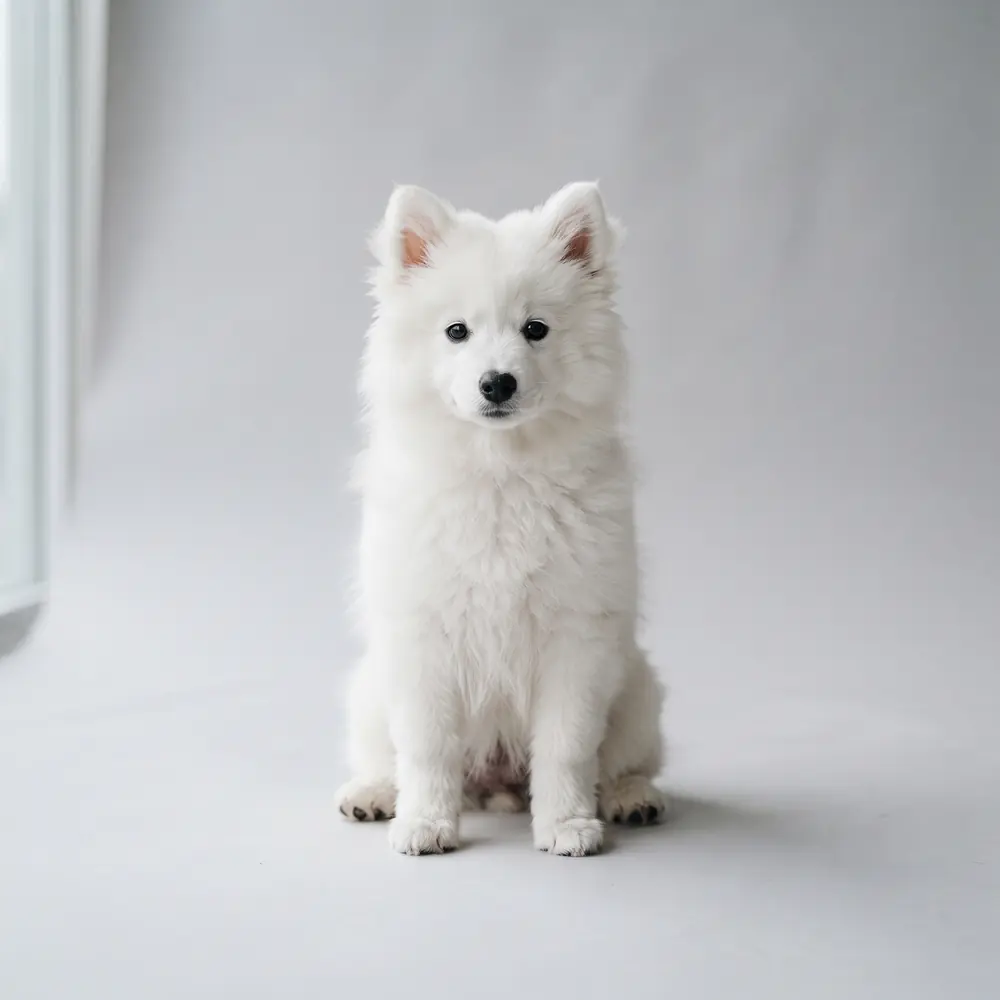
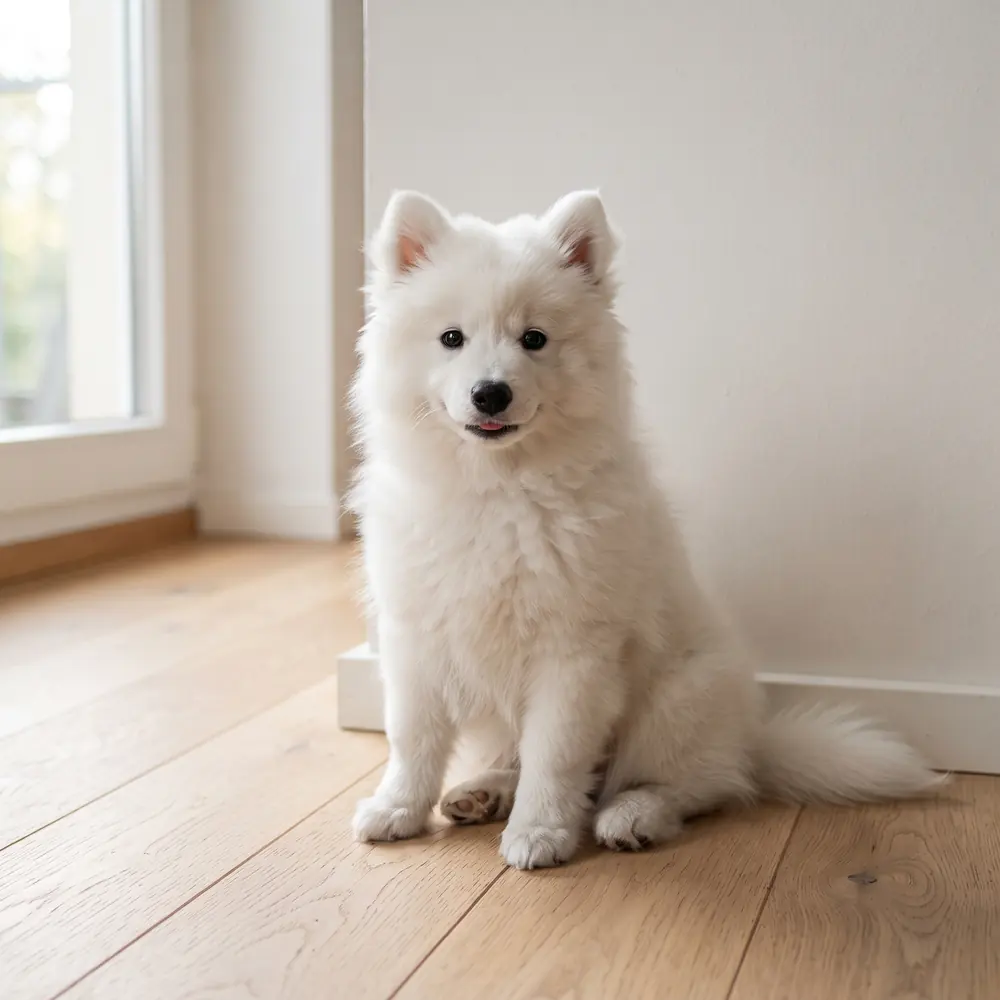
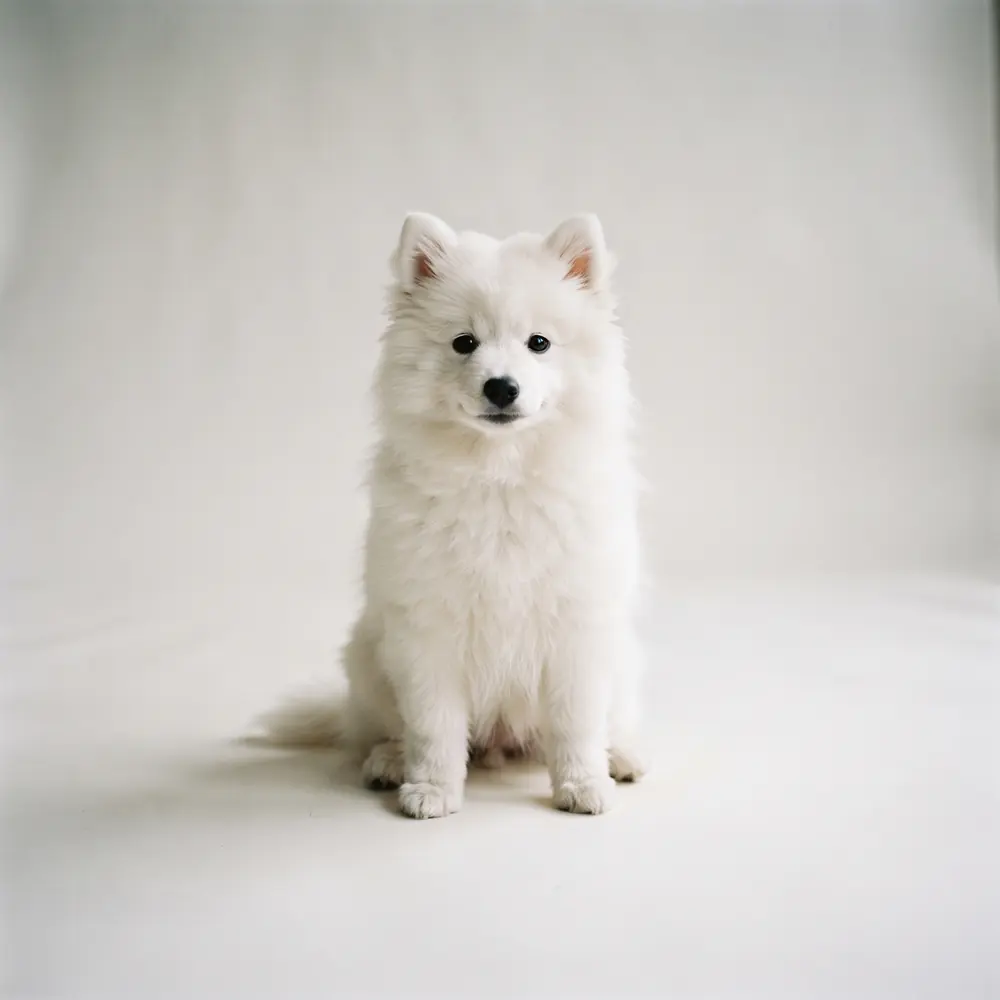
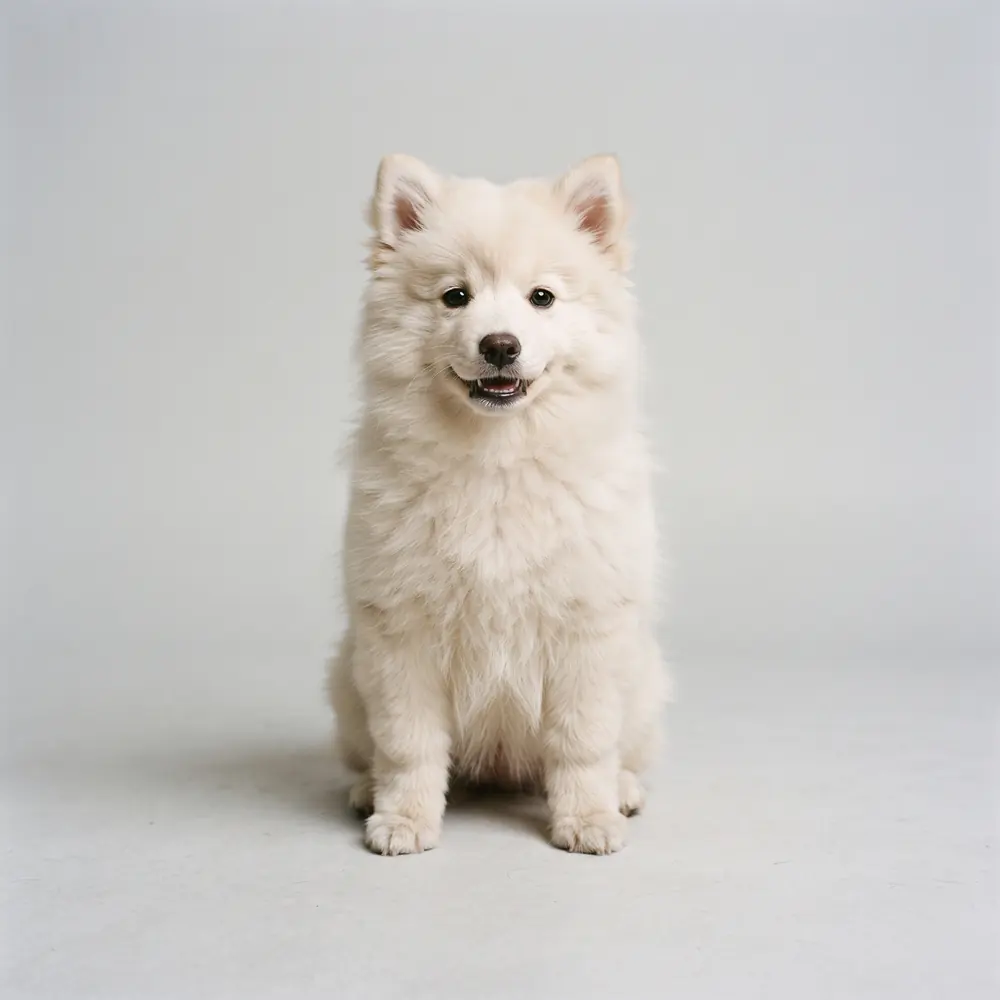
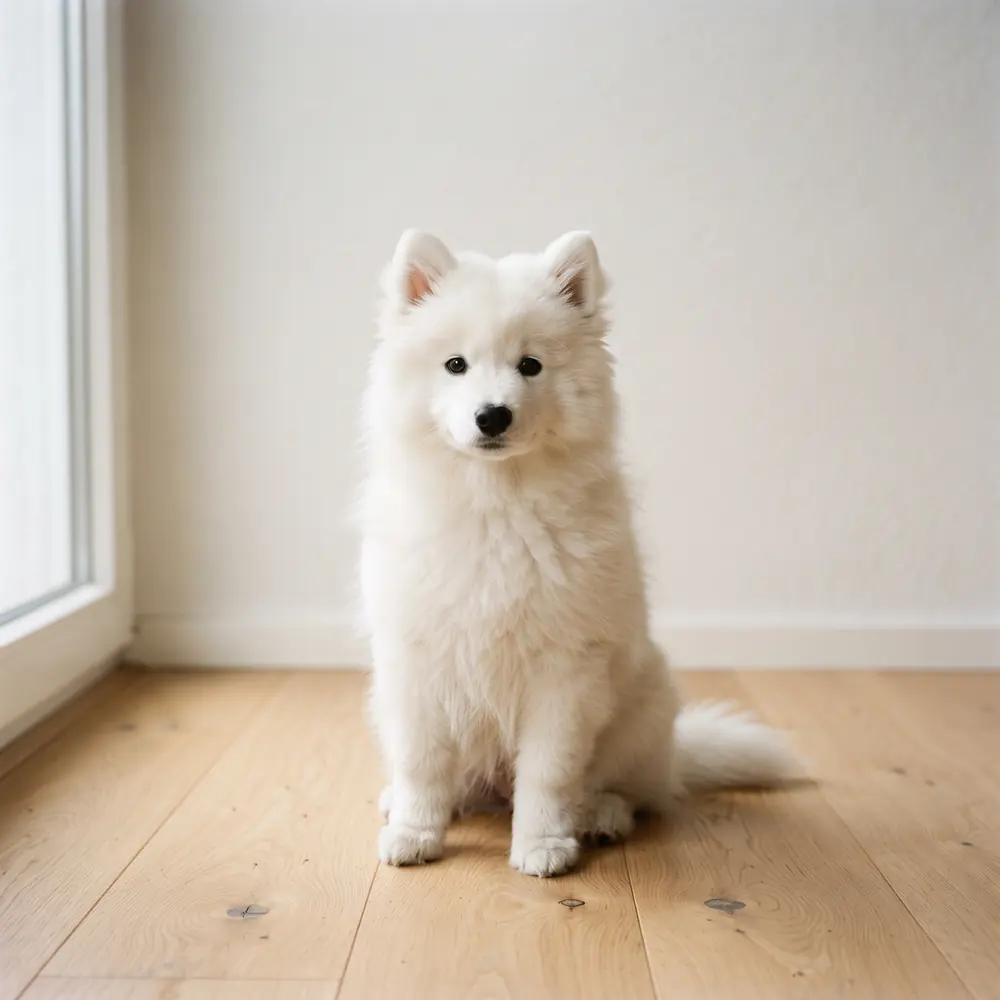
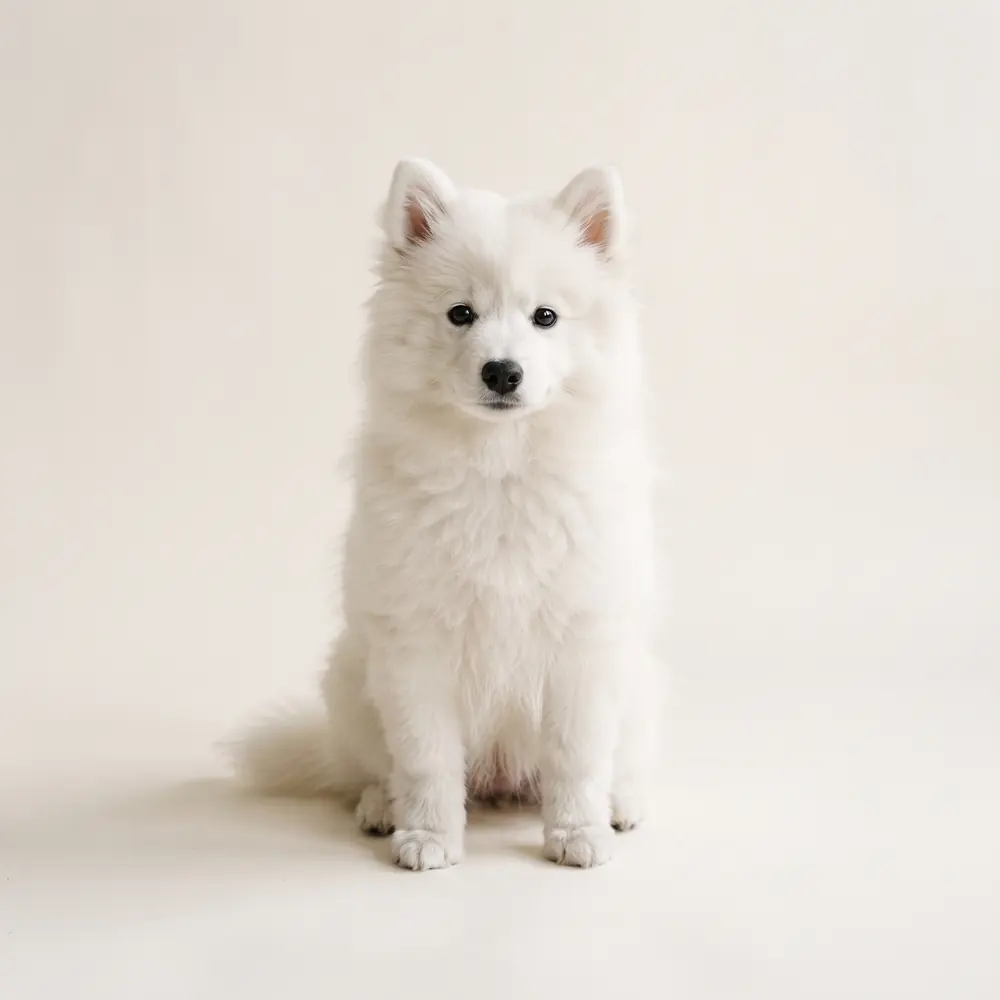
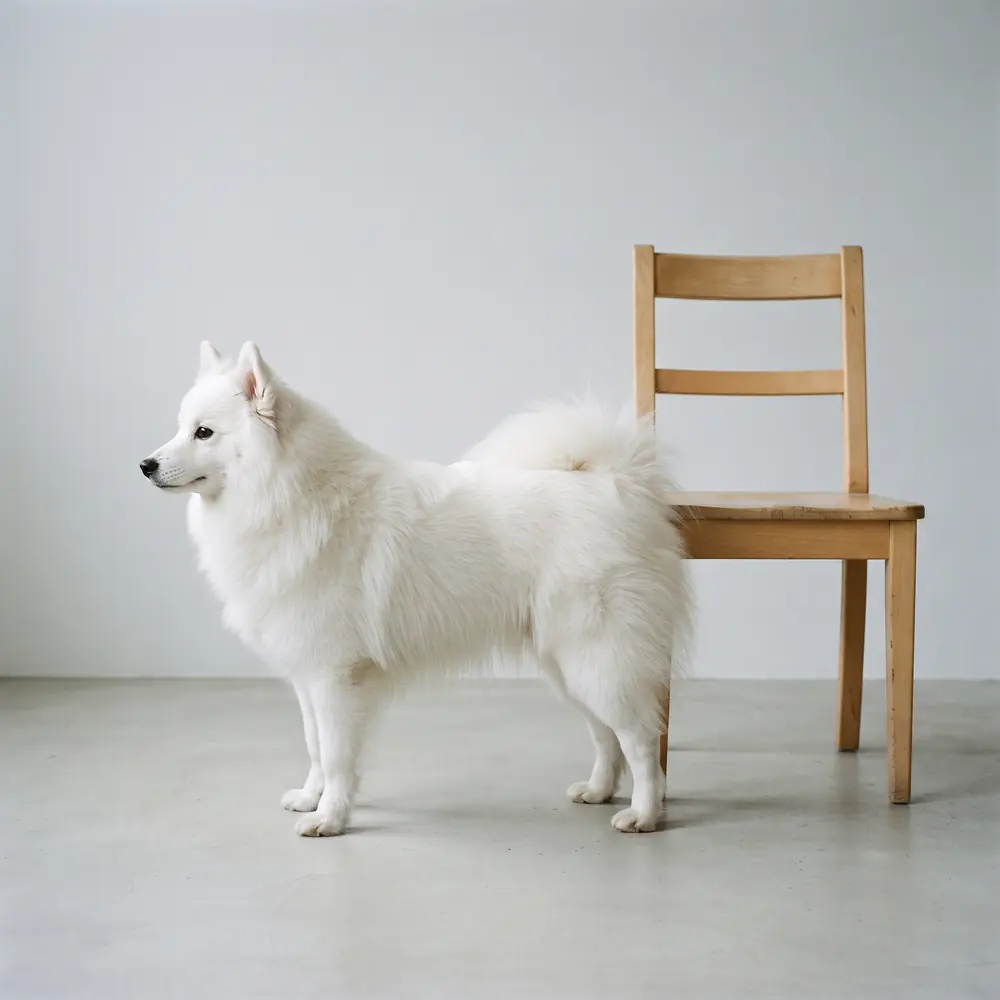
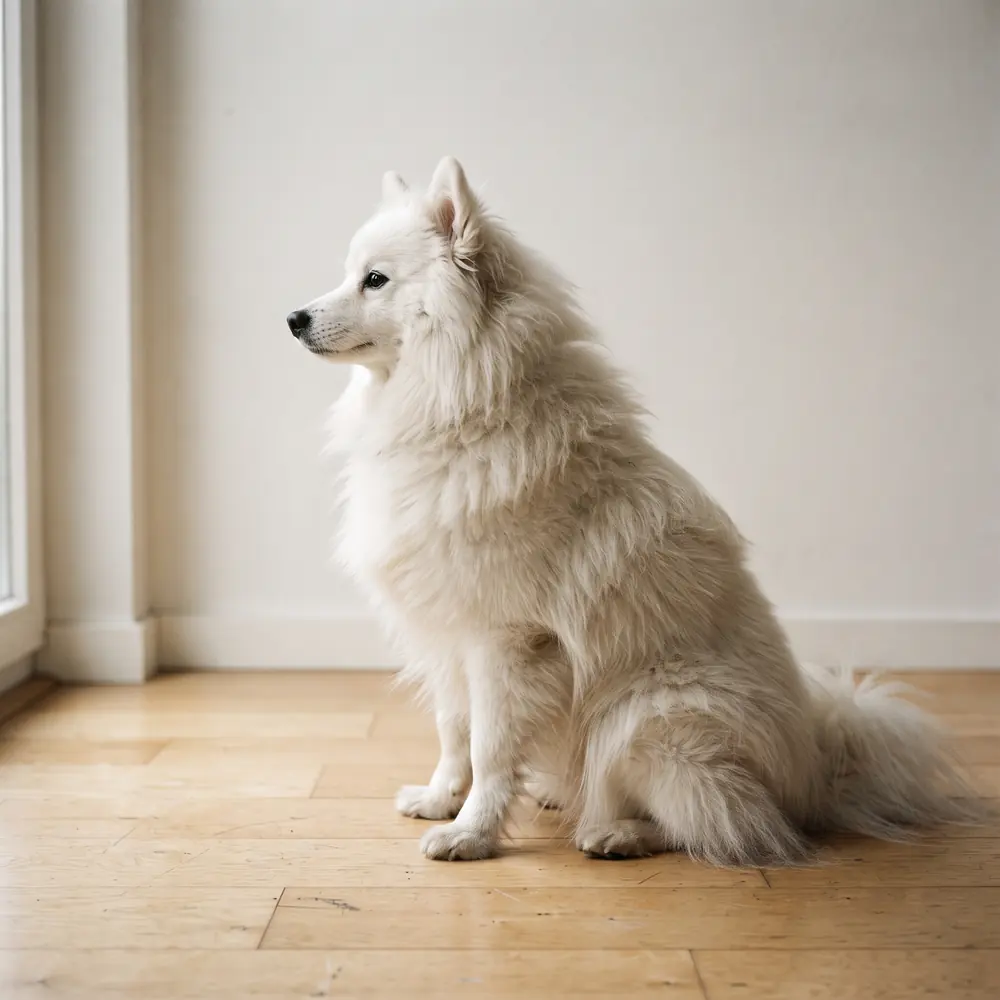
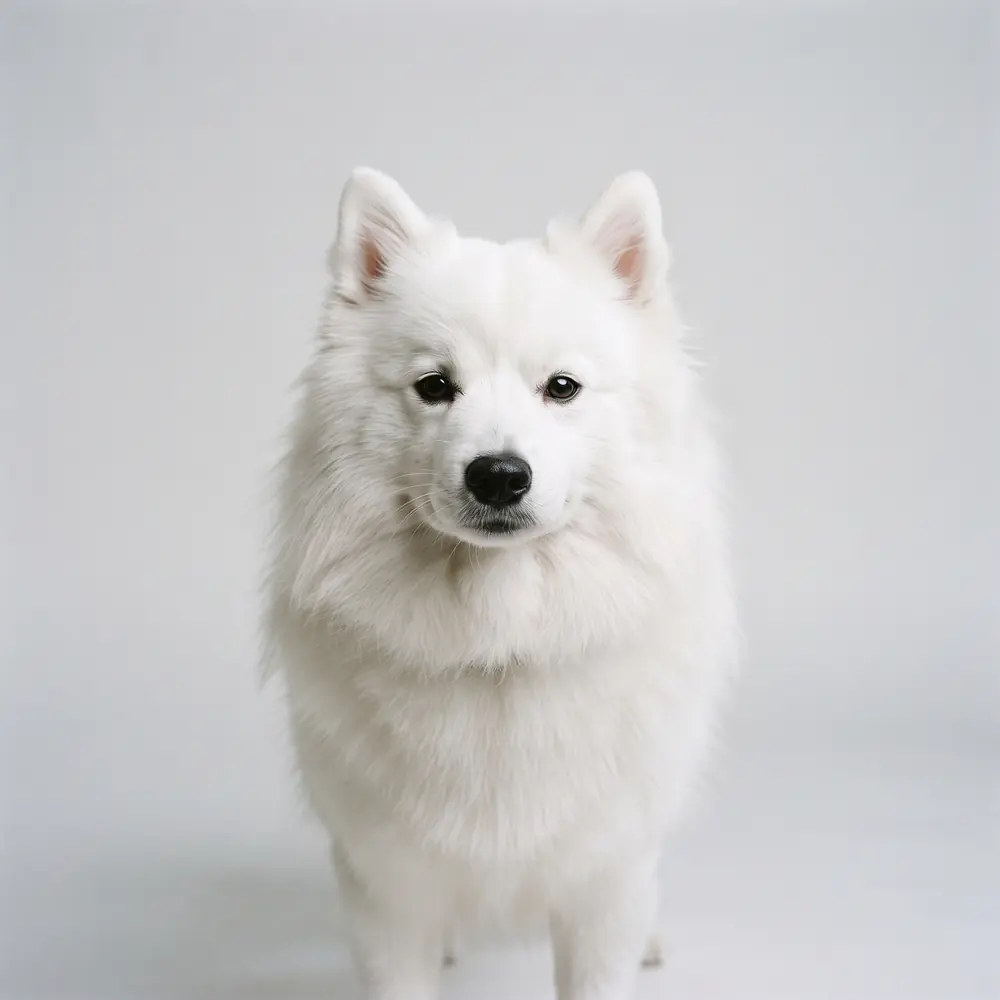
A Japanese Spitz puppy costs $4,888–$5,088 from an AVS-licensed seller in Singapore. That price includes vaccinations to date, deworming, a vet health check, a microchip, health certification and ancestry records. Age, sex and litter move a puppy inside the band.
Every Japanese Spitz puppy for sale Singapore buyers find on this site carries its price in public. Six things travel with the puppy, and each is a document or a procedure rather than a promise.
When people ask this without the word puppy in it, they usually mean what it costs to keep a Japanese Spitz rather than what it costs to buy one. Over 12–16 years the purchase price is the smaller half.
We will not publish a lifetime total, because it would be a guess dressed as a figure. What we can publish is what the recurring bill is made of.
| Line | Typical cost | What moves it |
|---|---|---|
| Food | The lower middle of the $30 to $120 a month band | A 5–10 kg dog, so a modest bill |
| Grooming | Real, but not extreme | Whether you brush at home between visits |
| Routine vet | Annual booster, plus eyes and knees checked | Age, and what the parents were checked for |
| AVS dog licence | $15 a year sterilised, $90 if not | Duration and sterilisation status, less a 10% online rebate |
A white double coat sounds expensive and mostly is not, because it repels dirt rather than holding it. Our price hub publishes what a Japanese Spitz costs here to buy and to keep, breed by breed.
Japanese Spitz Singapore 500 is a phrase Google's own related searches suggest twice, so a real share of the people reading this arrived holding that figure. It is almost always a rehoming or adoption fee for an adult dog, and not the price of a puppy.
A rehoming fee is the sum a rescue or an owner asks when placing a dog, set to cover its costs and to filter out impulse takers. It is deliberately not a market price, which is exactly why it reads like one.
We are a seller, so take the next sentence with that in mind: adoption is a genuinely good outcome and we are not trying to talk you out of it. An adult whose temperament and coat you can already see carries less unknown than any puppy does.
Verify anyone, including us, in the AVS public registry of licensed pet breeders. Our number is BR25052.
For most buyers here this is not a matter of taste. We sell five spitz-family breeds and HDB approves exactly two of them for a flat, so the field narrows before preference gets a say.
The Pomeranian and the Japanese Spitz are on the approved list. The Shiba Inu, the Siberian Husky, the Chow Chow are not, at any price. Of the two that remain, the Japanese Spitz is the larger at 5–10 kg.
| Breed | HDB flat | Adult weight | Typical range |
|---|---|---|---|
| Pomeranian | Yes, approved | 1.5–3.5 kg | $4,888–$5,388 |
| Japanese Spitz | Yes, approved | 5–10 kg | $4,888–$5,088 |
| Shiba Inu | Not approved | 8–11 kg | $4,788–$6,500 |
| Siberian Husky | Not approved | 16–27 kg | $5,088–$6,088 |
| Chow Chow | Not approved | 20–32 kg | $6,888–$10,888 |
The cut runs straight through the middle of the family by size, which is why the two that survive it are also the two smallest. If you live in private housing the whole table is open to you and the question really does become preference.
Yes. That is the honest answer and softening it would only move the disappointment to week three.
A Japanese Spitz living in a flat announces arrivals, because that is the job the breed was kept for alongside company. In a flat the triggers are constant: the lift landing, footsteps in a shared corridor, a delivery rider at the gate.
A double coat is insulation in both directions. It slows heat coming in as much as it holds warmth in a cold climate, which is why the reflex to shave a white northern dog in the tropics is the one thing not to do.
Shaving removes the dog's own temperature control and exposes skin that has never seen sun. Brushing is the intervention, because the undercoat that comes out in a shedding week is the part trapping heat.
Tears run down the face and the residue oxidises into a rust-coloured track. Every breed does it and only the white ones show it, which is why this section exists here and on no other page of this site.
A daily wipe with a clean damp cloth, taking in the fold under the eye, keeps it to something you stop noticing.
Written by a seller, so read the right-hand column with that in mind: it is the one that costs us sales when it is honest.
| Pros | Cons | |
|---|---|---|
| Housing | HDB-approved and flat-sized | One dog per flat still applies |
| Voice | A genuine alert dog that tells you someone is at the door | It barks, and training reduces it rather than removing it |
| Coat | Sheds dirt, so it stays white on little bathing | Sheds through the year and blows the undercoat twice |
| Face | One of the most striking small dogs anywhere | Tear staining shows on white in a way it never would on a dark coat |
| Temperament | Affectionate, biddable, good with a considerate child | A companion breed that does not enjoy an empty flat all day |
| Lifespan | 12–16 years | A long commitment for a first dog |
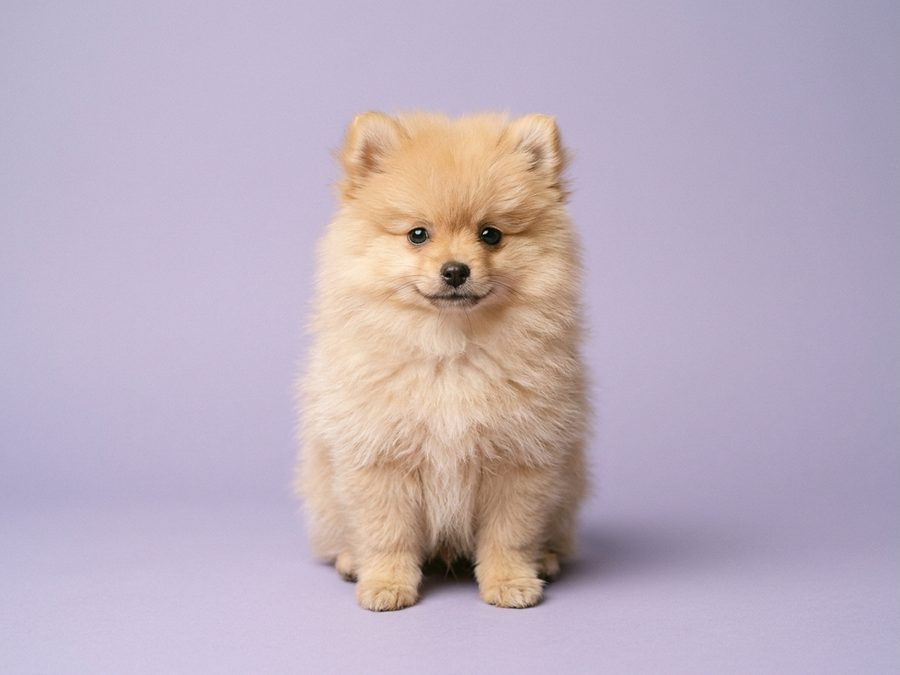
Price does not decide this one. Our published bands overlap almost exactly, at $4,888–$5,088 against $4,888–$5,388, so anyone telling you one is the premium dog is telling you about their stock rather than the breeds.
Size decides it. A Japanese Spitz is 5–10 kg and a Pomeranian is 1.5–3.5 kg, which is the difference between a small dog and a toy one. Grooming is the second difference, and it runs the other way.
| Japanese Spitz | Pomeranian | |
|---|---|---|
| HDB flat | Yes, approved | Yes, approved |
| Adult weight | 5–10 kg | 1.5–3.5 kg |
| Grooming | Medium | High |
| Coat | Double, white, never shaved | Double, many colours, never shaved |
| Typical range | $4,888–$5,088 | $4,888–$5,388 |
| Suits | A household that wants a small dog rather than a tiny one | A household that wants a lap dog and will do the coat work |
Meet both if you can. A Japanese Spitz right beside a Pomeranian settles the size question faster than any table does, and viewing here is by appointment.
If the toy end is what you are after, the smaller of the two spitz breeds a flat allows has its own page with the coat work set out in full.
Quick to learn and unusually willing to please, which is not quite the same thing as clever. House training tends to go fast, and the dog reads a household well.
We publish no intelligence ranking for any breed, because the well-known ones measure how fast a dog obeys a stranger. That is obedience, and it is not what most owners mean.
Spitz is German for pointed. It describes the shape rather than the origin: the tapering muzzle, the small upright ears and the tail carried curled over the back.
It is a family name, not a breed name, which is how it covers dogs as different as a 2 kg Pomeranian and a 30 kg Chow Chow. The Japanese Spitz is the one that carries the word in its name, and it is not the oldest member of the group.
Our own breed data gives 12–16 years, a long life even among small breeds.
We publish the range rather than an average. An average across a whole breed says very little about the dog in front of you, and it invites a precision nobody actually has.
It is one of the more forgiving breeds on this site. Two things catch first-timers, and both are on this page rather than hidden.
| Household | Verdict | Why |
|---|---|---|
| Family flat, someone home for part of the day | Excellent | Affectionate, flat-sized, biddable and long-lived |
| First-time owner willing to brush and train | Good | Learns quickly, and the coat work is manageable at home |
| Home with a considerate school-age child | Good | Sturdier than a toy breed and tolerant with children who have been taught how to handle a dog |
| Household that needs quiet | Think hard | This is an alert dog, and that is the trait it was kept for |
| Flat empty twelve hours a day | Wrong breed | A companion dog left alone all day is a bored dog, and a bored spitz is a loud one |
The timeline is set by the vaccination schedule, not by us. Core vaccinations run at weeks 6, 8 and 12, with an optional dose at week 16, and deworming happens at every visit.
Japanese Spitz adoption Singapore is a real search, and dogs of this breed do come through local rehoming, almost always as adults. That is where most of the five-hundred-dollar figures on this page come from.
An adult whose coat, voice and temperament you can already assess is a lower-risk dog than any puppy, and the dog still needs a licence, a microchip and a vet. Treat the fee as a commitment rather than a saving.
Developed in Japan in the early 20th century from white Spitz-type dogs, the Japanese Spitz was bred purely as a cheerful, devoted companion.
Japanese Spitz dogs were bred for nothing but company, and that is exactly what you get: attached to its household, interested in what everyone is doing, and vocal about anyone new. The alert bark and the affection are the same trait seen from two sides.
All four are HDB-approved and all four are white or commonly white, so the choice comes down to size, coat work and how much noise you can live with.
| Breed | HDB flat | Adult weight | Grooming | Typical range |
|---|---|---|---|---|
| Japanese Spitz | Yes, approved | 5–10 kg | Medium, never shaved | $4,888–$5,088 |
| Pomeranian | Yes, approved | 1.5–3.5 kg | High, never shaved | $4,888–$5,388 |
| Bichon Frise | Yes, approved | 5–8 kg | High, cut regularly | $3,888–$5,988 |
| Maltese | Yes, approved | 2–4 kg | High, cut regularly | $4,288–$5,988 |
The Japanese Spitz is the only one of the four with a coat that is brushed rather than cut, which for some households is the deciding fact and for others is the drawback.
Figures last checked 26 August 2026.