
 Available
Wanton
English Cream Labrador puppy
Male3 monthsNot HDB
$6,988
Ask about WantonWanton: age, colour and priceLabrador puppy for sale Singapore, the short answer: $4,588–$5,500 from Puppy Singapore, an AVS-licensed seller, vet-checked, vaccinated and microchipped under licence BR25052. At 25–36 kg the Labrador is not on HDB's approved list, so this is a condo or landed dog, and that is the first thing to settle.
The rest answers what buyers actually search: what one costs, what the 5 minute rule is, why the dog is always hungry, and what to ask about its hips before you pay anything.

Every puppy on this page is at the farm today, with its own photo, age, colour and price.
AvailableNine illustrations of the breed: the coat colours a Labrador Retriever comes in, the size it grows to, and the coat between grooming appointments. These are drawings of the breed, not photographs of puppies for sale. The puppy we actually have is further up this page, each with its own photograph.
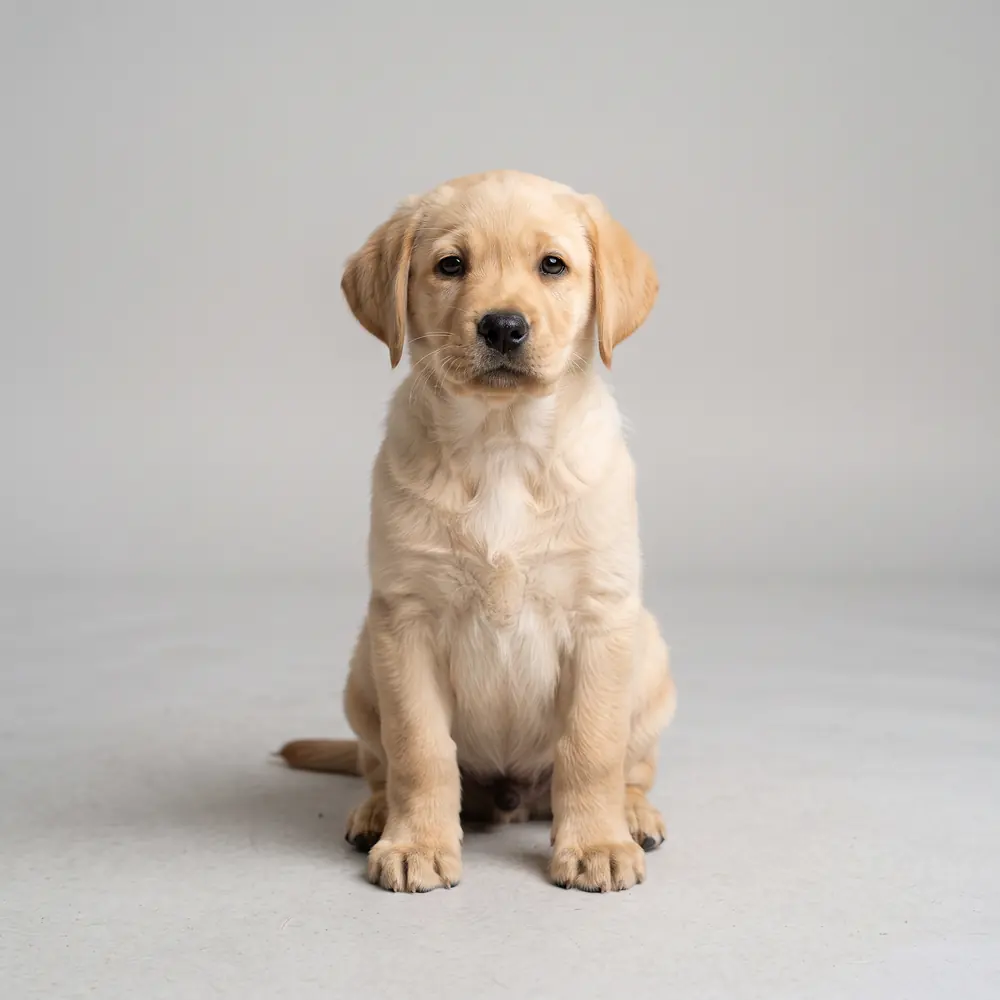
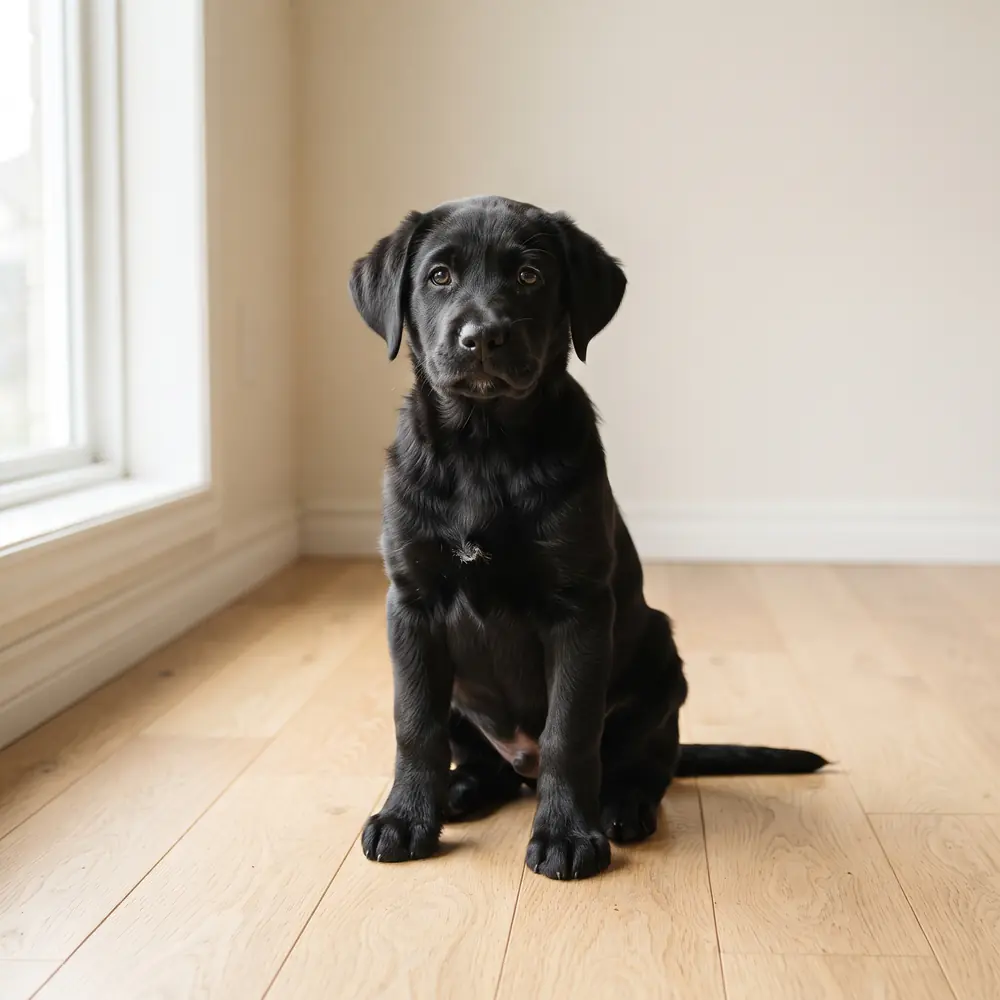
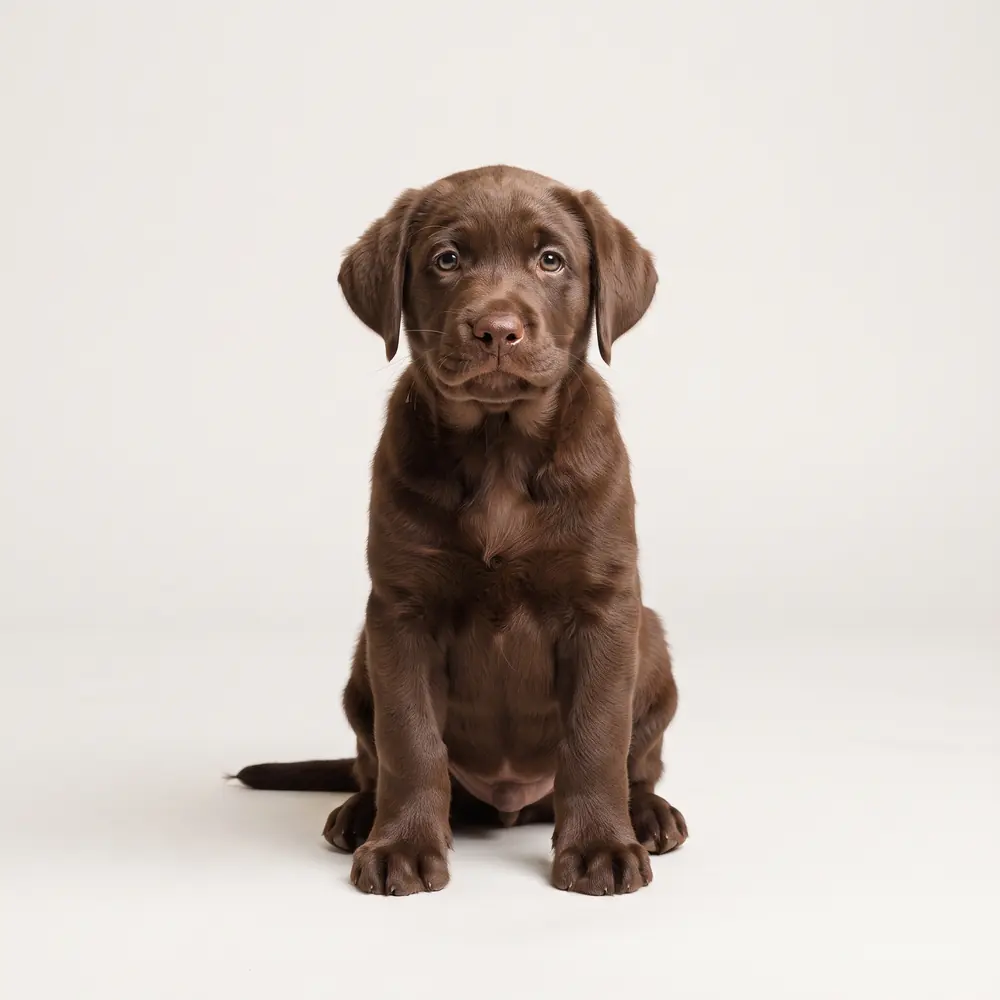



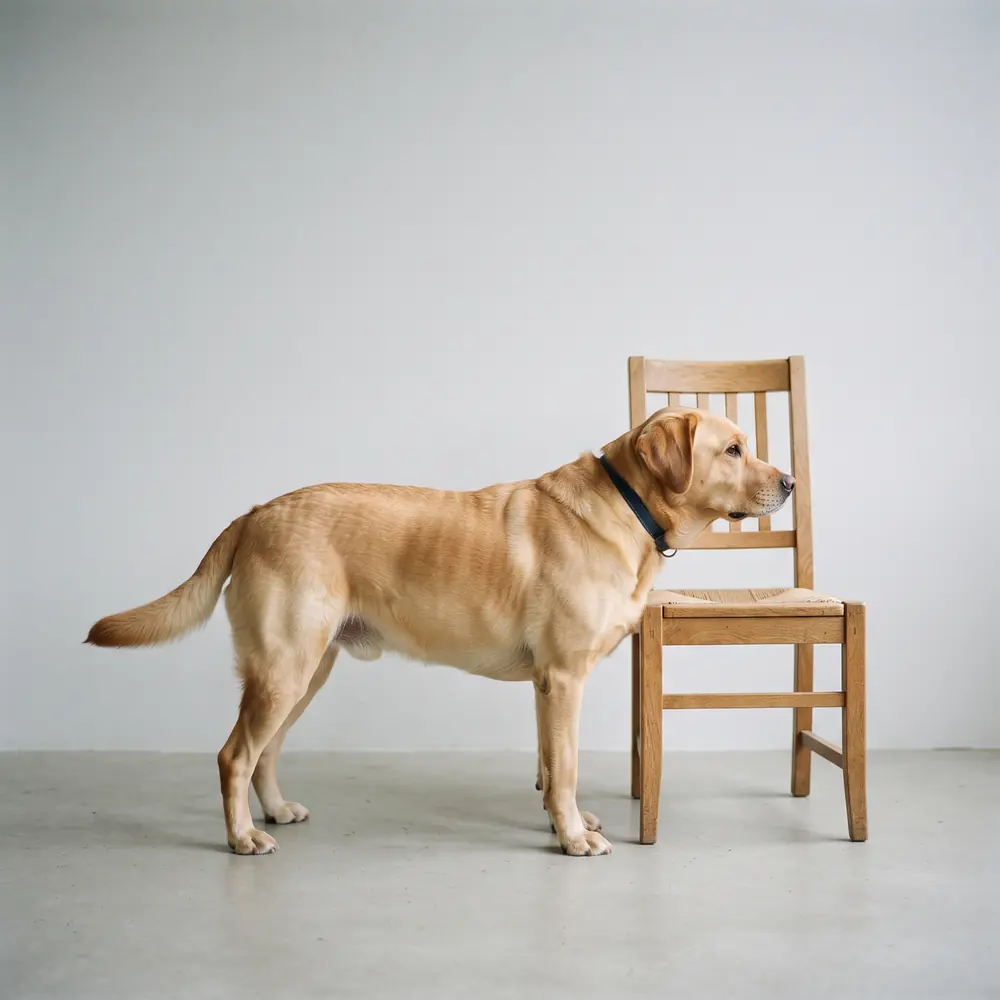
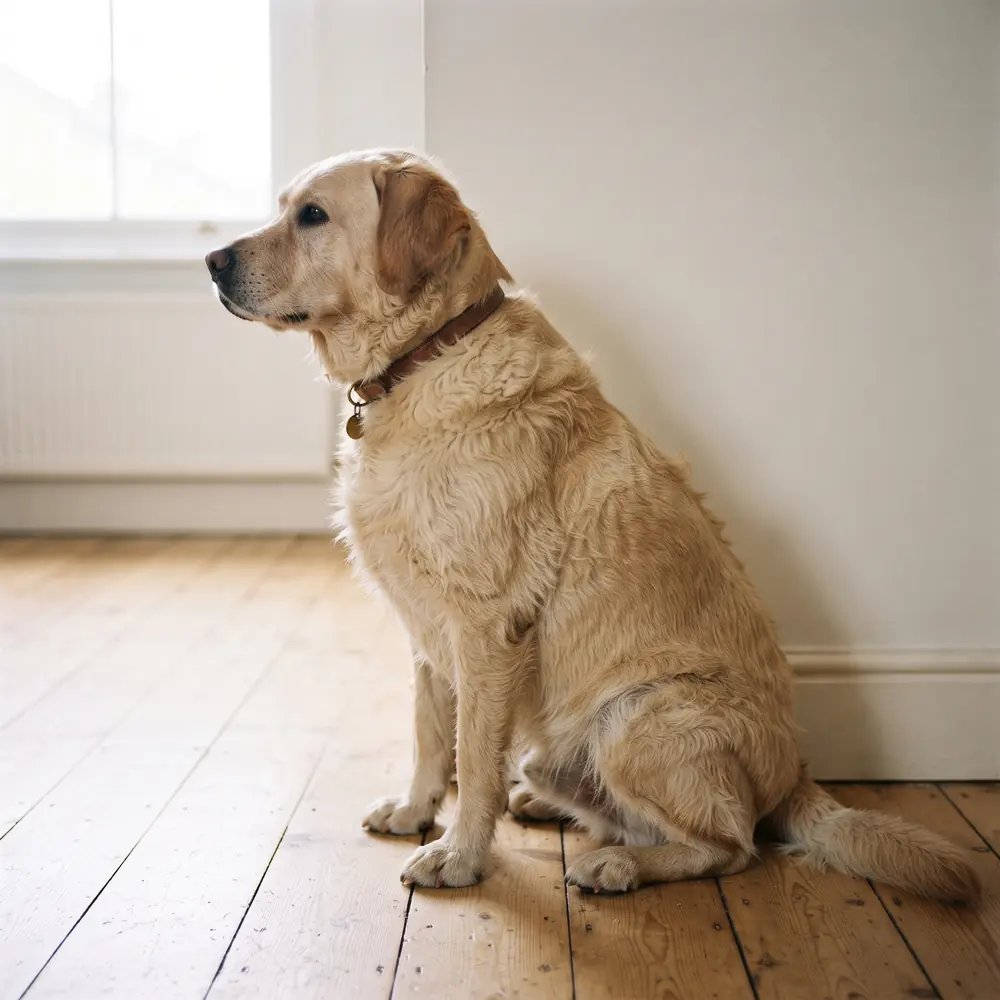
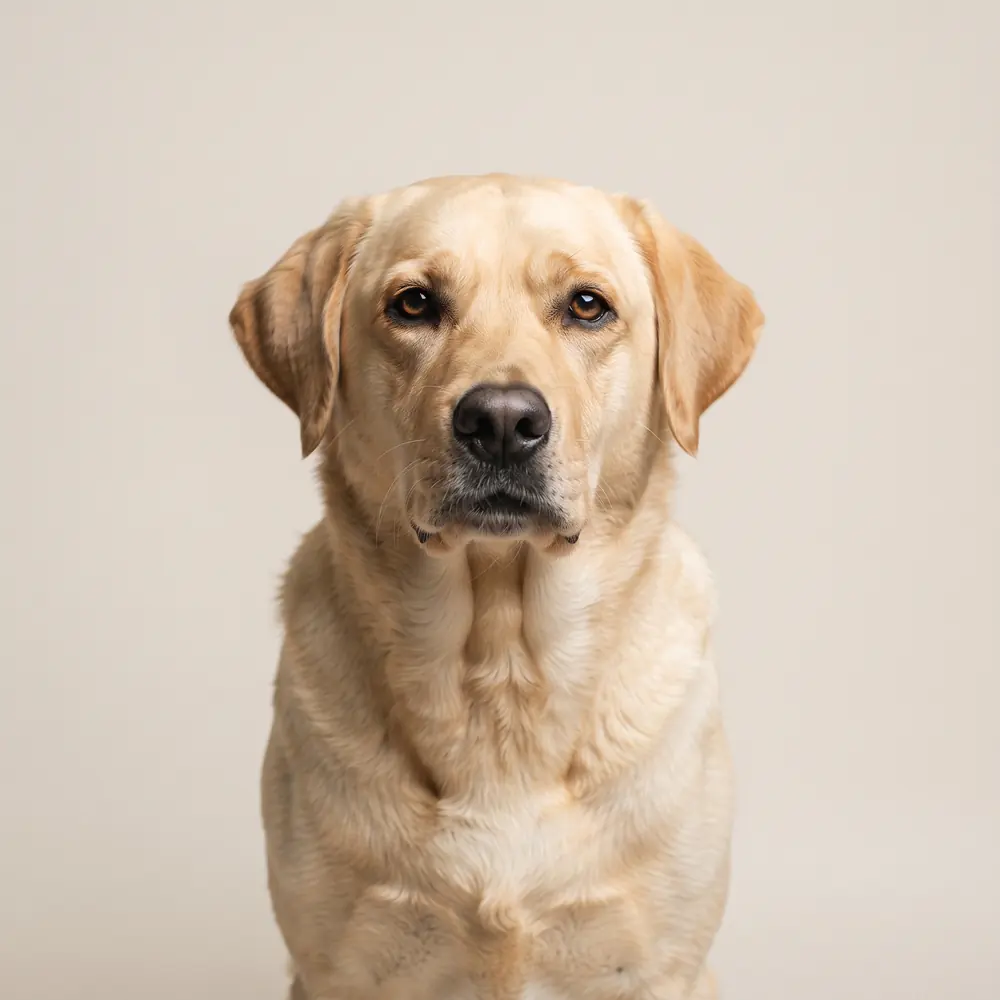
A Labrador puppy costs $4,588–$5,500 from an AVS-licensed seller in Singapore. That price includes vaccinations to date, deworming, a vet health check, a microchip, health certification and ancestry records. Age, sex and litter move a puppy inside the band, and coat colour does not.
Labrador puppies for sale on this site carry their price in public, before you enquire. Every Labrador we have in Singapore for sale is a dog at the farm rather than a photograph. Six things travel with the puppy, and each is a document or a procedure rather than a promise.
Across the breeds we sell, the range runs from around three thousand dollars to the high six thousands, and the Labrador puppy Singapore price sits in the middle of it. Size drives the recurring cost far more than the purchase price does.
| Line | Typical cost | What moves it |
|---|---|---|
| Food | $80 to $120 a month | A 25–36 kg dog eats like one |
| Grooming | Low, mostly a de-shed | The coat is brushed, never clipped |
| AVS dog licence | $15 a year sterilised, $90 if not | Duration and sterilisation status, less a 10% online rebate |
| Routine vet, joints and ears | Budget yearly from year one | Weight is the variable that moves the joint bill |
Food is the largest line in a large breed, and it is the one people underestimate. Our price hub publishes what a Labrador Retriever costs here to buy and to keep, breed by breed.
No. In Singapore HDB publishes an approved breed list for flats and the Labrador Retriever is not on it. There is no version of this answer that ends differently. It is the first thing to settle, because everything else on this page assumes you have somewhere to keep the dog.
No, for the same reason. Buyers ask this in the Labrador's own search results because they are working out which large friendly dog a flat allows, and the honest answer is that neither retriever does.
If a flat is your housing, start from the approved list rather than from the breed you had in mind. Several small, biddable breeds on it suit the same household, and we sell most of them.
Five minutes of formal exercise per month of age, up to twice a day, until the growth plates close. A four-month-old gets about twenty minutes a session. It is a guideline rather than a prescription, and it is the most useful thing anyone can tell a new large-breed owner.
What counts is structured exercise: lead walks, retrieving games, stairs, running on hard ground. What does not count is a puppy pottering about the house, sniffing a garden, or playing gently with people at its own pace and stopping when it wants to.
The reason is mechanical. A large-breed puppy's growth plates are still soft cartilage, and repeated concussion on hard surfaces is exactly the load they cannot take. The bill for ignoring this does not arrive until the dog is five or six.
Labrador owners are told to be firmer. The more useful version is that a deletion affecting the POMC gene is documented in this breed and is associated with stronger food motivation and a tendency to gain weight. The dog is genuinely hungrier, and canine obesity is where that ends if nobody is counting.
That changes what you manage. You are not correcting a character flaw, you are running a household where the food is measured and out of reach.
Weight is the one variable an owner fully controls, and in this breed it decides how the hips and elbows hold up in later life.
Hip dysplasia and elbow dysplasia are the joint conditions this breed is screened for. Buyers are told to ask about hips and never told what a real answer sounds like, so here it is.
Screening changes the odds rather than removing the risk, and any seller telling you otherwise is overselling. Environment does the rest of the work, and that half is yours.
Better than most large breeds, and still a 30 kg dog in a country with no cool season. The coat is short, dense and water-repellent, which insulates against heat as much as cold, so it is brushed and never shaved.

It is in the People Also Ask box for this breed, so here is the seller's answer. There is no cheap route to a large-breed puppy that does not move the cost somewhere else, and in a Labrador that somewhere is usually the joints.
Any listing priced well under the band is telling you something about itself. One of the related searches on this query is Labrador Puppy for Sale Singapore Cheap, and the table below is the honest reply to it.
| What you are offered | What it usually means | Where the cost lands |
|---|---|---|
| A price well below the published band | No parent screening, or an unlicensed seller | Hip and elbow bills from middle age onwards |
| No licence number given | Not an AVS-licensed seller | No recourse, and no records |
| No vaccination booklet | The schedule was skipped or is undocumented | Your vet restarts it, at your cost |
| Photos only, no viewing | You cannot see the puppy or its mother | Whatever arrives is what you get |
| A deposit before you meet the dog | A payment on a photograph | Usually unrecoverable |
The honest cheap route is adoption, covered further down. It is a real answer to this question, and it is not the one a seller is supposed to give you.
No. All three colours appear in the same litters, carry the same temperament and health picture, and sit in the same published band here.
Searches for a white Labrador puppy or a beige one are searching for the pale end of yellow, which is a shade rather than a separate colour. Nothing about it is rare enough to justify a premium, and we do not charge one.
Written by a seller, so read the right-hand column with that in mind: it is the one that costs us sales when it is honest. Anyone comparing a Labrador retriever puppy for sale against another large breed should start there.
| Pros | Cons | |
|---|---|---|
| Housing | Fine in a condo that permits large dogs, or landed | Not permitted in an HDB flat |
| Temperament | Friendly, biddable, superb with children | Adolescent and boisterous until about two |
| Training | One of the easiest breeds to train, and food-motivated | That same food motivation is a management job |
| Coat | Low grooming, no clipping, dries fast | Sheds heavily, all year |
| Exercise | Loves water, which suits the climate | An hour or more daily, in the cool hours |
| Health | Robust and long-lived when kept lean | Hips, elbows, ears, and weight multiplying all three |
Labradors live 10–12 years. Four things are worth asking about, and one of them multiplies the other three.
The timeline is set by the vaccination schedule, not by us. Core vaccinations run at weeks 6, 8 and 12, with an optional dose at week 16, and deworming happens at every visit.
Not every Labrador puppy for sale in Singapore needs to be a puppy. Labrador adoption Singapore is a search people run for good reason.
Labradors come through local rescue regularly, usually as adolescents and usually carrying too much weight. Both of those are fixable, and an adult whose temperament and joints you can already assess is a lower-risk dog than any puppy.
Bred in Newfoundland to help fishermen haul nets and retrieve fish, then refined in England, the Labrador’s love of water and work runs deep.
None of these four is HDB-approved, so the comparison is about energy, coat and how much dog you want, not about housing.
| Breed | HDB flat | Energy | Shedding | Typical range |
|---|---|---|---|---|
| Labrador Retriever | No | High | High | $4,588–$5,500 |
| Golden Retriever | No | High | High, longer coat | $4,588–$5,500 |
| Border Collie | No | Very high, needs a job | Medium | $5,880–$6,988 |
| Siberian Husky | No | Very high | Very high | $5,088–$6,088 |
The closest comparison is the other retriever. Read how a Golden Retriever compares: the same temperament in a longer coat, with more grooming and the same housing answer.
Figures last checked 25 August 2026.